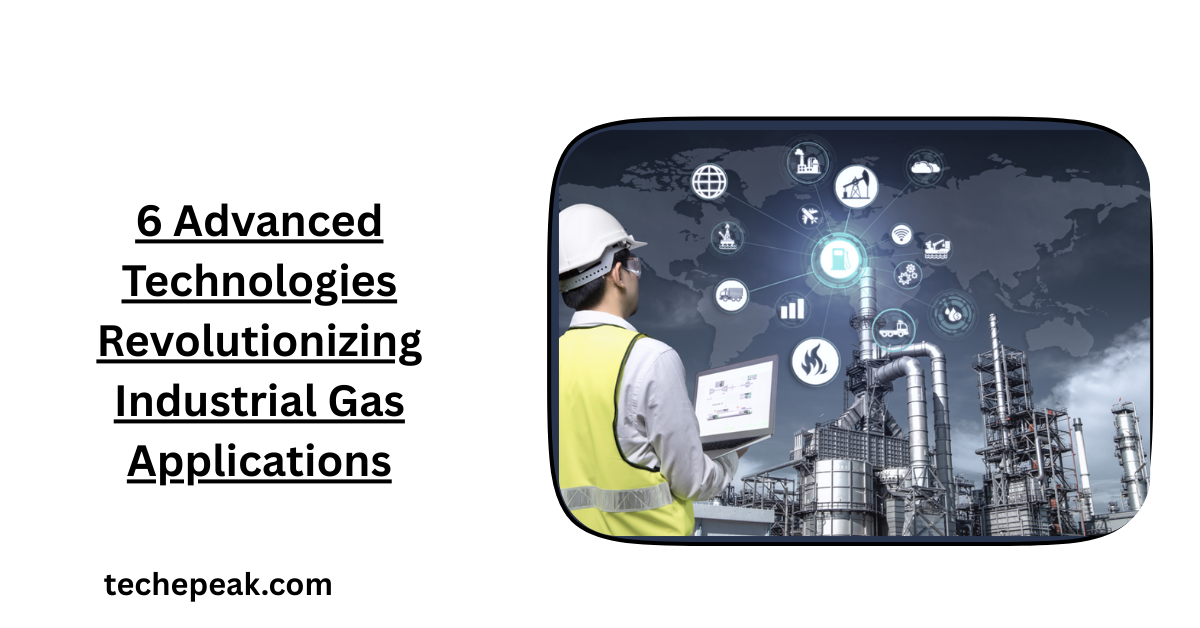

The industrial gas sector, a cornerstone of manufacturing, healthcare, and energy, is undergoing a profound transformation. As industries strive for greater efficiency, safety, and sustainability, technological advancements are paving the way for smarter and more reliable gas handling solutions. These innovations are not just incremental improvements; they are fundamentally reshaping how gases are produced, stored, transported, and utilized. This article explores six key technologies that are driving this revolution, offering a glimpse into the future of industrial gas applications and the benefits they bring to modern operations.
Table of Contents
Toggle1. Advanced Monitoring and IoT Integration
The integration of the Internet of Things (IoT) has brought unprecedented levels of control and insight to industrial gas systems. By embedding sensors and connectivity into tanks, pipelines, and processing equipment, companies can now monitor their operations in real time. These sensors collect vast amounts of data on pressure, temperature, flow rates, and gas purity. This constant stream of information allows for proactive maintenance, as predictive analytics can forecast potential equipment failures before they occur. For instance, a sudden pressure drop in a pipeline can trigger an immediate alert, enabling rapid response to prevent leaks and minimize downtime. This level of oversight significantly enhances safety and operational efficiency.
2. AI and Machine Learning for Predictive Analytics
Artificial intelligence (AI) and machine learning (ML) are taking data analysis to the next level. These technologies can process historical and real-time data to identify complex patterns and make highly accurate predictions about future performance. In the context of industrial gases, AI algorithms can optimize production schedules based on fluctuating demand, predict the ideal time for equipment maintenance, and even fine-tune purification processes to maximize yield. For example, an ML model can analyze years of operational data to predict wear and tear on agas compressor, scheduling maintenance only when necessary and avoiding costly unplanned shutdowns. This data-driven approach helps businesses reduce operational costs and improve asset longevity.
3. High-Purity Gas Generation and On-Site Production
The demand for high-purity gases in sectors like electronics and pharmaceuticals has spurred the development of advanced on-site generation technologies. Modern pressure swing adsorption (PSA) and membrane separation systems allow facilities to produce their own nitrogen, oxygen, and other gases directly from the ambient air. These systems are becoming more efficient, compact, and cost-effective. On-site generation eliminates the logistical complexities and costs associated with transporting and storing gas cylinders or liquid gas. This not only reduces a facility’s carbon footprint but also ensures a reliable, uninterrupted supply of high-purity gas, which is critical for sensitive manufacturing processes.
4. Cryogenic Technology Innovations
Cryogenic technologies, which involve the production and behavior of materials at very low temperatures, are essential for liquefying gases like nitrogen, oxygen, and natural gas. Recent advancements in cryocooler design and insulation materials are making cryogenic storage and transport more efficient and less prone to boil-off losses. For example, improved vacuum insulation and multi-layer insulation (MLI) techniques are enhancing the thermal performance of storage tanks. Furthermore, innovations in cryogenic refrigeration cycles are reducing the energy required to liquefy gases, making processes like liquefied natural gas (LNG) production more economically viable and environmentally friendly.
5. Advanced Materials for Storage and Transport
The development of novel materials is another key driver of innovation in the industrial gas sector. Carbon fiber composites, for instance, are being used to create lightweight, high-pressure gas cylinders that are much easier to handle and transport than traditional steel cylinders. These composite materials offer a high strength-to-weight ratio, allowing for higher storage pressures and increased gas capacity without adding extra weight. In addition, researchers are exploring metal-organic frameworks (MOFs) and other porous materials for their potential to store large quantities of gas at lower pressures, which could revolutionize gas storage by making it safer and more compact.
6. Automation and Robotics in Gas Handling
Automation is streamlining gas handling processes, from cylinder filling to plant operations. Robotic systems are increasingly being used for repetitive and physically demanding tasks, such as moving, sorting, and connecting gas cylinders. This not only improves operational speed and accuracy but also enhances worker safety by minimizing human exposure to potentially hazardous environments. In large-scale gas production plants, fully automated control systems manage entire processes with minimal human intervention, ensuring consistent quality and optimal performance around the clock. This integration of robotics and automation is leading to more resilient and efficient supply chains.
The continuous evolution of these advanced technologies promises a future where industrial gas applications are safer, more efficient, and more sustainable. By embracing these innovations, businesses can not only optimize their current operations but also unlock new opportunities for growth and development in an increasingly competitive global market. The journey toward a smarter industrial gas landscape is well underway, powered by data, advanced materials, and intelligent automation.
Most Viewed