Key Takeaways
- Interview scorecards provide a standardized and objective framework for assessing candidates.
- Scorecards help reduce bias and promote equity in hiring decisions.
- Designing and properly implementing scorecards maximizes their effectiveness.
- Real-world organizations utilize scorecards to ensure consistency and enhance the candidate experience.
Table of Contents
- Understanding Interview Scorecards
- Benefits of Implementing Interview Scorecards
- Designing an Effective Interview Scorecard
- Challenges and Considerations
- Real-World Applications
- Conclusion
Understanding Interview Scorecards
The hiring process is undergoing a significant transformation as organizations seek reliable tools for fairness and clarity. One of the most valuable advancements is the use of interview scorecards. By integrating a consistent, criteria-based approach, companies can safeguard against subjectivity, ensuring that every candidate is evaluated with the same rigor. To see an example and learn more about the mechanics, explore this interview scorecard sheet.
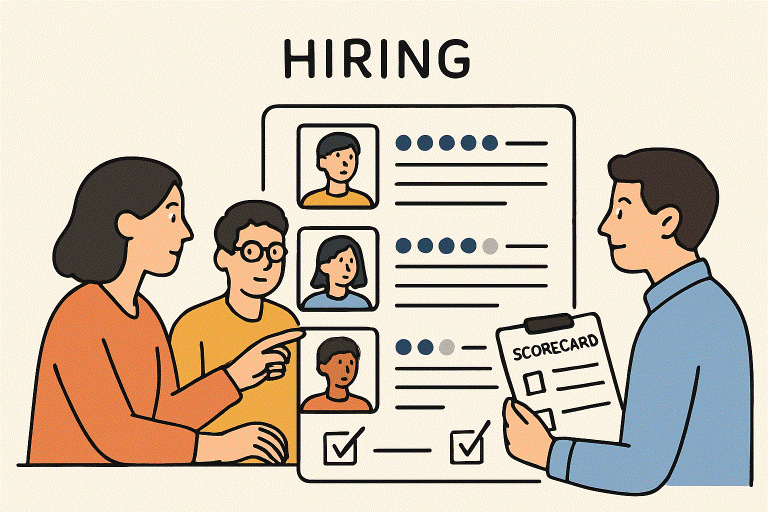
At their core, interview scorecards serve as a framework for interviewers to objectively gauge candidates on a set of predetermined skills and competencies. Rather than relying on gut feeling or first impressions, scorecards channel the interviewer’s attention to measurable job-related criteria. This approach not only clarifies the decision-making process but also helps organizations foster an unbiased and equitable environment from the outset.
Benefits of Implementing Interview Scorecards
The adoption of interview scorecards across industries has shown a measurable impact on hiring quality and organizational diversity. By removing ambiguity from candidate assessments, companies can better ensure that decisions rest on skills and potential rather than on incidental factors. This step is vital for organizations seeking to create workplaces that reflect values of inclusion and equal opportunity.
A clear benefit of a scorecard system is the facilitation of team-based decisions. When each interviewer uses the same core set of criteria to score candidates, it’s easier to compare feedback and make holistic decisions as a group. Crucially, this process also minimizes the risk of interviewers swaying one another’s judgments based solely on personality impressions. For additional insights on why standardized processes improve workplace fairness, see this resource from the Harvard Business Review.
- Consistency in Evaluations: Equal footing is given to every candidate, ensuring that evaluations are not arbitrary or inconsistent between interviews.
- Reduction of Bias: Focusing on predefined competencies limits the influence of unconscious preferences or stereotypes that may affect hiring decisions.
- Data-Driven Decision Making: Numerical scores offer an evidence-based foundation for discussions, which is invaluable when agreement among interviewers is needed.
Designing an Effective Interview Scorecard
Defining Core Competencies
Building a reliable scorecard starts with a thoughtful job analysis. Identify the most critical competencies required for the position—these might include technical skills, communication, cultural fit, problem-solving, or adaptability. Ensuring that these competencies tightly align with the core demands of the job is key to creating a meaningful assessment.
Establishing a Rating Scale
A clear and well-explained rating scale distinguishes high-performing candidates from average applicants. Most organizations use a 1-to-5 or 1-to-7 scale, with each number corresponding to a descriptive benchmark. Specific examples, such as “demonstrates leadership in group settings,” provide context and improve rating accuracy.
Documenting Evidence
Each score should be accompanied by tangible evidence from the interview, whether it’s a specific answer, behavior, or demonstration of skill. This practice not only supports the evaluator’s decision but also creates a feedback record that the company can reference when re-evaluating decisions or responding to candidate queries.
Final Recommendations
Most scorecards conclude with a summary or recommendation section. Here, interviewers briefly outline their rationale and indicate whether the candidate should advance. This summary, compiled across interviewers, provides hiring managers with a snapshot for final review.
Challenges and Considerations
Despite their advantages, interview scorecards can pose obstacles if not used correctly. One potential pitfall is “scorecard peeking,” where interviewers can view others’ scores before submitting their own. Such influence risks undermining objectivity. To prevent this, organizations should adopt tools or processes that keep feedback confidential until all submissions are in.
Another consideration is the need for interviewer training. Even the best-designed scorecard won’t eliminate bias if users are unaware of common cognitive traps, such as recency, similarity, or halo effects. Periodic calibration meetings, where interviewers review sample candidates, can bolster fairness and improve consistency across interviews.
Real-World Applications
Prominent organizations are leveraging interview scorecards for transformative results. LinkedIn’s Product team, for example, standardized its evaluation process by rolling out a tailored scorecard system. The changes improved transparency, boosted candidate satisfaction, and cut down the time required to make hiring decisions. Other leading firms, such as Google and Atlassian, have long relied on structured interview techniques to foster diversity and rigor in their hiring pipelines.
These organizations report not only greater confidence in their hiring choices but also stronger employee retention rates. A structured approach enables leaders to defend and explain their decisions, reinforcing job satisfaction and inclusivity from the outset.
Conclusion
Integrating interview scorecards into hiring processes allows companies to evaluate every candidate using clear, consistent, and objective criteria. This structure minimizes personal bias, reduces the influence of gut instincts,
Most Viewed