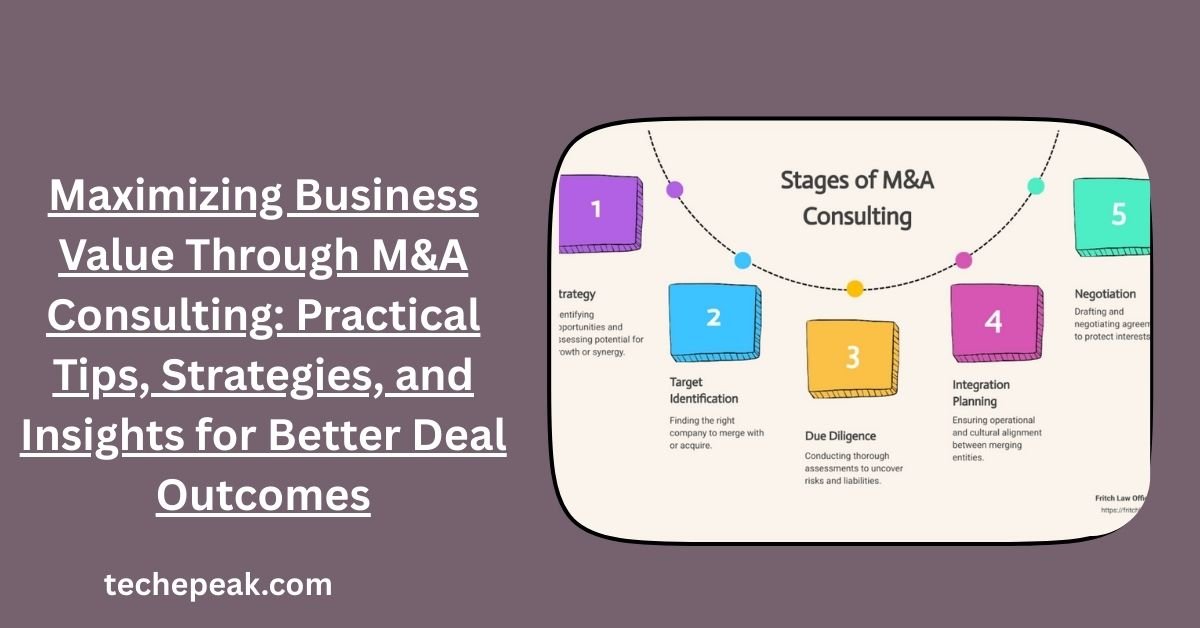

When companies decide to merge or acquire another business, the process often becomes more complicated than expected. Market conditions shift, financial risks appear, and hidden operational challenges frequently come to the surface. This is where m&a consulting becomes essential, as experienced advisors help businesses navigate uncertainties, assess risks, and shape deals that add long-term value instead of creating future problems.
Many organizations approach mergers and acquisitions with excitement but without a complete roadmap. With proper guidance, however, the process becomes more structured, strategic, and aligned with the company’s long-term goals. Below are insights and practical tips on how organizations can maximize value through the right M&A consulting approach.
Table of Contents
Toggle1. Start With a Clear Strategic Purpose
Every acquisition or merger must begin with a clear reason behind the decision. Companies that rush into deals without defining objectives often end up paying more than the deal is worth or acquiring businesses that do not support their long-term growth.
Good consultants help leaders understand why they want the deal in the first place. Is it to enter a new market? Strengthen product offerings? Reduce competition? Improve technology? Once the purpose becomes clear, everything—from valuation to negotiation—follows a more focused direction.
2. Conduct a Deep, Honest Assessment of the Target Company
Superficial due diligence is one of the biggest reasons why mergers fail. Financial statements alone never tell the full story. True value depends on operational efficiency, employee culture, customer relationships, and long-term stability.
A reliable consulting team looks at things that are easy to overlook such as:
- Future revenue potential
- Industry risks
- Quality of leadership
- Employee satisfaction and turnover
- Legal or compliance issues
- Technology gaps
The more honest and thorough the assessment, the closer the business gets to understanding a realistic value.
3. Use Data and Market Insights to Guide Decisions
Modern M&A involves more than gut feeling. Market intelligence, competitor analysis, and industry forecasts help organizations decide whether a deal is worth the investment. Skilled advisors bring in data-driven insights that support smarter decision-making.
Consultants also have access to research tools and market databases that businesses may not have independently. This gives them a clearer picture of market trends and how the target company fits into the industry’s future.
4. Strengthen Negotiation With Expert Support
Negotiation is often where real value is gained or lost. Consultants help companies negotiate from a position of strength by identifying hidden weaknesses, understanding the seller’s motivations, and proposing terms that protect long-term interests.
An expert advisor helps structure deals that balance price, risk, and responsibilities. They also guide leaders on when to push, when to compromise, and when to walk away.
5. Understand the Importance of Integration Planning
Many leaders focus so heavily on the deal itself that they forget what happens afterward. Integration is one of the most challenging phases of a merger. Even a strong deal can fail if the integration process is weak.
Consultants help create a structured plan that covers:
- Team and workflow alignment
- Technology and system integration
- Communication across departments
- Business continuity
- Leadership roles
Smooth integration protects deal value and prevents operational disruptions.
6. Manage Cultural Differences Early
Culture is not always simple to measure, but it plays a major role in merger success. Employees from different companies often work and communicate differently. If ignored, these differences can lead to conflict.
M&A advisors encourage leadership teams to engage employees early, communicate clearly, and respect the culture of both organizations.
7. Keep Communication Transparent
Uncertainty creates fear among employees, investors, and customers. Clear communication helps maintain trust and prevents rumors. Advisors guide leaders on managing announcements and handling people-related changes to ensure everyone understands the company’s direction.
Consistency and honesty always help create stability during transitions.
8. Prioritize Long-Term Growth Over Short-Term Excitement
Some companies get carried away by the excitement of expansion, but rushed decisions often create hidden problems. The real goal of any merger or acquisition should be long-term success.
Consultants help leaders evaluate whether the deal strengthens the future of the company, creates competitive advantages, and supports sustainable growth.
9. Monitor Progress After the Deal Closes
The work does not end once papers are signed. Post-deal monitoring ensures the integration is moving forward. Advisors help companies set performance targets, track progress, and adjust strategies when needed.
This continuous support helps identify issues early and maintain the deal’s value.
Final Thoughts
Maximizing value through M&A consulting requires a mix of careful planning, honest evaluation, strong negotiation, and structured integration. With the right experts guiding the process, businesses can turn complex deals into opportunities for growth, innovation, and long-term success.
Most Viewed