

An Unexpected Turn: The Complete DL275 Incident Timeline
The journey for Delta Flight DL275 began with a delay, departing from Detroit at 15:53 local time, nearly two hours behind its scheduled departure. For the first several hours, the Airbus A350-900 climbed to its cruising altitude, and the flight proceeded as expected.
However, while flying over the remote and icy expanse of the Bering Sea, the flight crew detected a technical issue that demanded immediate attention. Prioritizing safety above all else, the pilots made the critical decision to turn back. Instead of continuing to Tokyo or landing at a closer airport, the aircraft was rerouted to Los Angeles International Airport (LAX), a major Delta hub. The flight landed safely at LAX at 01:08 local time on May 28, 2025, after a marathon 12 hours and 15 minutes in the air.
| Flight Details | Planned | Actual |
|---|---|---|
| Flight Number | DL275 | DL275 |
| Route | Detroit (DTW) to Tokyo (HND) | Detroit (DTW) to Los Angeles (LAX) |
| Aircraft | Airbus A350-900 (N508DN) | Airbus A350-900 (N508DN) |
| Departure Time | 14:05 Local Time | 15:53 Local Time |
| Arrival Airport | Tokyo Haneda (HND) | Los Angeles International (LAX) |
| Arrival Time | 16:15 Local Time (+1 day) | 01:08 Local Time (+1 day) |
| Total Duration | ~13 hours 10 minutes | 12 hours 15 minutes |
The Technical Reason: A Deep Dive into the Engine Anti-Ice System
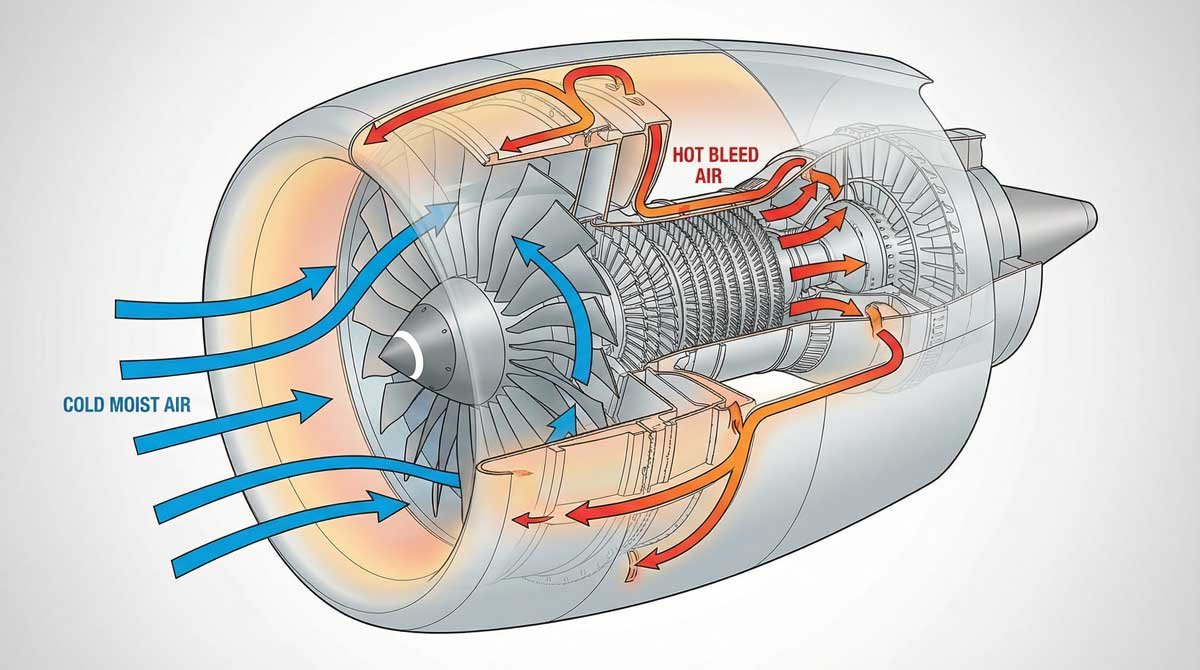
The reason for the diversion was not a catastrophic failure, but a precautionary measure related to the aircraft’s engine anti-ice system. At high altitudes, where temperatures can plummet to -40°C or lower, moisture in the air can freeze and accumulate on critical engine components. This ice buildup can disrupt airflow, damage fan blades, and ultimately affect engine performance.

Illustration: How the engine anti-ice system uses hot bleed air to prevent ice buildup on critical engine components.
The engine anti-ice system prevents this by using hot air from the engine’s compressor to heat the engine cowlings and other susceptible parts, ensuring they remain free of ice. When the pilots received a fault indication from this system, they were faced with a choice: continue over the vast Pacific with a potential (though not actual) risk, or divert to a location where the issue could be safely addressed.
“You don’t take chances over the ocean. The crew did exactly what they were trained to do: they identified a potential risk and mitigated it long before it could become a danger.” — Aviation Safety Expert
The decision to divert was a textbook example of aviation’s safety-first culture. The aircraft did not experience smoke, fire, or loss of power. Instead, the diversion was a preventative measure, highlighting how airline safety culture works: addressing potential risks early rather than reacting to emergencies later.
Why Los Angeles? Analyzing the Strategic Diversion Choice
Many observers, including those on social media platforms like Reddit, questioned why the flight diverted all the way to Los Angeles instead of closer airports like Anchorage (ANC) or Seattle (SEA). The answer lies in a combination of operational logistics and airline strategy.
While ANC and SEA are geographically closer, LAX is a major hub for Delta Air Lines. This means Delta has extensive resources on the ground, including:
- Maintenance Facilities: A large maintenance base with technicians and parts specifically for the Airbus A350.
- Crew Resources: A large pool of pilots and flight attendants to replace the crew who would have exceeded their duty time limits.
- Passenger Logistics: More extensive customer service teams and a greater number of onward flight options to get passengers to their final destinations.
| Diversion Airport | Pros | Cons |
|---|---|---|
| Los Angeles (LAX) | Major Delta hub, extensive maintenance, crew, and passenger resources. | Longer flight time to divert. |
| Anchorage (ANC) | Geographically closer, reducing immediate flight time. | Limited Delta maintenance and crew resources for an A350. |
| Seattle (SEA) | Delta hub, but smaller than LAX. | Fewer resources than LAX for a wide-body aircraft diversion. |
Additionally, because the anti-ice system issue required the aircraft to land in warmer weather conditions without precipitation, LAX’s climate made it an ideal choice compared to potentially icy conditions at northern airports.
A Passenger’s Guide: Rights, Compensation, and Best Practices in a Diversion
Finding your flight diverted can be stressful, but knowing your rights and how to handle the situation can make a significant difference. This is a topic often overlooked in news reports. Under U.S. law, airlines are not required to compensate passengers for delays or cancellations caused by safety-related issues. However, most airlines, including Delta, have policies in place to assist passengers.
What You Should Do If Your Flight Diverts
- Know Your Rights: Review your airline’s contract of carriage. For a diversion like this, Delta is responsible for getting you to your destination. They will typically provide meal vouchers and hotel accommodations if an overnight stay is required.
- Stay Informed: Pay close attention to announcements from the airline. Use the airline’s app for the most up-to-date information on rebooking.
- Document Everything: Keep all your receipts for expenses incurred due to the diversion, such as meals or toiletries. You may be able to get reimbursed.
- Be Proactive: If you are not automatically rebooked, speak to a customer service agent as soon as possible. Be polite but firm in requesting assistance.
Frequently Asked Questions (FAQ)
- 1. Was Delta Flight DL275 in immediate danger?
- No. The diversion was a precautionary safety measure. The pilots identified a potential issue with the engine anti-ice system and chose to land at a safe location rather than risk a problem developing over the ocean.
- 2. What compensation are passengers entitled to for this diversion?
- While not legally required for safety-related diversions under U.S. law, Delta’s policies typically provide for hotel accommodations, meal vouchers, and rebooking on the next available flight to their final destination.
- 3. How safe is the Airbus A350-900 aircraft involved in the incident?
- The Airbus A350-900 is one of the most modern and safest aircraft in the world, with an excellent safety record. The aircraft involved, registered as N508DN, was approximately 7.3 years old at the time of the incident and is one of 37 A350s in Delta’s fleet.
- 4. How did the flight crew’s actions ensure passenger safety?
- The flight crew followed their training and standard operating procedures perfectly. By identifying a potential issue, communicating with air traffic control, and making a conservative, safety-first decision, they ensured the well-being of everyone on board.
- 5. How often do flights divert for technical reasons?
- Flight diversions for technical reasons are not uncommon. They are a normal part of aviation safety procedures and demonstrate that the system is working to prevent potential problems from escalating. Such diversions are a testament to the industry’s commitment to safety.
Conclusion
The diversion of Delta Flight DL275 to Los Angeles was more than just a travel inconvenience; it was a real-world demonstration of aviation safety at its best. The incident underscores the industry’s unwavering commitment to prioritizing passenger safety over schedules and convenience.
While the 12-hour flight to LAX was undoubtedly a long and frustrating experience for the passengers, the actions of the flight crew ensured that everyone arrived safely. For travelers, it serves as a reminder that even when things go wrong, there are robust systems and highly trained professionals working to protect you. Stay informed about your rights, remain patient during unexpected situations, and trust that the aviation industry’s safety protocols are designed with your well-being in mind.

Most Viewed