

In this comprehensive guide, you will explore eight transformative technologies that are revolutionizing at-home care. We will delve into the evolution of telehealth, the power of AI in diagnostics, the role of robotics, and the critical importance of data security. You will also gain actionable insights from real-world case studies, implementation strategies, and a detailed cost-benefit analysis. As the lines between the hospital and the home continue to blur, understanding these innovations is no longer optional—it is essential for navigating the future of healthcare.
The Telehealth Revolution: Bringing Medical Expertise to Your Living Room
Telehealth has rapidly evolved from a niche service to a cornerstone of modern healthcare delivery. It represents a paradigm shift, empowering patients to connect with medical professionals from the comfort of their homes. This transformation is not just about convenience; it is about creating a more accessible, efficient, and patient-centric healthcare ecosystem. The integration of advanced communication tools and real-time data has elevated telehealth from simple video calls to comprehensive virtual care platforms.
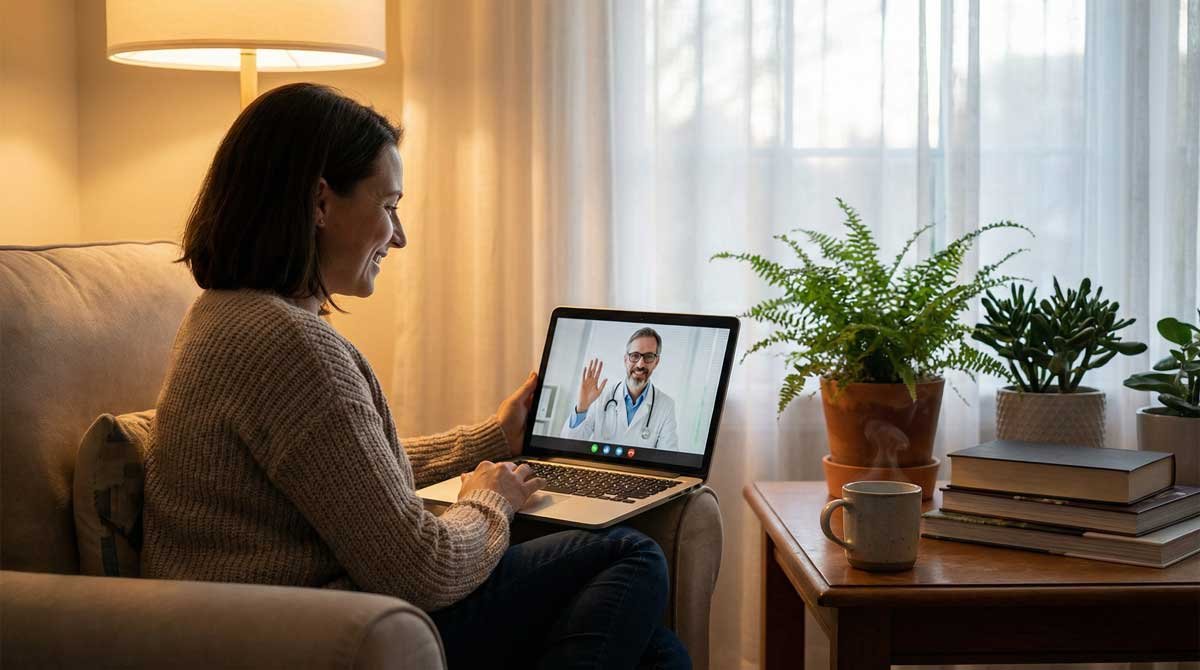
Beyond Video Consultations: The Evolution of Telehealth
While video consultations remain a core component of telehealth, the technology has expanded far beyond simple virtual meetings. Modern telehealth platforms now offer a suite of integrated services that replicate, and in some cases, enhance the in-person clinical experience. These platforms can facilitate secure messaging, digital prescription management, and seamless integration with electronic health records (EHRs). This allows for a holistic view of the patient’s health history, enabling more informed and personalized medical advice.
The evolution of telehealth also includes the incorporation of peripheral devices that can transmit real-time data to the physician during a virtual visit. For instance, a digital stethoscope can stream a patient’s heart and lung sounds directly to the doctor, while a high-definition camera can provide clear images of a skin condition. This capability for remote examination significantly broadens the scope of conditions that can be effectively managed through telehealth, making it a viable option for a wider range of medical needs.
In addition to sensor and device data, medical imaging plays a critical role in at-home and remote care models. A modern PACS system in medicine enables healthcare providers to securely store, access, and share diagnostic images—such as X-rays, ultrasounds, and CT scans—across telehealth platforms and care teams. When imaging workflows are centralized through solutions like Studycast, clinicians can review studies remotely, collaborate with specialists in real time.
Remote Patient Monitoring: Continuous Care Without Hospital Visits
Remote Patient Monitoring (RPM) is a critical component of the telehealth revolution, enabling continuous, real-time tracking of a patient’s vital signs and health metrics from a distance. RPM systems typically consist of sensors and devices that collect data—such as blood pressure, glucose levels, heart rate, and oxygen saturation—and transmit it securely to healthcare providers. This constant stream of data allows for proactive and preventative care, as physicians can identify and address potential health issues before they escalate into emergencies.
For patients with chronic conditions like diabetes, hypertension, or heart failure, RPM can be life-changing. It reduces the need for frequent hospital visits, lowers the risk of readmission, and provides patients with a greater sense of security and engagement in their own care. According to a study by the Consumer Technology Association, RPM has been shown to reduce hospital readmissions by up to 50% and decrease healthcare costs by over 11%. The implementation of automated alert systems, which notify care teams of any significant deviations from a patient’s baseline, ensures timely intervention and a higher standard of at-home care.
Wearable Technology: Your Personal Health Guardian
Wearable technology has transcended its origins as a fitness accessory to become a powerful tool in the at-home healthcare landscape. These devices, ranging from smartwatches to discreet skin patches, serve as personal health guardians, continuously monitoring a wide array of physiological data. The insights generated by wearables empower individuals to take a more proactive role in managing their health, while also providing healthcare professionals with a wealth of data to inform treatment decisions. The convergence of consumer-friendly design and medical-grade accuracy is driving the adoption of wearables for a variety of health applications.
From Fitness Trackers to Medical-Grade Wearables
The market for wearable technology has matured significantly, with a clear distinction emerging between consumer-grade fitness trackers and medical-grade devices. While fitness trackers are excellent for monitoring general wellness metrics like step count and sleep patterns, medical-grade wearables are designed to meet the stringent accuracy and reliability standards required for clinical use. These devices often undergo rigorous testing and receive clearance from regulatory bodies like the FDA.
Medical-grade wearables can monitor a range of biomarkers with a high degree of precision, including electrocardiogram (ECG) readings, blood oxygen levels, and even continuous glucose monitoring. The development of novel biosensors is further expanding the capabilities of wearables, with emerging technologies able to detect everything from dehydration levels to early signs of infection. This evolution is transforming wearables from passive data collectors into active participants in the healthcare journey.
Real-World Impact: Case Study of Chronic Disease Management
The impact of wearable technology is particularly profound in the management of chronic diseases. Consider the case of a patient with Type 2 diabetes. A continuous glucose monitor (CGM) worn as a small, discreet patch can provide real-time updates on blood sugar levels, sending the data directly to a smartphone app. This eliminates the need for painful and inconvenient finger-prick tests and allows the patient and their doctor to see how diet, exercise, and medication affect their glucose levels throughout the day.
Similarly, for a patient with atrial fibrillation, a smartwatch with an FDA-cleared ECG function can provide on-demand heart rhythm assessments. If an irregular rhythm is detected, the device can generate a PDF of the ECG that can be easily shared with a cardiologist. This capability for early detection and continuous monitoring can significantly reduce the risk of stroke and other complications, demonstrating the life-saving potential of wearable technology in at-home care.
Artificial Intelligence: Enhancing Diagnosis and Predictive Care
Artificial Intelligence (AI) is rapidly becoming one of the most transformative forces in healthcare, particularly in the realm of diagnostics and predictive care. By leveraging machine learning algorithms to analyze vast datasets, AI can identify patterns and insights that may be imperceptible to the human eye. This capability is not only enhancing the accuracy of diagnoses but also enabling a shift from reactive to proactive healthcare, where potential health crises can be predicted and prevented before they occur. The integration of AI into at-home care is empowering both patients and clinicians with more powerful tools for managing health.
AI-Powered Diagnostics: Accuracy Beyond Human Capability
AI-powered diagnostic tools are demonstrating a level of accuracy that can surpass that of human clinicians in certain tasks. For example, deep learning algorithms trained on thousands of medical images can learn to identify signs of disease with remarkable precision. In dermatology, AI models have been shown to detect skin cancer with an accuracy comparable to that of experienced dermatologists. Similarly, in cardiology, AI can analyze ECG data to predict the risk of a future heart attack with a high degree of certainty.
These AI-powered diagnostic capabilities are increasingly being integrated into at-home care devices and applications. A smartphone app equipped with an AI-powered algorithm could analyze a picture of a skin lesion and advise the user whether they should seek a professional opinion. This accessibility of advanced diagnostic tools is democratizing healthcare, allowing for earlier detection and treatment of a wide range of conditions.
Predictive Analytics: Preventing Health Crises Before They Happen
Beyond diagnostics, AI is also playing a crucial role in predictive analytics, which involves using data to forecast future health outcomes. By analyzing a patient’s health history, lifestyle data, and real-time physiological metrics from wearable devices, predictive models can identify individuals at high risk for developing certain conditions. This allows for the implementation of personalized prevention strategies, such as targeted lifestyle interventions or more frequent screenings.
AI-powered virtual assistants are also emerging as a valuable tool in predictive care. These virtual assistants can engage patients in a continuous dialogue, collecting information about their symptoms and providing personalized health advice. By analyzing this conversational data, the AI can identify subtle changes in a patient’s condition and alert their care team to the need for intervention. This proactive approach to care management is key to preventing hospitalizations and improving long-term health outcomes.
Internet of Medical Things: The Connected Healthcare Ecosystem
The Internet of Medical Things (IoMT) refers to the growing network of connected medical devices, sensors, and healthcare IT systems that communicate with each other to create a cohesive and intelligent healthcare ecosystem. This interconnectedness is breaking down the data silos that have long plagued the healthcare industry, enabling a more holistic and data-driven approach to patient care. In the context of at-home care, IoMT is facilitating the seamless flow of information from the patient’s home to the clinical setting, ensuring that care teams have a complete and up-to-date picture of a patient’s health status.
Smart Medical Devices: Real-Time Data Integration
At the heart of the IoMT are smart medical devices that are capable of collecting and transmitting data in real time. These devices range from smart inhalers that track medication usage for asthma patients to connected insulin pumps that automatically adjust insulin delivery based on a patient’s glucose levels. The data from these devices is typically sent to a cloud-based platform, where it can be accessed and analyzed by healthcare providers.
The integration of data from multiple smart devices provides a much richer and more comprehensive view of a patient’s health. For example, by combining data from a smart blood pressure cuff, a connected weight scale, and a wearable activity tracker, a care team can gain a deep understanding of a patient’s cardiovascular health and make more informed decisions about their treatment plan. This level of data integration is key to delivering truly personalized and proactive at-home care.
Interoperability Challenges and Solutions
Despite the immense potential of IoMT, the lack of interoperability between different devices and systems remains a significant challenge. The healthcare industry has historically been fragmented, with different vendors using proprietary data formats and communication protocols. This makes it difficult to share data seamlessly between different systems, creating a barrier to the creation of a truly connected healthcare ecosystem.
To address this challenge, there is a growing movement towards the adoption of standardized protocols for data exchange, such as HL7 (Health Level Seven) and FHIR (Fast Healthcare Interoperability Resources). These standards provide a common language for different healthcare systems to communicate with each other, enabling the free flow of information. As the adoption of these standards becomes more widespread, the interoperability challenges that have hindered the growth of IoMT will begin to diminish, paving the way for a more connected and efficient future for at-home care.
Robotics and Automation: The Future of Hands-On Home Care
Robotics and automation are poised to play an increasingly important role in the future of at-home care, addressing some of the most pressing challenges facing the healthcare industry, including a growing shortage of caregivers. While the idea of a robot caregiver may still seem like science fiction to some, the technology is advancing rapidly, with a new generation of robots being developed to assist with a wide range of tasks, from medication management to physical therapy and companionship. These robots are not intended to replace human caregivers but rather to augment their capabilities, freeing them up to focus on more complex and meaningful aspects of care.
From Companion Robots to Rehabilitation Assistants
The field of healthcare robotics is diverse, with different types of robots being designed for specific applications. Companion robots, such as Paro and ElliQ, are designed to provide social and emotional support to the elderly, helping to combat the loneliness and isolation that can have a detrimental effect on health. These robots can engage in conversation, play games, and provide reminders for medication and appointments.
Rehabilitation robots, on the other hand, are designed to assist with physical therapy, helping patients to regain strength and mobility after an injury or stroke. These robots can guide patients through exercises, provide resistance, and track their progress over time. Mobile assistance robots are also being developed to help with tasks such as lifting and transferring patients, reducing the physical strain on caregivers.
Addressing Caregiver Shortage: How Robots Fill the Gap
The global population is aging rapidly, and the demand for caregivers is far outpacing the supply. This growing caregiver shortage is creating a crisis in the healthcare industry, with many families struggling to find the support they need for their loved ones. Robotics and automation offer a potential solution to this problem, by taking on some of the more routine and physically demanding tasks of caregiving.
By automating tasks such as medication dispensing and vital signs monitoring, robots can help to ensure that patients receive the care they need, even when a human caregiver is not present. This can provide peace of mind for both patients and their families, and help to reduce the burden on the healthcare system. The cost-benefit analysis of deploying robots in at-home care is becoming increasingly favorable, as the technology becomes more affordable and the cost of human labor continues to rise.
Privacy and Security: Protecting Patient Data in Connected Healthcare
As at-home healthcare becomes increasingly connected and data-driven, the privacy and security of patient information have become paramount concerns. The proliferation of IoMT devices, telehealth platforms, and AI-powered applications has created a vast and complex web of data, all of which must be protected from unauthorized access and cyber threats. A single data breach can have devastating consequences, not only for the individuals whose privacy is compromised but also for the trust and confidence in the entire digital health ecosystem. Therefore, a robust and multi-layered approach to privacy and security is essential for the successful and ethical implementation of at-home healthcare technology.
HIPAA Compliance and Beyond: Regulatory Landscape
In the United States, the Health Insurance Portability and Accountability Act (HIPAA) sets the standard for protecting sensitive patient health information. Any organization that handles protected health information (PHI) must implement a series of administrative, physical, and technical safeguards to ensure its confidentiality, integrity, and availability. However, HIPAA is just the starting point. The regulatory landscape for digital health is constantly evolving, with new laws and regulations being introduced to address the unique challenges posed by emerging technologies.
For example, the FDA has established a regulatory framework for medical devices, including those that are connected to the internet, to ensure their safety and effectiveness. In addition, international privacy regulations, such as the General Data Protection Regulation (GDPR) in Europe, have set a high bar for data protection, with strict requirements for consent, data minimization, and the right to be forgotten. Healthcare organizations must navigate this complex regulatory landscape to ensure that they are in full compliance with all applicable laws and regulations.
Encryption, Authentication, and Data Protection Best Practices
Beyond regulatory compliance, there are a number of best practices that healthcare organizations should follow to protect patient data. End-to-end encryption is essential for securing data both in transit and at rest, making it unreadable to anyone who does not have the proper authorization. Multi-factor authentication adds an extra layer of security, by requiring users to provide two or more forms of identification before they can access sensitive information.
Regular security audits and vulnerability assessments are also crucial for identifying and addressing potential weaknesses in the system. In addition, patients should be given greater control over their own data, with the ability to decide who can access it and for what purpose. By empowering patients and implementing a comprehensive security strategy, we can build a more trustworthy and resilient digital health ecosystem.
Implementation Strategy: From Planning to Deployment
The successful implementation of at-home healthcare technology requires a thoughtful and strategic approach, that goes beyond simply purchasing the latest gadgets. It involves a comprehensive process of planning, selection, and change management, to ensure that the technology is not only effective but also well-integrated into the existing workflow and well-received by both patients and caregivers. A poorly planned implementation can lead to a host of problems, from technical glitches and user frustration to a failure to achieve the desired return on investment.
Technology Selection Framework: Choosing the Right Solutions
The first step in any implementation strategy is to choose the right technology for the specific needs of the organization and its patients. This requires a thorough assessment of the current challenges and goals, as well as a careful evaluation of the available solutions. A technology selection framework can help to guide this process, by providing a structured approach to comparing different options.
The framework should include a set of criteria for evaluating potential vendors, such as their track record, customer support, and commitment to data security. It should also assess the interoperability of the technology with existing systems, to ensure a seamless integration. A cost-benefit analysis is also essential, to determine the potential return on investment. Finally, the scalability of the technology should be considered, to ensure that it can grow with the needs of the organization over time.
Phased Implementation and Change Management
Once the right technology has been selected, it is important to implement it in a phased and controlled manner. A pilot project can be a valuable way to test the technology in a real-world setting, before rolling it out to the entire organization. This allows for any technical issues to be identified and addressed, and for feedback to be gathered from users.
Change management is also a critical component of a successful implementation. This involves communicating the benefits of the new technology to all stakeholders, and providing them with the training and support they need to use it effectively. Patient education is particularly important, to ensure that they are comfortable and confident in using the new devices and applications. By investing in change management, organizations can increase the adoption of the new technology and maximize its impact on patient care.
The Business Case: Cost Savings and Return on Investment
While the clinical benefits of at-home healthcare technology are clear, the financial implications are also a major driving force behind its adoption. The rising cost of healthcare is a global challenge, and at-home care offers a promising solution for delivering high-quality care more efficiently and cost-effectively. By reducing the need for hospitalizations, emergency room visits, and long-term care facilities, at-home healthcare technology can generate a significant return on investment for healthcare organizations, payers, and patients alike.
Reducing Healthcare Costs Through Technology
One of the most significant ways that at-home healthcare technology reduces costs is by preventing hospital readmissions. Studies have shown that remote patient monitoring can reduce readmission rates by as much as 50%, by enabling early intervention and proactive care management. This not only saves money but also improves patient outcomes and reduces the burden on the healthcare system.
At-home care technology can also reduce the number of unnecessary emergency room visits, by providing patients with on-demand access to medical advice and support. A telehealth consultation can often resolve a medical issue that would otherwise have resulted in a trip to the ER, saving both time and money. In addition, by enabling more care to be delivered in the home, the technology can reduce the need for expensive long-term care facilities.
Long-Term Value Creation
Beyond the immediate cost savings, at-home healthcare technology also creates long-term value in a number of ways. By improving patient satisfaction and engagement, it can enhance the reputation of a healthcare organization and attract new patients. By improving health outcomes, it can lead to a healthier and more productive population. And by empowering patients to take a more active role in their own care, it can foster a culture of wellness and prevention.
At-Home Healthcare Technology Comparison
| Technology Type | Primary Function | Cost Range | Implementation Difficulty | Patient Acceptance |
|---|---|---|---|---|
| Telehealth | Remote consultations | Low | Low | High |
| Wearable Devices | Continuous monitoring | Medium | Low | High |
| AI Diagnostics | Diagnostic support | High | High | Medium |
| IoMT Devices | Data integration | High | High | Medium |
| Robotics | Physical assistance | Very High | Very High | Low |
Implementation Cost Comparison
| Plan | Initial Investment | Annual Maintenance | Patient Capacity | ROI Period |
|---|---|---|---|---|
| Basic Plan | $50,000 | $10,000 | 100 | 2 years |
| Standard Plan | $150,000 | $30,000 | 500 | 1.5 years |
| Advanced Plan | $300,000 | $60,000 | 1000 | 1 year |
Frequently Asked Questions About At-Home Healthcare Technology
- 1. What is the difference between telehealth and telemedicine?
- Telemedicine specifically refers to the remote delivery of clinical services, such as a doctor diagnosing a condition via video call. Telehealth is a broader term that encompasses all health-related services and information provided via telecommunications technology, including non-clinical services like patient education and administrative meetings.
- 2. How secure is my health data with these technologies?
- Reputable at-home healthcare technologies use robust security measures to protect your data, including end-to-end encryption and multi-factor authentication. They are also required to comply with strict privacy regulations like HIPAA. However, it is always important to be vigilant and to only use trusted and secure platforms.
- 3. What are the main barriers to implementing home healthcare technology?
- The main barriers include the initial cost of the technology, the lack of interoperability between different systems, the need for training for both patients and caregivers, and the challenge of ensuring equitable access for all patients, regardless of their technical literacy or socioeconomic status.
- 4. Can home healthcare technology replace in-person visits?
- While at-home healthcare technology can replace many in-person visits, it is not a complete substitute for hands-on care. It is best used as part of a hybrid model, where virtual and in-person care are integrated to provide the most appropriate and effective treatment for each patient.
- 5. What is the average cost of setting up a home healthcare system?
- The cost can vary widely depending on the scale and complexity of the system. A basic system for a small number of patients could cost as little as a few thousand dollars, while a comprehensive system for a large organization could cost hundreds of thousands or even millions of dollars.
- 6. How do I choose the right technology for my needs?
- The key is to start with a clear understanding of your needs and goals. Then, you can research the available options, compare different vendors, and choose a solution that is a good fit for your budget and your technical capabilities. It is also a good idea to look for a solution that is scalable and can grow with your needs over time.
- 7. What training is required for patients and caregivers?
- The amount of training required will depend on the complexity of the technology and the technical literacy of the users. However, even the most user-friendly technology will require some level of training to ensure that it is used safely and effectively. This training should be ongoing, with regular check-ins and support to address any questions or issues that may arise.
- 8. What does the future of home healthcare look like?
- The future of home healthcare is likely to be even more connected, personalized, and data-driven. We can expect to see the continued development of new technologies, such as more advanced AI, more sophisticated robots, and more seamless integration between different devices and systems. The goal is to create a healthcare system that is truly patient-centered, where care is delivered when and where it is needed most.
Best Practices for Maximizing Home Healthcare Technology
To fully harness the potential of at-home healthcare technology, it is not enough to simply deploy the latest devices. A strategic and thoughtful approach is required to ensure that the technology is used effectively, securely, and in a way that truly enhances patient care. By following a set of best practices, healthcare organizations can maximize their return on investment and create a more sustainable and patient-centered model of care.
First and foremost, it is essential to establish a clear data governance policy that outlines how patient data will be collected, stored, and used. This policy should be in full compliance with all applicable privacy regulations and should be communicated clearly to all stakeholders. Regular security audits should also be conducted to identify and address any potential vulnerabilities.
Investing in comprehensive training for both staff and patients is another critical best practice. This training should go beyond the basics of how to use the technology and should also cover topics such as data privacy, security, and troubleshooting. Ongoing support should also be provided to ensure that users are comfortable and confident in using the technology.
Choosing interoperable systems is also key to maximizing the value of at-home healthcare technology. By selecting systems that can communicate with each other, healthcare organizations can create a more seamless and integrated care experience. It is also important to monitor key performance indicators to track the impact of the technology on patient outcomes and to identify areas for improvement.
Finally, it is essential to stay abreast of the latest technological advancements and to be willing to adapt and evolve as the landscape changes. By continuously collecting feedback from patients and caregivers, and by fostering a culture of innovation, healthcare organizations can ensure that they are always at the forefront of at-home care.
The Future of Care is Here: Taking Your First Steps
The revolution in at-home healthcare is not a distant vision; it is happening right now. The eight key technologies we have explored—from the telehealth revolution and wearable sensors to AI-driven diagnostics and the Internet of Medical Things—are fundamentally reshaping the way we deliver and receive care. This transformation is driven by a convergence of technological innovation, changing patient expectations, and the urgent need for a more efficient and sustainable healthcare system.
Embracing this change is no longer a choice but a necessity for any healthcare organization that wants to remain relevant and competitive in the years to come. The journey may seem daunting, but the rewards—in terms of improved patient outcomes, reduced costs, and enhanced patient satisfaction—are well worth the effort. The first step is to start a conversation within your organization about the potential of at-home healthcare technology and to begin developing a strategy for its implementation.
We invite you to take that first step today. Contact us for a consultation or a demonstration of our at-home healthcare solutions. Our team of experts can help you to navigate the complexities of this new landscape and to develop a customized plan that meets the unique needs of your organization and your patients. The future of care is here, and we are here to help you embrace it.

Most Viewed