
Ever wonder why a simple piece of jewelry can completely change how you feel? It’s not just your imagination. The practice of personal adornment is a story that stretches back over 100,000 years, told in beads, ink, and precious metals. It’s one of the oldest and most universal forms of human expression.
This isn’t just about looking good. Adornment is a powerful language. It communicates who we are, where we come from, and what we believe in. From a wedding ring symbolizing commitment to a tattoo marking a personal journey, these choices are deeply meaningful. They connect us to our past and shape our present identity.
This article explores the true meaning of adornment. We will uncover what it is, why it holds such psychological power, and how it has evolved across cultures and history. You’ll discover that what you choose to wear is more than just an accessory. It’s a vital part of your story.
Understanding Adornment: Definition and Core Concepts
At its heart, adornment is an accessory or ornament worn to enhance the beauty or status of the wearer. But this simple definition barely scratches the surface. The word itself holds a dual meaning. It refers to both the action of decorating and the object used for decoration. Think of it this way: the careful process of applying makeup is adornment, and so is the lipstick itself.
The term originates from the Latin word adornare, which means “to equip or embellish.” This reveals a deeper truth. Adornment isn’t just about adding something extra; it’s about equipping ourselves for the world. It’s a tool for self-expression, a way to present our chosen identity to others. It includes everything from jewelry and cosmetics to tattoos, hairstyles, and even the clothes we choose.
So, what separates adornment from mere decoration? Decoration makes a space more attractive, like hanging a painting on a wall. Adornment, however, is personal. It is worn on the body and becomes part of our physical presence. A string of pearls is an adornment; the wallpaper behind it is decoration. One is about personal identity, the other about enhancing an environment.
For a more comprehensive understanding, you can explore the Wikipedia article on Adornment or consult the Merriam-Webster definition.
The Psychology of Adornment: Why We Feel Transformed
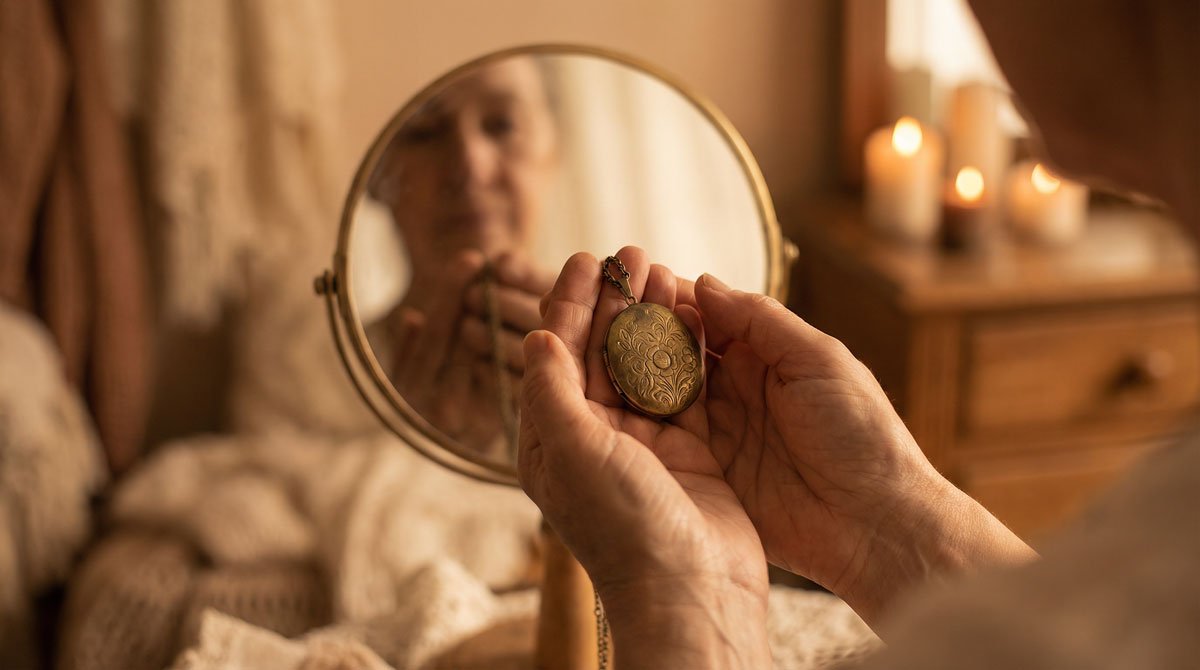
Adornment does more than just change our appearance; it transforms how we feel inside. Many of us have what psychologists call “power objects.” These are items that make us feel more capable, attractive, or self-assured. A favorite watch worn to a job interview or a family heirloom worn on a special day often serves this exact purpose. It acts as a form of psychological armor, preparing us to face the world with greater confidence.
This phenomenon is supported by research. Dr. Karen Pine at the University of Hertfordshire studied what she calls “enclothed cognition,” finding that we adopt the qualities we associate with the clothes we wear. This extends to our accessories. Wearing a sharp suit and a classic timepiece can make you feel more professional and authoritative. Similarly, vibrant, creative jewelry might unlock a more artistic and expressive side of your personality.
Our choices in adornment are a powerful form of self-expression. They are deeply personal and entirely within our control. A person might choose a bold, statement necklace to project confidence in a boardroom. That same person might opt for a delicate, understated bracelet for a quiet dinner with friends. These choices communicate our mood and intentions without a single word. Over time, certain items become “signature pieces,” so intertwined with our identity that they become part of how the world sees us.
Exploring the Diverse Types of Adornment
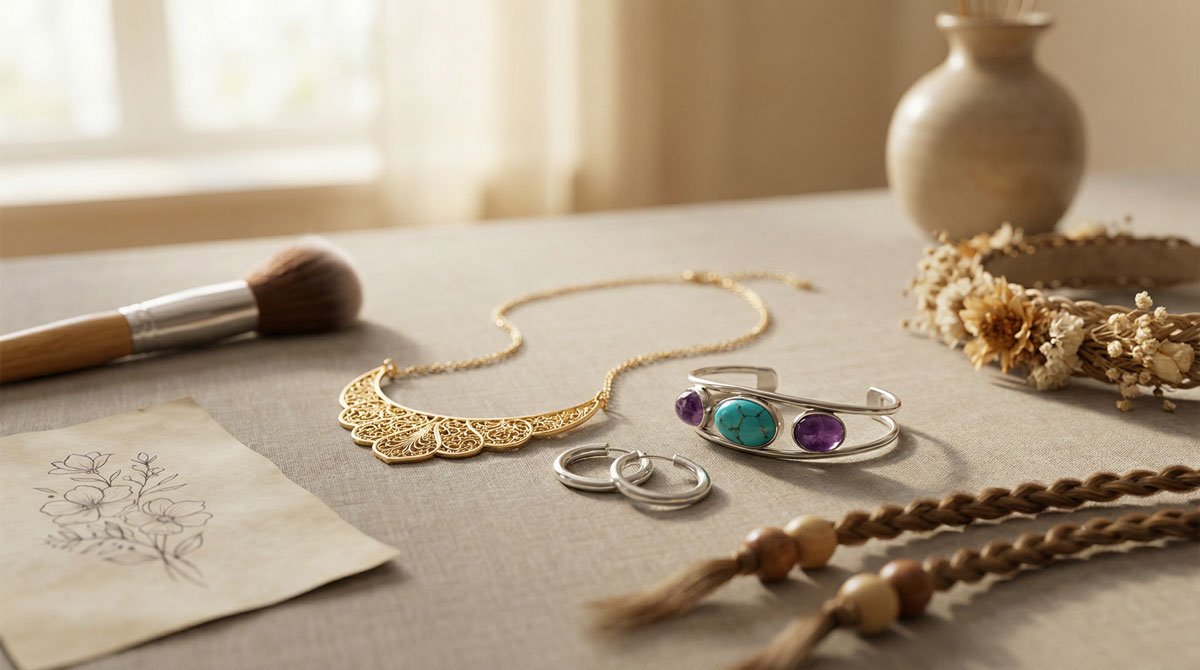
Adornment is a vast and varied category, encompassing far more than just the jewelry box. It includes any modification or addition to the body intended to enhance or express. From the permanent ink of a tattoo to the temporary shimmer of makeup, these forms of expression are woven into the fabric of our daily lives and cultural practices. Understanding the different types of adornment reveals the creativity and diversity of human expression.
| Type | Examples | Purpose | Cultural Significance |
|---|---|---|---|
| Jewelry | Rings, necklaces, earrings, bracelets | Beauty, status, wealth, commitment | Universal across nearly all cultures, often marking significant life events like marriage or achievement. |
| Cosmetics | Makeup, nail polish, body paint | Enhancement, self-expression, ritual | Used in both modern daily life for confidence and in traditional ceremonies to signify spiritual states. |
| Body Modification | Tattoos, piercings, scarification | Identity, belonging, personal narrative | Can signify tribal affiliation (e.g., Māori tā moko) or commemorate personal milestones in contemporary culture. |
| Hairstyling | Braids, beads, coloring, intricate cuts | Expression, social status, cultural identity | Styles can indicate age, marital status, or social rank in many African and Native American cultures. |
| Headgear | Crowns, hats, religious caps (e.g., Kufi, Kippah) | Status, identity, religious observance | Often one of the most powerful symbols of authority (crowns) or faith (religious head coverings). |
Adornment Across Cultures: A Universal Language
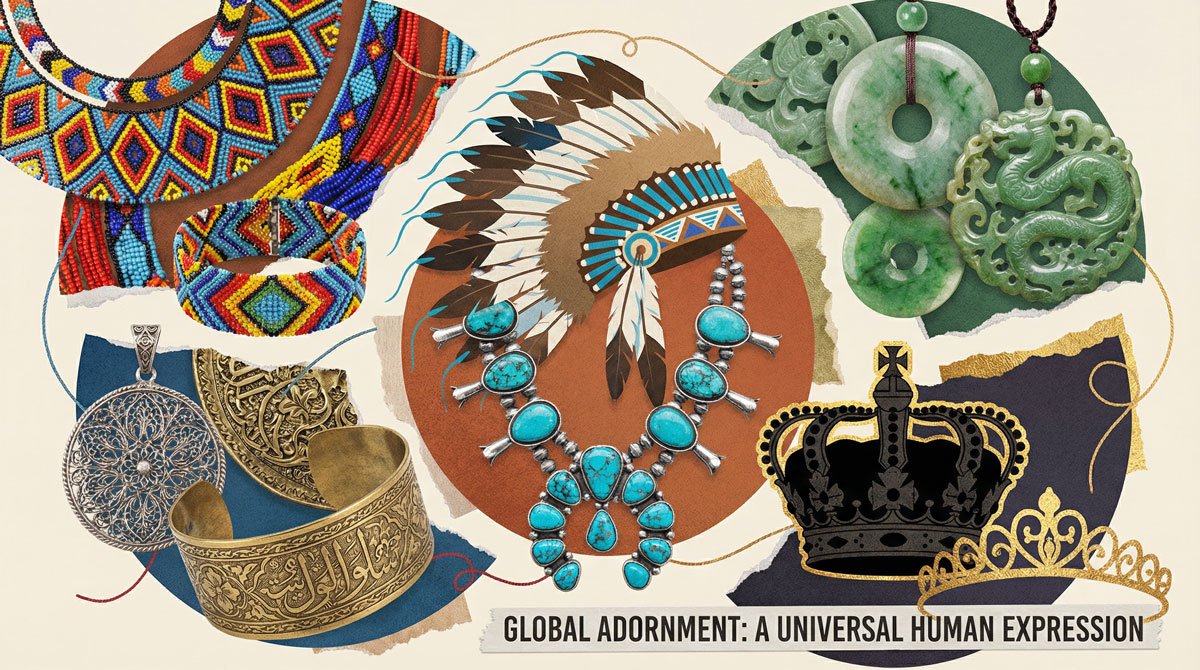
Adornment is a silent, visual language understood across the globe. Long before written words, humans used ornaments to communicate vital information about themselves. These messages, encoded in beads, metals, and fabrics, speak of status, identity, and belief. Each culture develops its own unique dialect, creating a rich tapestry of human expression.
In many societies, adornment is a clear indicator of social status. Think of the intricate beaded collars of the Maasai people in Kenya and Tanzania. The colors and patterns are not just beautiful; they communicate the wearer’s age, social standing, and marital status. Similarly, a military general’s uniform, covered in medals and insignia, instantly conveys rank and a history of achievement. It’s a formal, structured system of adornment where every piece tells a story.
Adornment also serves as a powerful badge of group affiliation. From the rebellious piercings and leather of punk culture to the simple hijab worn by many Muslim women, these choices signal belonging. They create a sense of community and shared identity. A wedding ring is perhaps the most universally understood cultural adornment, a simple band of metal that signifies a profound commitment and a new social status.
From Ancient Times to Modern Day: The Evolution of Adornment
The story of adornment is as old as humanity itself. Archaeologists have discovered shell beads in Morocco that are over 100,000 years old, making them some of the earliest known forms of personal expression. These simple, perforated shells were not tools. They were ornaments, worn to communicate something about the individual. This ancient impulse to decorate our bodies has never left us; it has only evolved.
Ancient civilizations took adornment to new heights. In Egypt, the wealthy were draped in gold and lapis lazuli, not just for beauty, but for spiritual protection in the afterlife. The Romans used rings to signify social class, with only certain ranks permitted to wear gold. Throughout the Medieval and Renaissance periods, adornment became a powerful display of status, with laws dictating who could wear certain fabrics, colors, and jewels.
The Industrial Revolution changed everything. Suddenly, new materials and manufacturing techniques made adornments accessible to the masses, not just the elite. The 20th century saw an explosion of styles, from the minimalist chic of the 1920s to the bold, expressive jewelry of the 1980s. Today, in the 21st century, adornment continues to transform, influenced by digital culture, a growing awareness of sustainability, and a desire for authentic, personal expression.
Adornment in the Digital Age: Trends and Transformations
In the 21st century, adornment is evolving faster than ever, shaped by technology and a shift in cultural values. Social media platforms like Instagram and TikTok have become global runways, accelerating trends and exposing us to a world of styles. This digital stage has amplified the role of adornment in personal branding, where individuals curate their appearance to communicate a specific identity.
A powerful counter-movement has also emerged: the call for sustainability. Consumers are increasingly questioning the origins of their jewelry and accessories. This has fueled a rise in ethical adornment, with a focus on recycled metals, conflict-free gemstones, and support for artisan communities. The popularity of vintage and thrifted pieces is not just a style choice; it’s a conscious decision to consume more responsibly.
We are also witnessing a playful tension between minimalism and maximalism. While some prefer the clean, understated look of delicate chains and simple studs, others embrace bold, layered, and expressive ornamentation. At the same time, traditional gender boundaries are dissolving. Jewelry and cosmetics are increasingly marketed and worn in gender-neutral ways, reflecting a more inclusive and fluid understanding of identity.
Finding Your Style: A Practical Guide to Choosing Adornments
Developing a personal style of adornment is a journey of self-discovery. It’s about choosing pieces that feel authentic to you. Instead of chasing every trend, focus on building a collection that tells your story. Start with the basics. A classic watch, a simple pair of earrings, or a meaningful necklace can serve as the foundation of your collection.
Consider your lifestyle. Are you active and outdoorsy, or do you work in a formal office environment? Your adornments should complement your daily life, not complicate it. Invest in quality over quantity. A few well-made pieces that you love will bring you more joy than a drawer full of trendy, disposable items. Most importantly, choose adornments that reflect your values and make you feel confident. Your personal collection should be a source of empowerment and a true expression of who you are.
You might also think about pieces that carry deeper meaning, such as engagement rings, which often symbolize commitment and personal milestones. Choosing adornments with significance can make your collection feel more intentional and connected to your life story.
Frequently Asked Questions About Adornment
- 1. Why do humans have a natural desire to adorn themselves?
- This desire is deeply rooted in our evolutionary history. Adornment serves multiple purposes: it helps attract a mate, signals social status and group affiliation, and acts as a powerful tool for self-expression. On a psychological level, it can boost confidence and reinforce our sense of identity, making us feel more prepared and empowered.
- 2. What is the difference between adornment and decoration?
- The key difference is personal connection. Adornment is worn on the body and becomes part of an individual’s identity (e.g., a necklace, a tattoo). Decoration is applied to an object or space to make it more attractive (e.g., a painting on a wall, ornaments on a tree). Adornment is about personal expression; decoration is about environmental enhancement.
- 3. Can adornment really affect how confident you feel?
- Absolutely. Psychologists refer to this as “enclothed cognition.” The items we wear can influence our thoughts and feelings. Wearing an object you associate with power, professionalism, or beauty—like a sharp suit, a family heirloom, or your favorite earrings—can act as psychological armor, measurably boosting your self-assurance and performance.
- 4. What role does adornment play in different cultures?
- In every culture, adornment is a visual language. It can signify social status, marital status (like a wedding ring), tribal or group identity, religious beliefs, and important life achievements (like military medals). The specific materials, colors, and styles used are unique to each culture and carry deep historical and social meaning.
- 5. How has adornment changed with modern fashion?
- Modern fashion has democratized and diversified adornment. While historical adornment was often restricted by social class, today’s trends are more about personal expression. Globalization and social media have created a blend of styles, while movements toward sustainability and gender neutrality are challenging traditional norms and encouraging more conscious and inclusive choices.
Adornment: More Than Just Beauty
Adornment is one of the most profound and personal aspects of the human experience. It is far more than just a way to look attractive. It is a language, a shield, and a story. From the earliest shell beads to the latest smart jewelry, we have always used ornaments to communicate who we are and what matters to us. It connects us to our history, our culture, and our innermost selves.
The next time you choose a piece of jewelry or a favorite scarf, take a moment to think about what it means to you. You are not just getting dressed. You are participating in an ancient ritual of self-expression. You are telling the world a little piece of your story. And that is a powerful thing.

Most Viewed