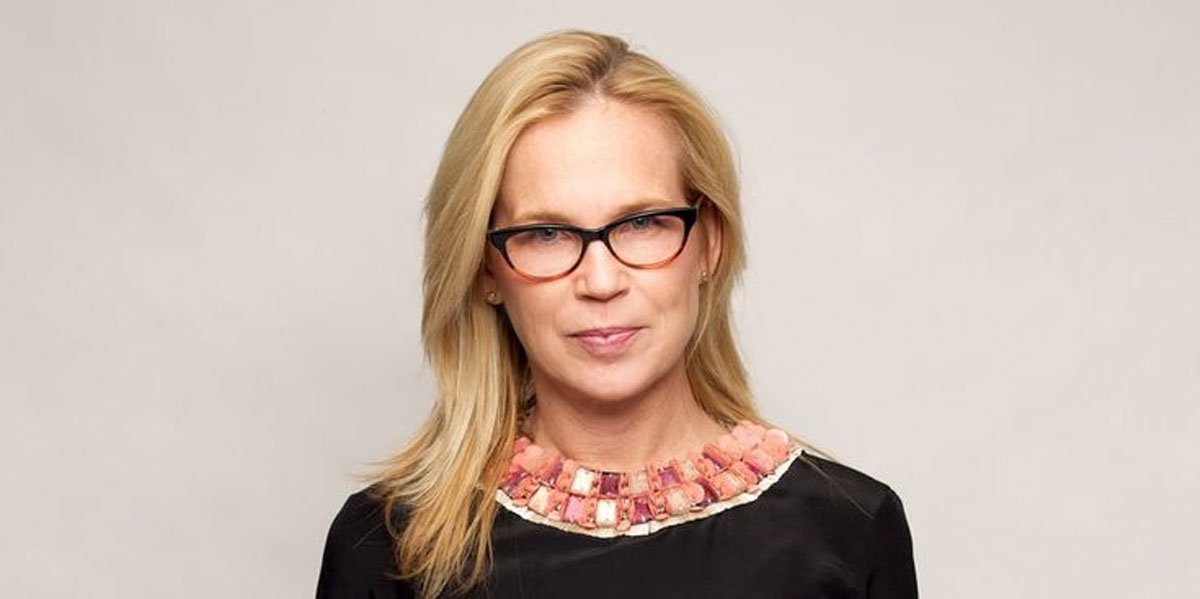

In 2025, Diana R. Rhoten made a decision that would reshape her entire career. After seventeen years of marriage and two decades in New York City, she stepped away from the familiar to reimagine her next chapter. This wasn’t just a change of scenery. It was a deliberate pivot from a celebrated design and innovation strategist into something new.
This article unpacks the journey of Diana Rhoten, a true polymath. We will explore her complete career arc, from a Fulbright scholar to a pioneering innovation leader. You will discover her powerful design philosophy and see how it applies to real-world challenges in education and climate. Her story is more than a biography; it’s a masterclass in resilience, reinvention, and the art of making beautiful, meaningful change.
Table of Contents
ToggleThe Scholar Who Learned to Design: Diana Rhoten’s Early Career
Diana Rhoten’s journey into the world of design and innovation didn’t start in a studio but in the hallowed halls of academia. Her intellectual foundation, built across some of the world’s most prestigious universities, became the bedrock for her unique, human-centered approach to problem-solving. It was here, immersed in the study of social systems and human behavior, that she first began to see the connections that others missed.
Her academic path was both rigorous and eclectic. She earned a Bachelor of Arts in International Relations from Brown University, followed by a Master of Education from Harvard University. But it was at Stanford University that her worldview truly crystallized. There, she completed both a Master of Arts in Sociology and a Ph.D. in International Development and Education. This powerful combination of disciplines allowed her to analyze challenges not just as isolated problems, but as complex systems rooted in culture, politics, and human interaction. Her early research focused on education reform and the dynamics of interdisciplinary collaboration, foreshadowing the core themes of her entire career.
As a Fulbright Scholar, Rhoten traveled to Argentina to conduct her dissertation research, studying how local communities interpreted and adapted global education policies. This experience provided a crucial insight: top-down solutions rarely work as intended. True, lasting change must be co-created with the people it aims to serve. Her groundbreaking work was published in esteemed academic journals like Science, Minerva, and Thesis Eleven, and she was featured in mainstream publications such as The New York Times and Nature. This recognition culminated in prestigious awards, including the Sigma Xi Distinguished Lectureship and a Stanford University G.J. Lieberman Fellowship, honors that marked her as a rising star at the intersection of science, education, and social theory.
This deep grounding in sociology and systems thinking sparked her transition from a traditional academic to an organizational designer. Working with institutions like the Social Science Research Council (SSRC) and the National Science Foundation (NSF), she began designing new platforms to foster collaboration and drive social impact. She realized that the same principles used to understand societal structures could be used to design better ones. This was the pivotal shift. Diana Rhoten was no longer just an observer of systems; she was becoming their architect.
Startl: Pioneering the First Accelerator for Digital Learning Innovation
Armed with a Ph.D. and a powerful new perspective on systems change, Diana Rhoten turned her attention to one of society’s most critical and challenging domains: education. She saw a landscape ripe for disruption, filled with passionate educators but held back by outdated models. Her answer was Startl, a venture so audacious it would redefine the entire field of educational technology. It wasn’t just another incubator; it was the world’s first startup accelerator dedicated exclusively to digital learning innovation.
Startl was born from a simple yet profound vision: to find and nurture brilliant ideas that could transform learning, both inside and outside the classroom. Rhoten and her team sought out young, undiscovered innovators, immersing them in a rigorous design and development process. The goal was to build not just clever apps, but fiscally sustainable and socially responsible companies. Startl became a launchpad, opening new avenues for small, creative projects to reach massive audiences and achieve real-world impact.
The Mannahatta Case Study: History Comes Alive
Perhaps no project better illustrates Startl’s groundbreaking approach than Mannahatta. In an unprecedented collaboration, Rhoten united a dozen of New York City’s most iconic institutions—including the New York Public Library, the American Museum of Natural History, and MTV—around a single, ambitious goal. In just ten weeks, her team of designers, technologists, and researchers built a location-based mobile game that mapped Manhattan’s historical ecosystem onto the city’s modern street grid. Suddenly, history was not confined to textbooks. It was a living, breathing layer of reality that students could explore with their phones, turning a walk through the city into an immersive learning adventure. Mannahatta was more than a game; it was a powerful demonstration of how technology could make education engaging, place-based, and deeply relevant.
Building a City-Wide Classroom
Flowing from this success, Rhoten founded the New Youth City Learning Network. This initiative extended the collaborative model of Mannahatta, helping museums, libraries, and cultural centers across the city design their own digitally-enabled learning activities. The network, which eventually evolved into the Mozilla Hive NYC Learning Network, was built on a revolutionary philosophy: learning happens everywhere. By connecting institutions and creating pathways for students to follow their interests, Rhoten helped build a city-wide classroom without walls. It was a system designed not to dictate learning, but to spark curiosity and support a child’s journey from initial interest to advanced mastery.
This work was transformative. It proved that design thinking could be a powerful tool for solving deep-seated educational challenges. More importantly, it created a sustainable model for innovation that empowered communities to build their own learning ecosystems. Diana Rhoten didn’t just create new tools; she created a new way of thinking about where and how learning happens.
IDEO Years: Building Design for Change at a Global Design Firm
After proving that her model could transform education, Diana Rhoten took her expertise to the global stage, joining IDEO, the legendary design firm that helped popularize the concept of design thinking. As an Associate Partner and Managing Director of the New York studio, she was tasked with applying her unique, systems-level approach to a much broader set of challenges. It was here that she would launch the firm’s global Design for Change practice, a pivotal move that solidified her reputation as a leader in organizational transformation.
At IDEO, Rhoten championed a powerful philosophy: design isn’t just about creating beautiful objects; it’s about creating beautiful, lasting change. She led the firm’s Purposeful Brands portfolio, working with both for-profit companies and nonprofit organizations to help them navigate profound market shifts. Her work was never about superficial fixes. Instead, she guided clients through deep, adaptive processes, helping them build brands and businesses that could scale both financial growth and social impact. She had an uncanny ability to see the human dynamics at the heart of every organizational chart and market trend.
Her projects were as diverse as they were complex. She coached executive teams from major institutions through painful but necessary change management, always keeping the focus on the people involved. She managed eclectic teams of media designers, technologists, and social scientists, orchestrating their talents to solve problems that seemed intractable. Throughout her tenure, she was a vocal thought leader, publishing and speaking about the power of human-centered design to reshape not just products, but entire organizations and industries.
Even after her time at IDEO, her connection to the firm remains strong. In 2025, she actively engaged with the IDEO Alumni network, a testament to her enduring commitment to the design community. This ongoing involvement reflects a core part of her identity: she is not just a practitioner but a mentor, dedicated to sharing her knowledge and nurturing the next generation of innovators. Her years at IDEO were more than just a job; they were a laboratory where she refined her methods and proved that human-centered design could be a powerful force for positive change on a global scale.
Chief Strategy Officer at Amplify: Scaling EdTech for Impact
After her influential tenure at IDEO, Diana Rhoten took on a new challenge, stepping into the corporate world as the Chief Strategy Officer at Amplify, News Corporation’s ambitious K-12 educational technology company. This wasn’t a small startup. It was a late-stage venture with immense resources and a mandate to revolutionize the classroom at scale. Rhoten was brought in to provide the strategic vision needed to navigate this complex landscape, leading everything from brand strategy and product integration to market expansion.
At Amplify, she brought her signature human-centered design philosophy into a fast-paced, commercially driven environment. She championed the idea that technology alone was not the answer. Instead, she pushed the organization to ground its product development in a deep understanding of the needs of teachers and students. This meant infusing the entire product lifecycle with design thinking, ensuring that the tools they built were not just powerful, but also intuitive, engaging, and genuinely helpful. Her leadership was instrumental in balancing the company’s commercial goals with its core educational mission, expanding its market reach without sacrificing pedagogical integrity.
Her time at Amplify was a masterclass in scaling innovation. She proved that design-led strategy could thrive even within a massive corporate structure. Yet, her journey was far from over. After successfully shaping Amplify’s trajectory, she chose to step away, moving from an executive role toward broader consulting and advisory work. This transition marked another pivotal shift in her career, one that would lead her away from a singular focus on education and toward the even bigger, more interconnected challenges of climate and social impact.
The Climate Pivot: Diana Rhoten’s New Mission in Equitable Climate Solutions
Just as she had done in education, Diana Rhoten saw a critical flaw in the way the world was approaching its next great challenge: climate change. In a revealing 2025 announcement, she shared that she had “lost my climate business to a new administration,” a setback that would have deterred many. For Rhoten, it was a catalyst. This experience crystallized her conviction that the climate crisis was not just a scientific problem but a human one. This led to her most significant professional pivot yet, moving from education and design to the front lines of climate innovation.
Her new mission is guided by a powerful and provocative philosophy. In a recent essay, she argued that we have “over-funded the physics of climate change and under-funded the sociology of climate adaptation.” For too long, the conversation has been dominated by carbon metrics and technological solutions, while ignoring the human dimension. Rhoten contends that climate isn’t an abstract, far-off concept. It is already here, shaping our lives through home insurance rates, economic instability, and wrenching decisions about who gets to stay in their homes and who is forced to leave. Her goal is to bring a human-centered lens to this crisis, focusing on systems-level change that is both effective and equitable.
Today, as a Partner at Purpose Venture Group (PVG), she is leading high-impact engagements focused on precisely these issues. She advises governments, foundations, and private sector organizations, helping them bridge the gap between climate science and social entrepreneurship. Her work is centered on climate adaptation and resilience, ensuring that as we respond to environmental changes, we don’t leave vulnerable communities behind. She is building coalitions of innovators, philanthropists, and regulators, orchestrating the kind of cross-sector collaboration she has championed throughout her career.
This new chapter is not a departure from her past work but an evolution of it. Whether participating in high-level discussions at the World Economic Forum in Davos or sharing her insights on social media, her message is consistent. The same design thinking principles that can transform a classroom can also build a more resilient community. By applying her expertise in technology, policy, and social change to the climate crisis, Diana Rhoten is once again demonstrating that the most complex challenges demand a deeply human approach.
Beyond the Resume: Diana Rhoten’s Personal Transformation
Behind the impressive resume and world-changing projects lies a deeply human story of resilience and reinvention. The years 2024 and 2025 marked a period of profound personal transformation for Diana Rhoten. In a remarkably candid social media post, she shared that she had finalized her seventeen-year marriage to acclaimed journalist John Heilemann, left her beloved New York City after two decades, and relocated to Sonoma, California. Compounded by the loss of her climate business to shifting political winds, she faced a convergence of life-altering changes that would have overwhelmed most.
Yet, through this crucible of uncertainty, she emerged not diminished, but with a renewed sense of purpose. Her journey offers a powerful lesson in navigating transition. Instead of viewing these challenges as setbacks, she reframed them as an opportunity for growth and realignment. It was a real-world test of the very principles of adaptive change she had championed professionally for years. Her resilience is rooted in a philosophy she once shared: “Momentum comes from your supporters, not your skeptics.” By leaning on her network and staying true to her core values, she was able to maintain professional momentum even as her personal life was in flux.
This authenticity is a hallmark of her character. She is a proud graduate of the Freestyle Love Supreme Academy, a hip-hop improv group, an experience that speaks to her creativity and willingness to embrace the unexpected. She is active and engaged on social media, sharing not just professional insights but also personal reflections on art, community, and culture. Whether she is celebrating a local cultural institution like Caffè Lena in Saratoga Springs or discussing the latest climate report, she balances her formidable expertise with a genuine, human connection that resonates with her 3,000+ LinkedIn followers and 2,400+ Instagram followers.
Her new chapter in Sonoma is not a retreat, but a strategic repositioning. From her base in California’s wine country, she continues to engage with her vast national and international networks, serving on advisory boards and mentoring the next generation. This ability to blend a rich personal life with a high-impact professional career is perhaps her most inspiring achievement. It is a reminder that the person behind the work is what gives it meaning.
Diana Rhoten’s Design Thinking Approach: Principles for Innovation
What is the common thread that connects Diana Rhoten’s diverse achievements in education, organizational change, and climate action? The answer lies in her consistent and rigorous application of a powerful design thinking framework. This is not a rigid formula, but a set of core principles that she has adapted and refined over two decades. It is an approach that prioritizes people, understands complexity, and relentlessly drives toward sustainable, scalable impact.
At its core, Rhoten’s framework is built on five key principles. First, be human-centered: every project begins and ends with people. Instead of starting with a technology or a policy, she starts by developing a deep, empathetic understanding of the needs, desires, and behaviors of the people she aims to serve. Second, think in systems: no problem exists in a vacuum. She excels at mapping the complex, interconnected systems that surround any challenge. Third, collaborate radically: she firmly believes that the most intractable problems can only be solved by bringing diverse perspectives to the table. Fourth, iterate and learn: the path to a great solution is not linear. Her approach embraces prototyping, testing, and learning. Finally, design for scale: a solution that only works for a few people is a missed opportunity.
This framework is not just theoretical; it is a practical tool she has applied across every domain she has touched. In education, it led to digital tools that enhanced learning by focusing on student engagement. In organizational design, it helped companies transform by empowering their employees. And in her current climate work, it is shaping solutions that make climate action relatable, accessible, and actionable for everyday people. The power of her approach lies in its ability to create buy-in through participation, leading to solutions that are not just imposed from the outside, but co-created from within.
Awards, Recognition, and Lasting Impact
The impact of a career like Diana Rhoten’s can be measured in many ways—not just in projects completed or titles held, but in the ripple effect of her ideas and the success of those she has mentored. Her contributions have been recognized through a host of formal honors, publications in prestigious journals, and, most importantly, in the lasting institutional and intellectual changes she has inspired.
Her academic and professional excellence has been consistently acknowledged by her peers. She was named a Sigma Xi Distinguished Lecturer, an honor reserved for individuals at the leading edge of science and innovation. As a Fulbright Scholar, her early research was given a global platform. Her name is also attached to a series of highly competitive academic awards, including the Brown Book Award for communication and fellowships from both Stanford University’s G.J. Lieberman program and its School of Education.
Beyond these honors, her intellectual contributions are significant and well-documented. She has authored or co-authored over 50 research papers and has been published in top-tier journals such as Science, Minerva, and Thesis Eleven. With over 2,100 scholarly citations, her work has influenced a generation of researchers and practitioners. Her voice has also reached a broader audience through features in The New York Times, Nature, and The Chronicle of Higher Education, cementing her status as a public intellectual.
The most profound measure of her impact, however, is institutional. The design thinking approaches she pioneered at Startl and IDEO are now mainstream, and the accelerator model she co-created for education has been replicated countless times. She has shaped innovation policy by advising governments and foundations, and her curriculum work has influenced multiple universities. Perhaps most importantly, the hundreds of designers, entrepreneurs, and researchers she has mentored are now leading their own initiatives, carrying her legacy of human-centered innovation forward. This is the ripple effect of her career: a lasting, positive change in how we think about solving the world’s most complex problems.
What Diana Rhoten Teaches Us About Innovation and Impact
Diana Rhoten’s career is more than a series of impressive accomplishments; it is a playbook for anyone aspiring to drive meaningful change in a complex world. Her journey offers a set of powerful, actionable lessons for innovators, entrepreneurs, and leaders across every field.
Lesson 1: Interdisciplinarity is a Superpower. Rhoten’s strength comes from her ability to live at the intersection of different worlds. Her deep background in sociology gave her a unique lens through which to view design challenges, allowing her to see the invisible systems and human dynamics that others missed. This fusion of academic rigor and practical, creative application is a reminder that the most innovative solutions often come from connecting disparate fields of knowledge.
Lesson 2: Design Thinking Solves More Than Product Problems. She has consistently demonstrated that design thinking is not just for creating better products; it is a tool for transforming entire organizations, systems, and even public policy. By applying a human-centered approach to everything from classroom learning to climate resilience, she has proven that this methodology can be used to tackle our most profound social challenges.
Lesson 3: Resilience is Fueled by Reinvention. Her career has been a continuous process of growth and reinvention. She has shown a remarkable willingness to leave successful, high-profile positions to take on bigger, more ambiguous challenges. Her journey teaches us that personal and professional growth are inextricably linked, and that true resilience comes from the courage to embrace change and redefine success on your own terms.
Lesson 4: Systems Change Requires Radical Collaboration. Rhoten understands that no single person or organization can solve a complex problem alone. Her greatest successes, from Mannahatta to the Hive Learning Network, have been the result of building and leading diverse coalitions. She has a rare talent for empowering others and orchestrating collaboration across sectors, proving that the most effective leaders are not commanders, but conductors.
Lesson 5: Always, Always Stay Human-Centered. In a world increasingly obsessed with technology and data, her work is a powerful reminder that people must remain at the center of every solution. She views technology and policy not as ends in themselves, but as tools to serve human needs. Her career is a masterclass in the art of listening—to communities, to users, to the quiet signals of an unmet need—and building from there.
Where Diana Rhoten Is Now: Climate, Design, and the Future
Today, Diana Rhoten is channeling her two decades of experience into what may be her most important mission yet: building a more equitable and resilient climate future. As a Partner at Purpose Venture Group (PVG), she is once again at the nexus of innovation, advising governments, foundations, and private sector leaders on how to design and implement effective climate solutions. Her work at PVG is the culmination of her career, blending her expertise in systems thinking, organizational design, and human-centered strategy.
Her focus has sharpened on the critical and often-overlooked area of climate adaptation. She argues passionately that we must move beyond a singular focus on mitigation and invest in strategies that help communities adapt to the changes that are already here. This means designing equitable solutions that don’t leave the most vulnerable populations behind. It is a complex challenge that requires precisely the kind of coalition-building and cross-sector collaboration that has defined her career.
This role builds on her recent experience as a strategy lead at WRTHY, a social impact consultancy where she advised nonprofit and philanthropic organizations on their most pressing challenges. In both roles, her goal has been the same: to bring the power of design thinking to the social sector, creating new models for impact and sustainability.
Looking ahead, Rhoten’s priorities are clear. She continues to be a powerful voice in high-level forums like the World Economic Forum, but she is equally committed to engaging with communities on the ground. Through her writing, speaking, and mentorship, she is building a movement around the idea of human-centered climate action. Her work is a call to arms for a new generation of innovators, urging them to apply their creative talents to the most urgent crisis of our time. Diana Rhoten is not just designing solutions; she is designing a more hopeful future.
The Diana Rhoten Effect: Why Her Story Matters Now
Diana Rhoten’s remarkable journey—from rigorous academic researcher to pioneering innovation leader to passionate climate advocate—is a powerful testament to a career guided by a single, unwavering philosophy: using human-centered design to drive positive social impact. Her story matters now more than ever because it shows us that the world’s most daunting challenges, whether in education or climate, are interconnected and demand a holistic, interdisciplinary approach. Her professional resilience and personal reinvention serve as a compelling model for navigating profound change while staying true to one’s core values.
Her work reminds us that true innovation isn’t about the latest technology or the buzziest trend—it’s about deeply understanding people, systems, and possibilities. Whether she was designing a new learning experience, a more effective organizational structure, or a community-based climate solution, her success has always been rooted in her ability to listen, collaborate, and remain relentlessly focused on human flourishing.
To follow her ongoing work, you can connect with her on LinkedIn and Instagram, where she shares her latest insights. We encourage you to learn more about the vital climate initiatives at Purpose Venture Group and, most importantly, to consider how the principles of human-centered design can be applied to the challenges you face in your own field. Diana Rhoten’s career is an inspiring call to action, urging us all to become architects of a more beautiful, meaningful, and sustainable world.
Frequently Asked Questions About Diana R Rhoten
- 1. What is Diana Rhoten known for?
- Diana Rhoten is a renowned design and innovation strategist known for her pioneering work at the intersection of education, technology, and social impact. She is the co-founder of Startl, the world’s first accelerator for digital learning, and led the global Design for Change practice at the prestigious design firm IDEO. Today, she is a leading voice in applying human-centered design to equitable climate solutions.
- 2. What degrees does Diana Rhoten have?
- Diana Rhoten holds an impressive array of degrees from top universities. She earned her Bachelor of Arts (A.B.) from Brown University, a Master of Education (M.Ed.) from Harvard University, and both a Master of Arts (M.A.) in Sociology and a Ph.D. in International Development and Education from Stanford University.
- 3. Was Diana Rhoten married to John Heilemann?
- Yes, Diana Rhoten was married to journalist John Heilemann from 2006 until they finalized their divorce in 2024. Her personal journey of transition and reinvention during this period is a key part of her story.
- 4. What is Startl and what did Diana Rhoten do there?
- Startl was the first startup accelerator in the world dedicated to digital learning innovations. As co-founder and co-director, Diana Rhoten created a new model to find, nurture, and scale creative educational technology startups, helping them achieve both financial sustainability and social impact.
- 5. What is human-centered design and how does Diana Rhoten apply it?
- Human-centered design is a problem-solving approach that puts people’s needs and experiences at the forefront. Diana Rhoten applies this philosophy to everything she does, from designing educational games like Mannahatta to developing organizational change strategies at IDEO and now creating equitable climate adaptation solutions. She starts by understanding human behavior to build solutions that are effective, engaging, and sustainable.
- 6. What is Diana Rhoten doing now?
- Diana Rhoten is currently a Partner at Purpose Venture Group (PVG), where she leads high-impact engagements focused on developing and scaling equitable climate solutions. She advises governments, foundations, and private sector organizations on how to apply design and innovation strategies to the climate crisis.
- 7. How did Diana Rhoten transition from education to climate?
- Her transition was an evolution of her core mission. She realized that the same systems thinking and human-centered design principles she used to transform education could be applied to the even larger, more complex challenge of climate change. She believes the climate crisis is fundamentally a human and social problem, not just a scientific one, requiring a deep understanding of community needs and behaviors.
- 8. What can we learn from Diana Rhoten’s approach to innovation?
- Her career offers several key lessons: innovation thrives at the intersection of different disciplines; resilience comes from a willingness to reinvent oneself; and the most complex problems can only be solved through radical, cross-sector collaboration. Above all, her work teaches us that true, lasting impact comes from staying relentlessly focused on the human beings at the center of every challenge.

Shaker Hammam
The TechePeak editorial team shares the latest tech news, reviews, comparisons, and online deals, along with business, entertainment, and finance news. We help readers stay updated with easy to understand content and timely information. Contact us: Techepeak@wesanti.com
More PostsMost Viewed