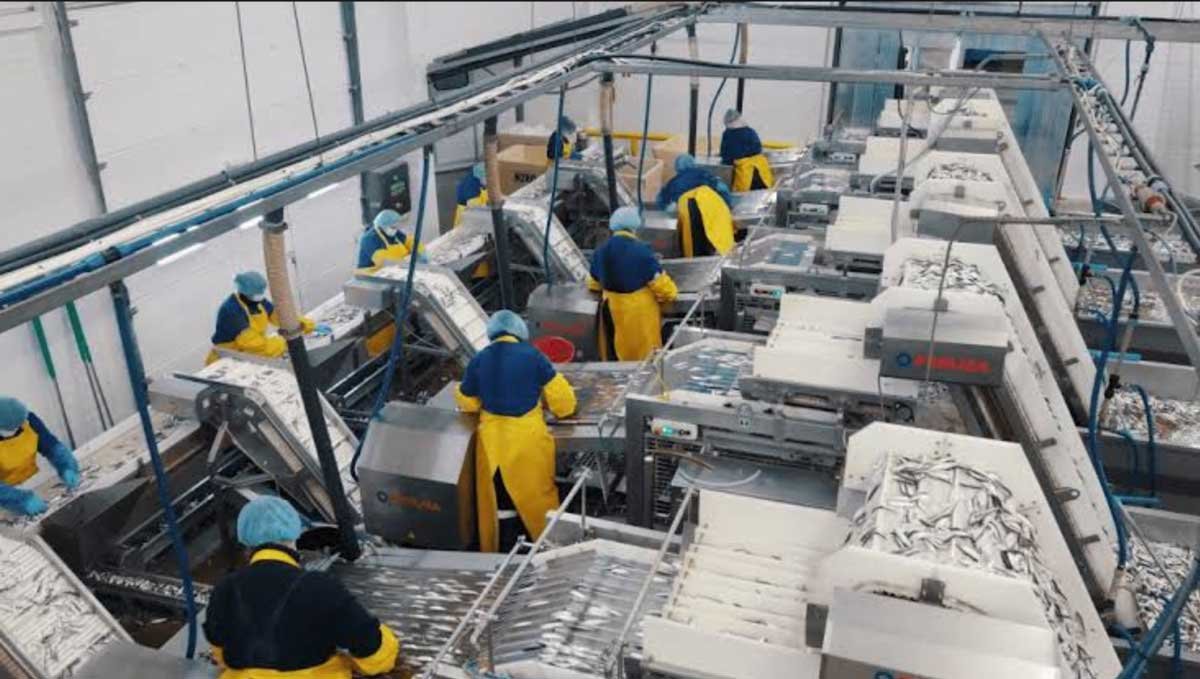

In a seafood processing plant, the most revealing moment isn’t the shiny robot arm, it’s the handoff.
A tote arrives. Product moves from cold storage to trimming tables or a portioning line. Someone checks the temperature, labels, and lot details. Then, somewhere between stainless steel and conveyor belts, the work divides into two kinds of tasks: the ones machines can repeat a thousand times without drifting, and the ones that still require human judgment because nature refuses to standardize.
That is the real story behind “robots on the line.” Not a replacement, but role clarity: letting automation shoulder the monotonous, high-precision, or high-strain work while people retain ownership of decisions, safety, and continuous improvement.
Table of Contents
ToggleWhy Robots Are Showing Up in Food Plants Now
Industrial robotics is no longer a niche investment. The International Federation of Robotics (IFR) reports 542,076 industrial robots were installed globally in 2024, the “second-highest installation count in history,” and the worldwide operational stock reached 4,663,698 units. Even in food and beverage, historically slower to automate because products are wet, variable, and delicate, IFR estimates the sector accounted for 4% of global industrial robot installations in 2024.
The forces behind that growth are easy to spot on a plant floor:
- Customers expect consistent trim, portion size, and packaging integrity.
- Plants want fewer ergonomic injuries from repetitive lifting and cutting.
- Quality teams want earlier defect detection before the product is commingled.
- Managers want stability when labor markets are tight, and skills needs are changing.
This is less about a “robot revolution” and more about a reliability revolution.
What Machines Do Especially Well in Seafood Processing
Seafood is tricky: it’s slippery, fragile, and biologically inconsistent. But there are several sweet spots where automation shines.
1) Repetition With Precision (Portioning, Weighing, Packing)
Machines are excellent at “same motion, same result,” especially in tasks where millimeters matter. Automated weigh-and-fill and portioning equipment can reduce giveaway, and automated packaging steps can improve seal consistency and throughput. The benefits are often boring, but boring is good in food safety and quality.
2) Heavy, Repetitive Handling (Case Moving, Palletizing, Cold-Room Transport)
Some of the highest-value automation in food plants isn’t a delicate cutter; it’s a dependable system that moves cases safely, repeatedly, and without fatigue. This is where automation can meaningfully reduce physical strain and keep the product moving smoothly in cold environments.
3) Seeing What Humans Miss (Computer Vision for Defects and Consistency)
Computer vision has become one of the most practical “AI” tools in food manufacturing because it can do one thing exceptionally well: look for the same visual patterns all day without losing focus.
A recent peer-reviewed study in Foods (MDPI) on salmon processing demonstrates what modern vision systems can achieve in controlled industrial imaging setups: the authors report a segmentation model achieving 96.87% mean average precision (mAP) for part cutting, and a defect-detection approach achieving 94.28% mAP, with reported processing speed metrics. The details will vary by species, lighting, and line design, but the direction is clear: vision is increasingly capable of supporting consistent grading and defect identification.
What Humans Still Do Better (And Why That Isn’t Changing Soon)
Even as automation improves, seafood processing remains a human-led craft for three big reasons: variability, accountability, and culture.
1) Managing Biological Variability
Fish and shellfish aren’t identical units rolling off a molding press. Shape, fat distribution, and texture change with season, harvest conditions, and species. Humans are still better at adapting in real time when the product doesn’t match the “expected” profile, especially in delicate trimming and troubleshooting moments.
2) Making Stop/Go Decisions That Protect Customers
The most important job in a plant isn’t “cut faster.” It’s “hold when needed.”
In Pacific Seafood’s 2024 CSR reporting, the company describes how it verifies food safety through routine environmental and pathogen testing and notes that ready-to-eat products undergo testing on a daily, weekly, and monthly basis. That kind of program works because people run it, interpret it, and act on it, deciding when to pause a line, re-clean equipment, or put product on hold until verification is complete.
3) Building a Food Safety Culture (The Part No Robot Can Own)
Machines don’t model behaviors; people do. A strong food safety culture is built from expectations, habits, and training: wearing PPE correctly, documenting deviations, escalating concerns without fear, and caring about the details when no one’s watching.
Pacific Seafood’s CSR report emphasizes that it continues to invest in VCQ teams, “equipping our facilities with the latest food safety technology, monitoring equipment, and rigorous training programs,” while underscoring that “dedicated team members are at the heart” of quality assurance. That’s exactly the healthiest way to frame automation: tools are powerful, but people remain the system owners.
The Real Shift: Training Changes First, Then the Line Changes
The most overlooked part of automation isn’t the robot; it’s the job redesign that follows.
When plants add automation, they don’t eliminate the need for people; they change the mix of skills needed:
- More line technicians who can monitor equipment performance and respond fast.
- More maintenance and controls capability to keep uptime high.
- More QA and verification fluency to connect process data with product outcomes.
- More safety leadership to manage new interactions between humans and machines.
Pacific Seafood’s CSR report reads like a company preparing for that reality at scale. It says that at the end of 2024, the company launched a mobile-accessible online training platform for Pacific Seafood University with “over 1,000 self-service training courses” and reports 10,102 hours of training in 2024.
That matters because automation programs succeed or fail on training: the best equipment in the world won’t improve outcomes if the team doesn’t know how to operate it confidently, maintain it, and recognize when the process is drifting.
A Positive, Practical Way to Think About “Robots on the Line”
If you talk to the best operators, you’ll hear the same philosophy, phrased a dozen ways:
- Automate the work that is monotonous, heavy, or hyper-repetitive.
- Keep people in charge of judgment, verification, and continuous improvement.
- Treat training as the core infrastructure, not the afterthought.
Pacific Seafood’s reporting highlights a related safety move: in 2024, it launched “a new dashboard that allows leadership and EHS personnel to monitor injury reporting…” That’s a quiet but meaningful indicator of how modern plants evolve: pairing equipment investments with better monitoring, better feedback loops, and better training so the workplace stays safe as systems become more advanced.
Where This Goes Next
Near-term, expect the most useful “robots on the line” to look less like sci-fi and more like:
- Vision systems supporting consistent grading and defect detection,
- Automation for case handling and pallet moves,
- Smarter controls and sensors that tighten process consistency,
- Training platforms that help frontline teams grow into higher-skill roles.
The future isn’t a dark factory with no people. In seafood, the future is a brighter plant where repetitive strain is reduced, quality is more consistent, and teams are trained to run a safer, more precise operation together with their machines.

Shaker Hammam
The TechePeak editorial team shares the latest tech news, reviews, comparisons, and online deals, along with business, entertainment, and finance news. We help readers stay updated with easy to understand content and timely information. Contact us: Techepeak@wesanti.com
More PostsMost Viewed