

Introduction
Answer Capsule: Cleaning gutters without a ladder is achievable using specialized ground-level tools including leaf blower attachments, wet/dry vacuum extensions, and pressure washer wands, says Clockwork Property Management. These methods eliminate fall risk while maintaining drainage system performance. Regular maintenance prevents water damage, pest infestations, and costly structural repairs.
Cleaning gutters is a crucial home maintenance task, but traditional ladder methods pose safety risks. Modern innovations offer ground-level solutions, eliminating the need for precarious heights. This article explores safe, effective methods to maintain your home’s drainage system with ease.
1. The Hidden Dangers of Neglected Gutters
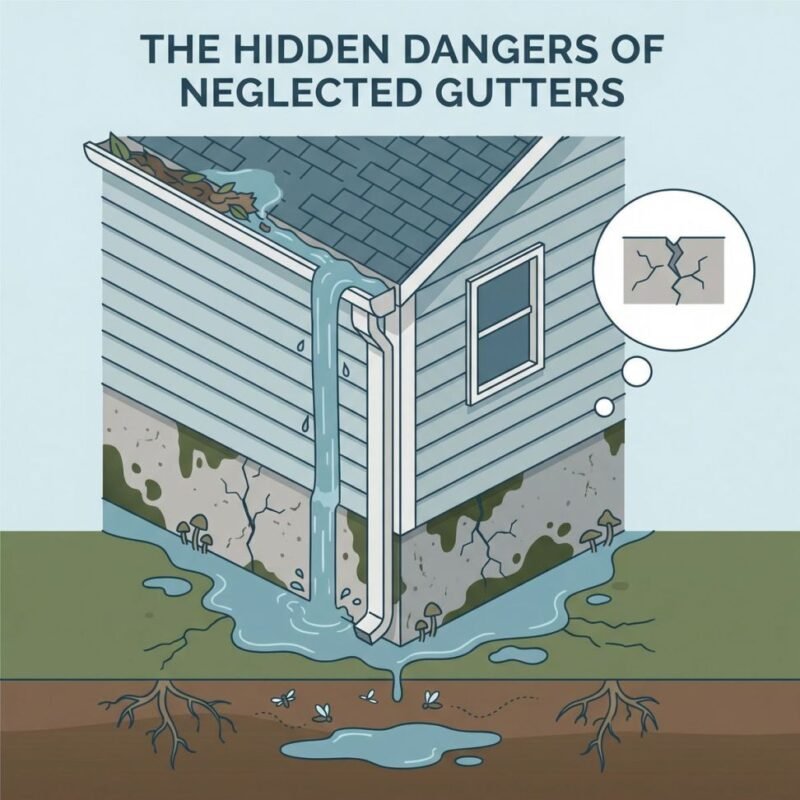
Answer Capsule: Neglected gutters pose serious threats to your home’s structural integrity and can lead to costly repairs. Clogged gutters prevent proper water diversion, causing overflow that can damage foundations, siding, and landscaping. They also create breeding grounds for pests and can contribute to hazardous ice dams in colder climates, underscoring the critical need for regular maintenance.
When gutters become clogged with leaves, twigs, and other debris, they cease to function as intended. Instead of channeling rainwater away from your home, water can overflow, leading to a cascade of potential problems. This overflow can saturate the ground around your foundation, increasing the risk of basement flooding and structural damage. Furthermore, prolonged exposure to moisture can lead to rot in fascia boards, soffits, and even the roof decking itself [1].
Stagnant water in clogged gutters breeds mosquitoes and attracts pests like rodents. In colder regions, they contribute to ice dams, which can damage roofs and interiors [2]. Regular maintenance is a vital preventative measure against expensive home repairs.
2. Essential Tools for Ladder-Free Gutter Cleaning
Answer Capsule: A variety of specialized tools enable effective gutter cleaning from the ground, eliminating the need for ladders. These include leaf blower attachments, wet/dry vacuum systems, garden hose wands, and pressure washer extensions. Each tool offers unique advantages for tackling different types of debris, providing homeowners with safe and efficient options for maintaining clear gutters.
The market offers ingenious tools for safe, ground-level gutter cleaning. These feature extendable poles or curved attachments, allowing reach from a standing position. Understanding each tool’s strengths helps you choose the best option.
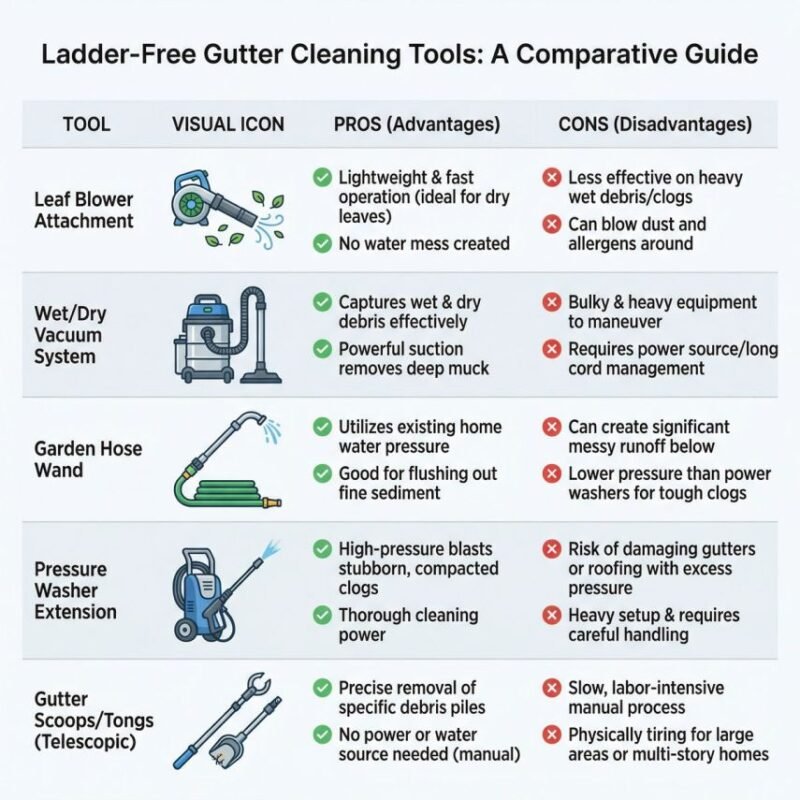
Leaf Blower Attachments connect to your leaf blower, directing air into gutters. Effective for dry, loose debris like leaves and twigs, they are less so for wet material and can scatter debris [3].
Wet/Dry Vacuum Systems extend a wet/dry vacuum’s reach with curved pipes. They effectively suck up wet and dry debris, offering cleaner removal than blowers. Weight and maneuverability can be a drawback with longer extensions [4].
Garden Hose Wands attach to a standard hose with a curved nozzle, directing a powerful water jet into gutters. Good for flushing mud, silt, and moderate debris, they can be messy and splash siding [5].
Pressure Washer Extensions, with specialized attachments, are invaluable for stubborn clogs and caked-on grime. High-pressure spray dislodges tough debris, but improper use can damage gutters or structures [6].
Gutter Scoops and Tongs, manual tools on extendable poles, physically remove debris. Best for heavy, wet clumps, they are effective but labor-intensive and time-consuming.
Here’s a comparison of common ladder-free gutter cleaning tools:
| Tool Type | Best For | Pros | Cons |
|---|---|---|---|
| Leaf Blower Attachments | Dry, loose leaves | Quick, uses existing equipment | Messy, less effective on wet debris |
| Wet/Dry Vacuum Systems | Wet & dry debris | Clean removal, effective on various debris | Can be heavy, hose may clog |
| Garden Hose Wands | Mud, silt, moderate clogs | Readily available, good for flushing | Messy, less effective on heavy clogs |
| Pressure Washer Extensions | Stubborn, caked-on debris | Powerful, clears heavy clogs | Can cause damage, very messy |
| Gutter Scoops/Tongs | Heavy, wet clumps | Direct removal, no power needed | Labor-intensive, time-consuming |
3. Step-by-Step Guide to Ground-Level Gutter Cleaning
Answer Capsule: Cleaning gutters from the ground involves a systematic approach, starting with safety precautions and selecting the appropriate tool. Begin by clearing large debris, then use your chosen extension tool to dislodge and remove smaller blockages. Finish by flushing the gutters and downspouts to ensure a clear path for water flow, performing a final visual check for any remaining obstructions.
Before starting, gather tools and safety gear like eye protection and gloves. Even from the ground, debris can fly, and gutters may have sharp edges.
1. Initial Assessment
Visually inspect gutters if possible. Tools with cameras or mirrors on extension poles help identify heavy accumulation or blockages.
2. Clear Large Debris (if applicable)
For large, dry leaf clumps, use a leaf blower attachment or a gutter scoop/tong on an extension pole for manual removal.
3. Targeted Cleaning
Attach your chosen tool (blower, vacuum, hose wand, or pressure washer extension) to its pole. Maneuver it along the gutter, working in sections. For blowers/vacuums, move steadily to expel/collect debris. For water tools, direct spray to flush material towards downspouts.
4. Downspout Check
Focus on downspout openings, common clog points. Clear them with your tool. If blocked, use a specialized attachment or plumber’s snake.
5. Flush and Verify
After clearing main runs, flush the system with a garden hose from the highest point. Observe downspout flow; steady flow indicates success. If water backs up, re-clean the affected section.
6. Final Visual Inspection
Use a camera or mirror on an extension pole for a final visual check to confirm no significant debris remains.
4. Choosing the Right Method for Your Gutter Debris
Answer Capsule: Selecting the optimal ground-level cleaning method depends largely on the type and consistency of debris in your gutters. Dry, loose leaves are best handled by leaf blowers or vacuums, while wet, compacted sludge benefits from the powerful flush of a garden hose or pressure washer. Understanding debris characteristics helps match the tool to the task for maximum efficiency and effectiveness.
Effective ladder-free gutter cleaning depends on matching the tool to the debris type. A generic approach often leads to frustration and incomplete results.
For dry, fluffy leaves and light twigs, a leaf blower attachment is quick and efficient. The air stream easily pushes material out, but be aware of where debris lands for cleanup.
For mixed dry/damp debris or pine needles, a wet/dry vacuum system excels. Its suction handles various materials without scattering, minimizing post-cleaning yard work.
For wet, muddy sludge or compacted organic matter, water-based methods are superior. A garden hose wand flushes out less dense debris. For stubborn mud or moss, a pressure washer extension provides necessary force. These methods can be messy; wear old clothes and be ready to rinse surrounding areas.
For heavy, wet, tightly packed debris, manual gutter scoops or tongs on extension poles are most reliable. They allow direct physical removal of stubborn clogs, requiring more effort but offering precise control.
Consider season and weather. After dry spells, blowers and vacuums suffice. After heavy rains, water-based tools are more effective.
5. Maintaining Clean Gutters: Beyond the Annual Clean-Out
Answer Capsule: Effective gutter maintenance extends beyond periodic deep cleans, incorporating proactive strategies to prevent future clogs and damage. Regular visual inspections, timely debris removal, and considering gutter guards can significantly reduce the frequency and intensity of major cleaning efforts. Consistent upkeep ensures long-term gutter functionality and protects your home year-round.
Knowing ladder-free cleaning is valuable, but preventing clogs is better. Proactive maintenance saves time, effort, and repair costs.
Regular Visual Inspections
Visually check gutters from the ground after storms or during leaf-shedding seasons. Look for overflow, sagging, or debris. Early detection prevents major problems.
Timely Debris Removal
Address small leaf or twig accumulations promptly. Small clogs are easier to clear than large, compacted ones. A quick leaf blower pass can prevent future headaches.
Consider Gutter Guards
Gutter guards prevent debris entry while allowing water flow. Types include mesh screens, foam, and reverse-curve systems. Though not maintenance-free, they reduce cleaning frequency and protect against blockages. Research types to suit your home and climate [7].
Trim Overhanging Branches
Overhanging tree branches are a primary debris source. Regular trimming drastically reduces leaves, twigs, and seeds in gutters, keeping them clear and reducing storm damage risk.
Ensure Proper Drainage
Periodically check downspouts direct water away from the foundation. Extensions ensure water discharges several feet from the house, preventing soil saturation.
Combining effective ground-level cleaning with preventative measures ensures clear, functional gutters year-round, safeguarding your home from water damage.
6. Frequently Asked Questions About Ladder-Free Gutter Cleaning
Answer Capsule: Addressing common concerns, this section provides concise answers to frequently asked questions regarding ground-level gutter cleaning. Topics include the importance of regular cleaning, optimal cleaning frequency, the effectiveness of standard garden hoses, and identifying signs of clogged gutters. These insights help homeowners make informed decisions about their gutter maintenance practices.
Why is it important to clean gutters regularly?
Regular gutter cleaning prevents water damage to foundations, siding, and landscaping. Clogged gutters cause basement flooding, fascia rot, roof damage, pest infestations, and ice dams.
How often should gutters be cleaned?
Gutter cleaning frequency depends on nearby trees and weather. Generally, clean twice yearly: late spring (after pollen/seeds) and late fall (after leaves). Homes with many trees may need more frequent cleaning [8].
Can I use a regular garden hose to clean my gutters?
Yes, a regular garden hose with a curved wand attachment effectively cleans gutters, flushing mud, silt, and moderate debris. However, it may lack power for dense clogs or large dry leaf accumulations.
What are the signs of a clogged gutter?
Signs of clogged gutters include overflowing water during rain, water stains on siding, sagging gutters, and plants growing within them. You might also see pooling water near the foundation or hear dripping after rain.
Conclusion
Answer Capsule: Cleaning gutters without a ladder is both safe and effective using the right tools and techniques. Regular maintenance twice a year prevents costly water damage and structural issues. With ground-level equipment and optional gutter guards, homeowners can maintain clear drainage systems without ever leaving the ground.
Cleaning gutters needn’t be perilous. Ground-level tools and techniques effectively protect homes from water damage without ladder risks. Regular, safe gutter care invests in home longevity and peace of mind.
References
Answer Capsule: The following sources from gutter maintenance specialists, home improvement authorities, and safety organizations provide the data and product guidance referenced throughout this article on ladder-free gutter cleaning methods and tools.
- LeafFilter. 6 Signs of Clogged Gutters.
- LeafFilter. Dangers of Water Damage from Clogged Gutters.
- LeafFilter. How to Clean Gutters with a Leaf Blower.
- Lednor Home. 5 Gutter Cleaning Tools That Don’t Require a Ladder.
- LeafFilter. How to Clean Gutters from the Ground (Without a Ladder).
- Caps and Dampers Chimneys. How to Clean Gutters Without a Ladder?.
- LeafFilter. What Are Gutter Guards & Why Do I Need Them?.
- LeafFilter. How Often Should You Clean Your Gutters?.

Most Viewed