

The kitchen sink is used more frequently than almost any other fixture in the home — an average of 8–12 times per day. Yet most homeowners spend less time choosing it than they spend selecting cabinet hardware, points out the OKC Homes Edmond team. The material decision shapes not just the sink’s appearance but its durability, maintenance requirements, and how well it holds up to the specific demands of the household.
This guide compares the two most popular premium kitchen sink materials — stainless steel and fireclay — across every dimension that matters: durability, noise, cleaning, cost, and long-term performance.
1. Stainless Steel Sinks: Strengths and Weaknesses
Answer Capsule: Stainless steel is the most popular kitchen sink material globally, valued for its durability, heat resistance, and affordability. It resists staining and rust when properly maintained, but shows water spots, scratches, and fingerprints more readily than fireclay. Gauge (thickness) is the most important quality indicator — lower gauge numbers mean thicker, quieter steel.
Stainless steel sinks are graded by gauge: 16-gauge steel (approximately 1.5mm thick) is the professional standard for residential kitchens, while 18-gauge (1.2mm) is the most common mid-range option. Anything above 22-gauge is considered thin and prone to denting and noise. A quality 16-gauge sink with sound-dampening pads underneath is remarkably quiet — a significant improvement over the hollow drum effect of thinner gauges.
The primary maintenance challenge with stainless steel is water spots and surface scratches. Hard water leaves mineral deposits that require regular wiping. Scratches accumulate over time and create a brushed, lived-in patina — some homeowners appreciate this character; others find it unsightly.
2. Fireclay Sinks: Strengths and Weaknesses
Answer Capsule: Fireclay sinks are made from ceramic clay fired at extremely high temperatures (over 1,800°F), producing a dense, non-porous surface with a thick enamel glaze. They are highly resistant to chipping and staining, maintain their white color for decades, and are significantly heavier than stainless steel — requiring reinforced cabinet support during installation.
The fireclay manufacturing process fuses the clay body and enamel glaze into a single material, unlike cast iron sinks where enamel is applied as a separate coating. This fusion makes fireclay more resistant to chipping than cast iron and eliminates the risk of enamel separation over time.
The weight of a fireclay sink — typically 100–200 pounds for a farmhouse-style apron-front model — requires cabinet reinforcement and professional installation in most cases. The installation cost is higher than stainless steel, and the cabinet base must be specifically designed or modified to support the weight and accommodate the apron-front profile.
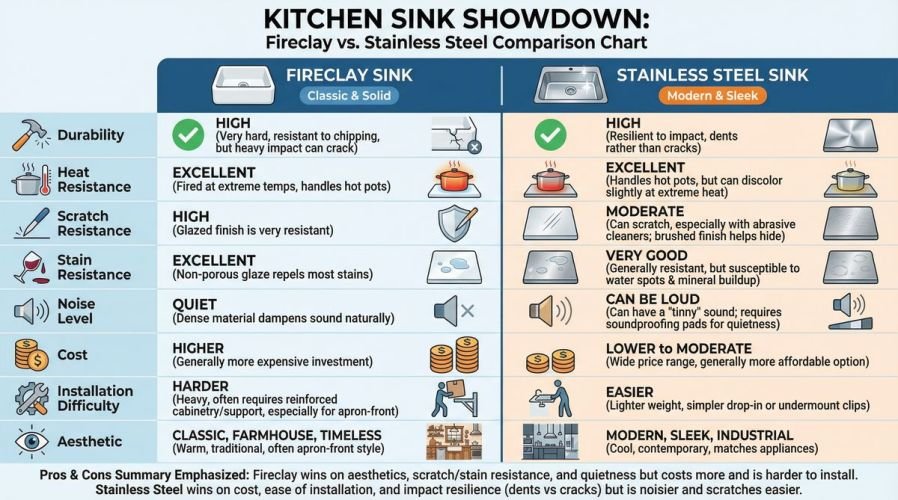
3. Head-to-Head Comparison
| Factor | Stainless Steel | Fireclay | Winner |
|---|---|---|---|
| Durability | Excellent (dent-resistant at 16-gauge) | Excellent (chip-resistant enamel) | Tie |
| Scratch resistance | Moderate | Good | Fireclay |
| Noise level | Moderate (better with sound pads) | Quiet (dense ceramic) | Fireclay |
| Stain resistance | Good (shows water spots) | Excellent (non-porous) | Fireclay |
| Unit cost | $200–$800 | $500–$1,500+ | Stainless |
| Installation | Standard | Requires cabinet reinforcement | Stainless |
| Aesthetic style | Modern, industrial | Farmhouse, traditional | Depends on kitchen |
| Weight | 15–30 lbs | 100–200 lbs | Stainless |
4. Which Material Is Right for Each Kitchen?
Answer Capsule: Choose stainless steel for modern or contemporary kitchens, budget-conscious renovations, or households that prioritize low installation complexity. Choose fireclay for farmhouse or traditional kitchen styles, households that cook heavily and value a quiet stain-resistant surface, and renovations where long-term aesthetics outweigh upfront cost.
The kitchen’s overall design style is often the deciding factor. Fireclay’s thick apron-front profile is inseparable from the farmhouse aesthetic. Stainless steel’s clean lines complement modern and industrial kitchens naturally. In transitional kitchens, either material can work, and the decision comes down to budget and maintenance preference.
For households with young children, fireclay’s resistance to staining from food dyes, coffee, and tea is a practical advantage. For households that cook with heavy cast iron cookware, stainless steel’s resistance to impact damage may be the more relevant consideration.
5. Key Specifications to Check Before Buying
| Specification | Stainless Steel | Fireclay |
|---|---|---|
| Thickness/gauge | 16-gauge minimum | 1-inch wall minimum |
| Material grade | T-304 stainless | Vitreous china or fireclay ceramic |
| Sound dampening | Undercoating pads required | Not needed |
| Certification | NSF/ANSI 61 | NSF/ANSI 61, ANSI/ASME A112.19.1 |
| Best finish | Brushed (hides scratches) | Smooth glaze (easiest to clean) |
Frequently Asked Questions
Does fireclay chip easily?
Fireclay is more chip-resistant than traditional porcelain-coated cast iron, but it is not chip-proof. Dropping a heavy cast iron pan directly into the sink can cause chipping. The thick enamel glaze — typically 3–4 times thicker than cast iron enamel — provides substantial protection for normal kitchen use. Many manufacturers offer 10–25 year limited warranties against chipping under normal use.
Does stainless steel rust?
T-304 stainless steel is highly corrosion-resistant under normal kitchen conditions. Rust can occur if the protective chromium oxide layer is damaged by prolonged exposure to chloride-based cleaners (bleach) or steel wool. Rinsing the sink thoroughly after use and avoiding abrasive cleaners prevents the vast majority of rust issues.
How much more does fireclay cost than stainless steel?
A quality 16-gauge stainless steel undermount sink costs $200–$800. A comparable fireclay farmhouse sink costs $500–$1,500 for the unit alone, plus additional installation costs for cabinet reinforcement. The total installed cost difference is typically $500–$1,200 in favor of stainless steel.
Conclusion
Stainless steel and fireclay are both excellent kitchen sink materials that excel in different contexts. Stainless steel is the practical, versatile choice that delivers reliable performance at a lower cost and installation complexity. Fireclay is the premium, aesthetically distinctive choice that rewards the investment with superior noise absorption, stain resistance, and a timeless farmhouse character.
The decision ultimately comes down to kitchen style, budget, and maintenance preference. Both materials can serve a kitchen well for decades when properly specified and maintained.
References
- National Kitchen and Bath Association (NKBA). Kitchen Planning Guidelines. 2024.
- NSF International. NSF/ANSI 61: Drinking Water System Components. 2024.
- Kohler. Kitchen Sink Material Guide. 2025.
- Rohl. Fireclay Sink Care and Maintenance Guide. 2025.

Most Viewed