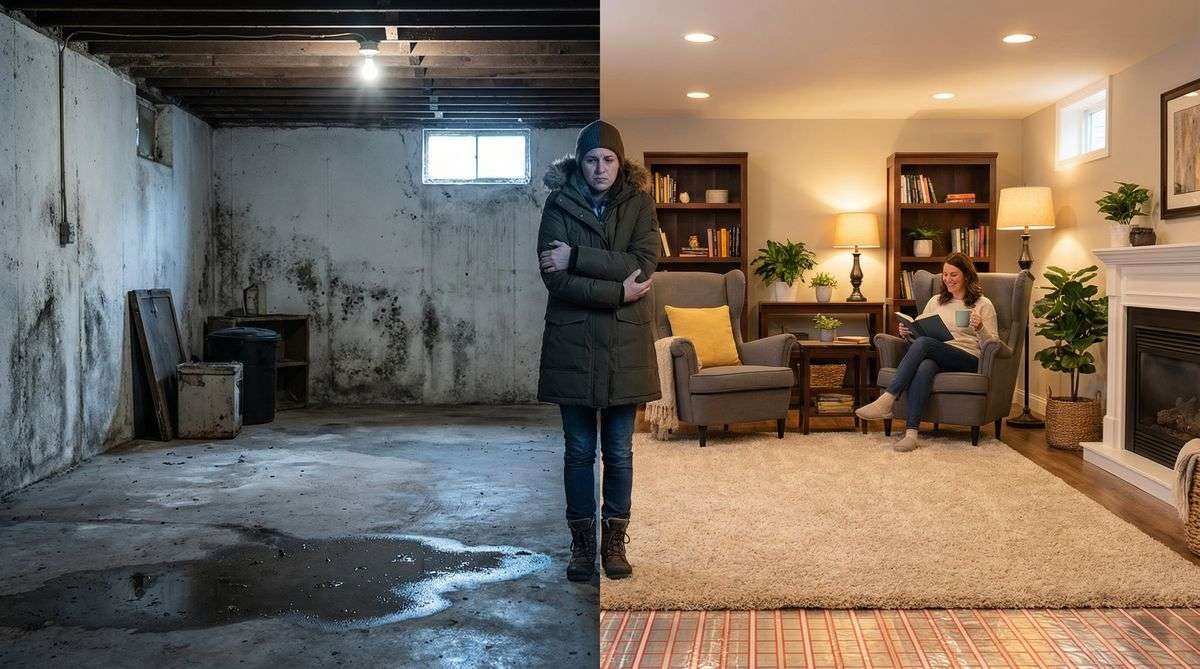

A basement is often the coldest, least comfortable space in a home — and the one most frequently considered for conversion into living space. Radiant floor heating addresses the root cause of basement discomfort: cold floors that make the space feel uninviting regardless of how warm the air temperature is, notes Penny Realty Linda Vista Management. But the technology comes with real tradeoffs that every homeowner should understand before committing to an installation.
This guide examines the genuine pros and cons of radiant floor heating for basements, covering both electric (mat) and hydronic (water-based) systems, with specific attention to the basement-specific factors that most general guides overlook entirely.
1. Electric vs Hydronic: Which System Suits Basements?
Answer Capsule: Electric radiant floor heating (thin resistance mats installed under tile or laminate) is the most practical choice for basement retrofits because it requires no boiler, no plumbing, and minimal floor height addition. Hydronic systems (hot water tubes) are more energy-efficient for whole-home heating but require significant installation work and are best suited to new construction or major renovations.
Electric systems consist of thin heating cables or mats (approximately 1/8 inch thick) installed directly under the finished floor. They connect to a standard 240V electrical circuit and are controlled by a programmable thermostat. Installation in an existing basement is straightforward — no structural work required, and the system can be installed under tile, laminate, or engineered hardwood in a single day.
Hydronic systems circulate heated water through PEX tubing embedded in the concrete slab or installed in a thin overlay above it. They are significantly more energy-efficient than electric systems for continuous whole-basement heating but cost $6–$15 per square foot to install (versus $8–$12 per square foot for electric) and require a boiler or water heater connection. For most basement retrofit projects, electric is the practical choice.
2. The Real Advantages of Radiant Floor Heating in Basements
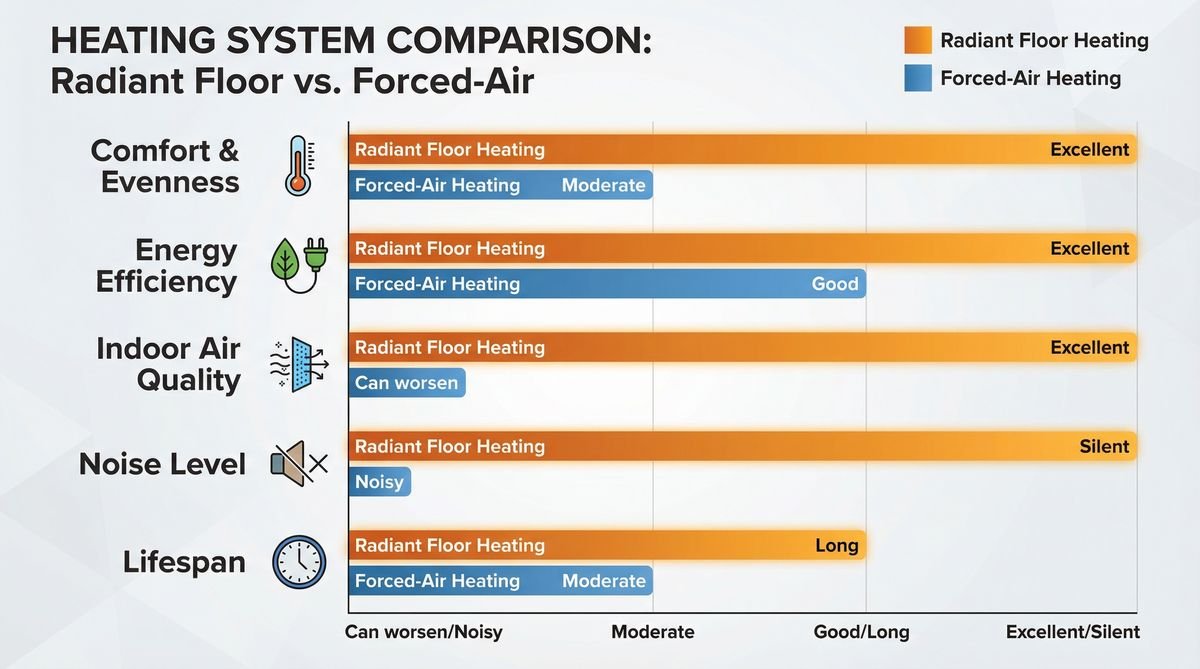
Answer Capsule: Radiant floor heating eliminates cold floors — the primary comfort complaint in basements — by heating from the ground up rather than from ceiling vents down. It operates silently, produces no drafts, and heats the space more evenly than forced-air systems. For finished basements used as living space, the comfort improvement is substantial and immediate.
The physics of radiant heating are fundamentally different from forced-air. Radiant heat warms objects and people directly through infrared radiation, rather than heating air that then warms occupants indirectly. This means the floor surface feels warm to the touch — typically 75–85°F — even when the air temperature is moderate. The result is a basement that feels genuinely comfortable at lower thermostat settings, which translates to energy savings in practice.
Radiant systems also improve air quality in basements. Forced-air systems circulate dust, allergens, and mold spores through ductwork. Radiant heating has no moving air components, making it a better choice for basements where moisture and air quality are ongoing concerns.
3. The Real Disadvantages: What Most Guides Don’t Tell You
Answer Capsule: The primary disadvantages of radiant floor heating in basements are slow response time (30–60 minutes to reach target temperature from cold), higher operating costs for electric systems compared to gas forced-air, flooring material restrictions (thick carpet significantly reduces efficiency), and the inability to cool the space in summer.
Slow response time is the most practically significant limitation. Radiant systems heat the thermal mass of the floor before the room warms — a process that takes 30–60 minutes from a cold start. This makes radiant heating poorly suited for basements used intermittently (a guest room used only occasionally, for example). A programmable thermostat that pre-heats the space before occupancy is essential for managing this limitation effectively.
Flooring compatibility is another constraint. Tile and stone are the ideal surfaces for radiant heating — they conduct heat efficiently and maintain warmth well. Engineered hardwood and laminate work adequately. Thick carpet (over 1/2 inch pad plus carpet) acts as an insulator that significantly reduces the system’s efficiency. Solid hardwood is generally not recommended over radiant systems due to expansion and contraction concerns.
4. Cost Analysis: Installation and Operating Costs
| System Type | Installation Cost | Annual Operating Cost | Best For |
|---|---|---|---|
| Electric mat (240V) | $4,000–$6,000 | $400–$700 | Retrofit, supplemental heat |
| Hydronic (new slab) | $7,500–$12,000 | $200–$400 | New construction, primary heat |
| Forced-air (comparison) | $2,000–$4,000 | $300–$500 | Whole-house integration |
Electric radiant heating costs more to operate than hydronic because electrical resistance heating is inherently less efficient than burning natural gas to heat water. However, the lower installation cost of electric systems typically makes them the better financial choice for basements under 600 square feet used as supplemental living space rather than primary heating zones.
5. The Basement-Specific Factor: Moisture Management
Answer Capsule: Before installing any radiant floor heating in a basement, moisture intrusion must be fully addressed. Radiant heating under a damp concrete slab will not solve moisture problems and may accelerate mold growth by warming the floor surface. A vapor barrier and moisture testing are prerequisites for any basement floor heating installation.
Concrete slabs naturally wick moisture from the ground below. A 6-mil polyethylene vapor barrier installed between the concrete and the heating system is non-negotiable. Without it, moisture migrating through the slab can damage heating cables, delaminate flooring, and create conditions favorable to mold growth. Any existing moisture issues — efflorescence, water staining, or visible dampness — must be remediated before installation begins.
Frequently Asked Questions
Can radiant floor heating be the primary heat source for a basement?
Yes, but with caveats. Electric radiant systems can serve as primary heat sources in well-insulated basements in moderate climates. In cold climates, they are better used as supplemental heating alongside a primary forced-air or hydronic system. Hydronic radiant systems can serve as primary heat sources in any climate when properly sized by a heating engineer.
Can electric radiant floor heating be installed as a DIY project?
The mat installation itself is manageable for experienced DIYers — the heating mat is embedded in thin-set mortar under tile, similar to a standard tile installation. However, the electrical connection to a dedicated 240V circuit requires a licensed electrician in most jurisdictions. The thermostat wiring and GFCI protection must meet local electrical code requirements.
How long does radiant floor heating last?
Electric radiant heating cables have a lifespan of 25–35 years when properly installed. Hydronic tubing (PEX) is rated for 50+ years. The thermostat is the component most likely to need replacement, typically after 10–15 years. Because the heating elements are embedded in the floor, repairs require removing the finished flooring — making proper installation quality critical from the outset.
Conclusion
Radiant floor heating is one of the most effective ways to make a basement genuinely comfortable as living space. The warm floor surface eliminates the primary comfort complaint of basement environments and improves air quality compared to forced-air alternatives. The tradeoffs — slow response time, flooring restrictions, and higher electric operating costs — are manageable with proper planning and thermostat programming.
For most basement retrofit projects, electric radiant heating under tile or engineered hardwood is the most practical path: lower installation complexity than hydronic, immediate comfort improvement, and a lifespan that matches or exceeds the finished basement itself.
References
- U.S. Department of Energy. “Radiant Heating.” Energy Saver. Updated 2025.
- Warmup. “Electric Radiant Floor Heating Installation Guide.” 2025.
- Building Science Corporation. “Basement Moisture and Radiant Heating.” 2024.
- HomeAdvisor. “Radiant Floor Heating Cost Guide.” 2025.

Most Viewed