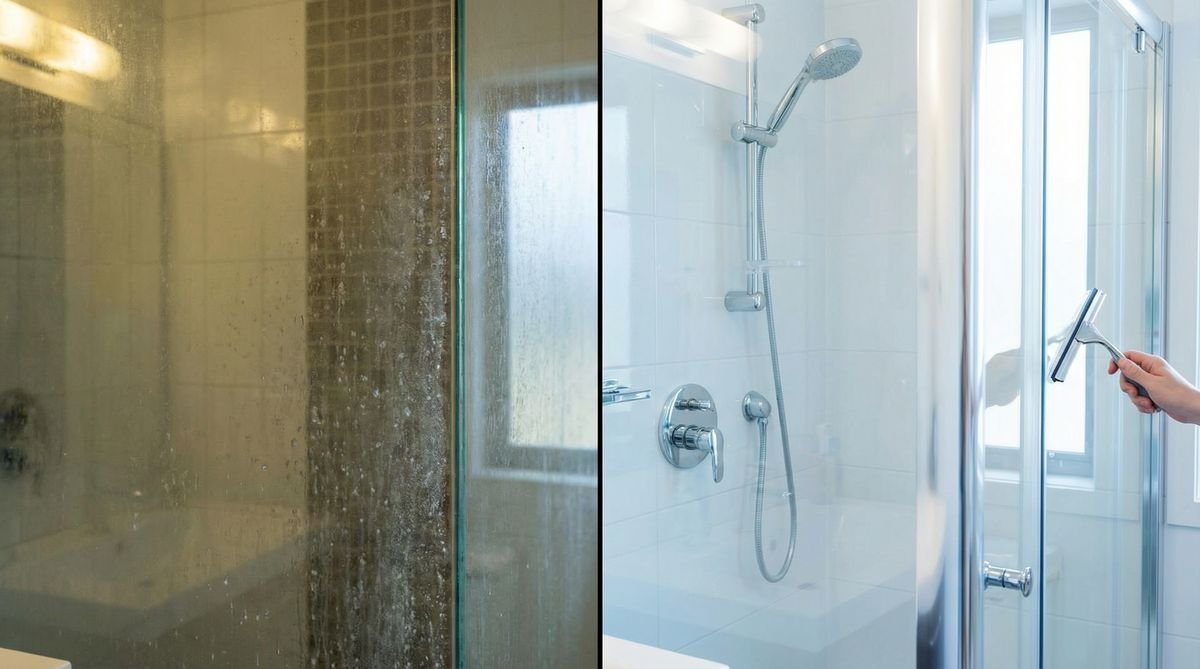

A glass shower door looks stunning when clean and genuinely terrible when coated in soap scum, hard water deposits, and mildew. The frustrating reality is that most people clean their shower doors incorrectly — using the wrong products, skipping the preventive steps that actually matter, and then wondering why the glass looks hazy again within days of cleaning, notes a trusted property management Pottstown PA company.
This guide covers the best methods for cleaning glass shower doors (including the most stubborn hard water stains), the daily habits that prevent buildup from forming in the first place, and the protective treatments that make future cleaning dramatically easier.
1. The Daily Habit That Prevents 80% of Buildup
Answer Capsule: Squeegeeing the glass after every shower is the single most effective maintenance habit for glass shower doors. It takes 30 seconds and removes the water droplets that, when left to evaporate, deposit minerals and soap residue on the glass surface. A squeegee hung inside the shower makes this habit effortless and nearly eliminates hard water buildup between deep cleans.
Hard water deposits form when water evaporates and leaves behind dissolved minerals — primarily calcium and magnesium carbonates. These deposits accumulate with every shower and become progressively harder to remove as they build up and bond to the glass surface. Removing the water before it evaporates eliminates the source of the problem entirely.
A daily spray of a diluted white vinegar solution (1:1 vinegar to water in a spray bottle) after squeegeeing provides additional protection. The mild acidity of vinegar neutralizes mineral deposits before they harden. This two-step routine — squeegee then spray — keeps glass shower doors clean with minimal weekly cleaning effort.
2. Weekly Cleaning: The Right Method and Products
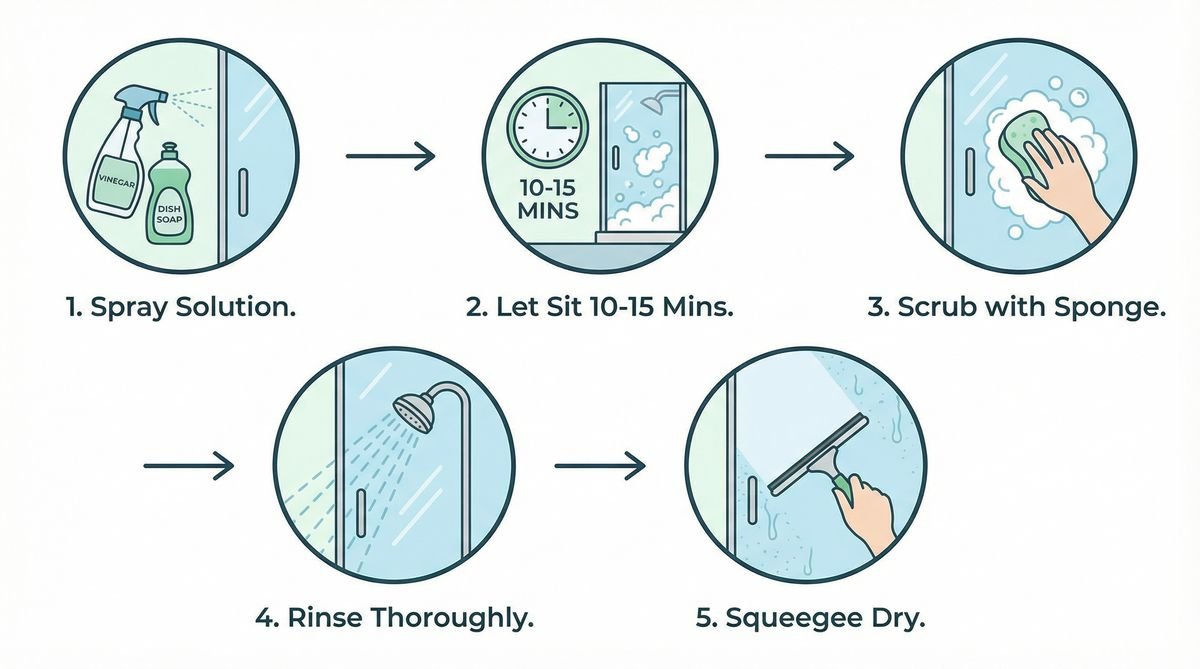
Answer Capsule: For weekly cleaning, spray the glass with undiluted white vinegar, let it dwell for 5 minutes, then scrub with a non-scratch sponge and rinse thoroughly. For soap scum, add a few drops of dish soap to the vinegar before applying. This combination dissolves both mineral deposits (vinegar) and soap residue (dish soap) simultaneously without scratching the glass or damaging seals.
The dwell time is critical. Many people spray and immediately wipe — this removes surface residue but leaves the mineral deposits that are bonded to the glass. Allowing the vinegar to sit for 5 minutes gives the acid time to dissolve the calcium carbonate bonds. The glass will visibly brighten after rinsing.
For the scrubbing tool, a non-scratch nylon sponge or a microfiber cloth is ideal. Steel wool, abrasive scrubbing pads, and harsh powdered cleansers will scratch glass permanently. Once scratched, glass is significantly harder to keep clean because the microscopic grooves trap soap and mineral deposits.
3. Removing Stubborn Hard Water Stains and Soap Scum
Answer Capsule: For severe hard water stains that white vinegar cannot remove, commercial hard water removers containing hydrochloric or phosphoric acid (CLR, Lime-A-Way) are the most effective solution. Apply according to label directions, allow to dwell, scrub with a non-scratch pad, and rinse thoroughly. Always test in an inconspicuous area first, as these products can damage some metal finishes and grout.
A paste of baking soda and dish soap is an effective intermediate option for moderate buildup. Apply the paste to the glass, let it sit for 15 minutes, scrub in circular motions, and rinse. The mild abrasiveness of baking soda provides mechanical cleaning action without scratching glass.
For etched glass — the permanent white haze caused by years of mineral buildup that has actually etched into the glass surface — commercial glass polishing compounds (similar to automotive paint polishing compounds) can restore clarity. This is a more involved process but can rescue glass that appears permanently damaged.
4. Protective Coatings: Making Future Cleaning Easier
Answer Capsule: Hydrophobic glass coatings (Rain-X, EnduroShield, or similar products) applied to clean glass create a surface that repels water and prevents mineral deposits from bonding. These coatings last 1–3 years and reduce cleaning frequency by 50–70%. Application takes 15 minutes and is one of the highest-value maintenance investments for glass shower doors.
Hydrophobic coatings work by filling the microscopic pores in the glass surface with a water-repelling silicone or fluoropolymer compound. Water beads up and rolls off rather than spreading and evaporating. The result is dramatically less mineral deposit formation and soap scum adhesion.
| Frequency | Task | Time Required | Products Needed |
|---|---|---|---|
| After every shower | Squeegee glass surface | 30 seconds | Squeegee |
| Daily (optional) | Spray diluted vinegar solution | 1 minute | Vinegar spray bottle |
| Weekly | Full clean with vinegar + dish soap | 10–15 minutes | Vinegar, dish soap, non-scratch sponge |
| Monthly | Clean door tracks and seals | 10 minutes | Old toothbrush, vinegar |
| Every 1–3 years | Reapply hydrophobic coating | 15–20 minutes | Rain-X or EnduroShield |
5. Cleaning Door Tracks and Rubber Seals
Answer Capsule: Door tracks and rubber seals accumulate soap scum, mildew, and mineral deposits faster than the glass itself. Clean tracks monthly using an old toothbrush dipped in undiluted white vinegar. For mildew on rubber seals, apply a paste of baking soda and hydrogen peroxide, let it sit for 10 minutes, scrub, and rinse. Replace seals when they become cracked or no longer create a watertight barrier.
Neglected door tracks are the most common source of mildew odors in shower enclosures. The narrow channels trap water, soap residue, and organic matter — ideal conditions for mold and mildew growth. Monthly track cleaning with a toothbrush and vinegar prevents this buildup from becoming a significant problem.
Frequently Asked Questions
Is white vinegar safe to use on all glass shower doors?
White vinegar is safe for glass but should be used with caution on certain metal finishes. It can damage brushed nickel, oil-rubbed bronze, and natural stone surfaces if left in contact for extended periods. Rinse thoroughly after use and avoid prolonged contact with metal hardware. For frameless glass doors with minimal metal contact, vinegar is an ideal cleaning solution.
What type of squeegee works best for shower doors?
A 10–12 inch squeegee with a rubber blade and a comfortable grip is ideal for most shower doors. Silicone blades last longer than rubber and leave fewer streaks. Replace the blade when it shows nicks or no longer makes full contact with the glass. A suction cup hook inside the shower keeps the squeegee accessible for daily use.
How can hard water stains be prevented long-term?
The most effective long-term prevention combines three approaches: daily squeegeeing to remove water before it evaporates, a hydrophobic coating to prevent mineral adhesion, and a water softener if the home has very hard water (above 7 grains per gallon). A water softener addresses the problem at its source and benefits all plumbing fixtures, not just the shower door.
Conclusion
Keeping a glass shower door clean is primarily a matter of consistent daily habits rather than periodic intensive cleaning. The squeegee is the most powerful tool available — 30 seconds after every shower prevents the mineral buildup that makes deep cleaning necessary. Combined with weekly vinegar cleaning and a hydrophobic coating applied every one to three years, a glass shower door can remain sparkling with minimal effort.
The products and techniques that work best are also the simplest and least expensive: white vinegar, dish soap, a non-scratch sponge, and a squeegee. The expensive commercial cleaners are rarely necessary when the preventive habits are in place.
References
- EnduroShield. “Glass Protection and Maintenance Guide.” 2025.
- American Cleaning Institute. “Hard Water and Cleaning.” 2024.
- This Old House. “How to Clean a Glass Shower Door.” Updated 2025.
- Water Quality Association. “Hard Water Hardness Scale.” 2024.

Most Viewed