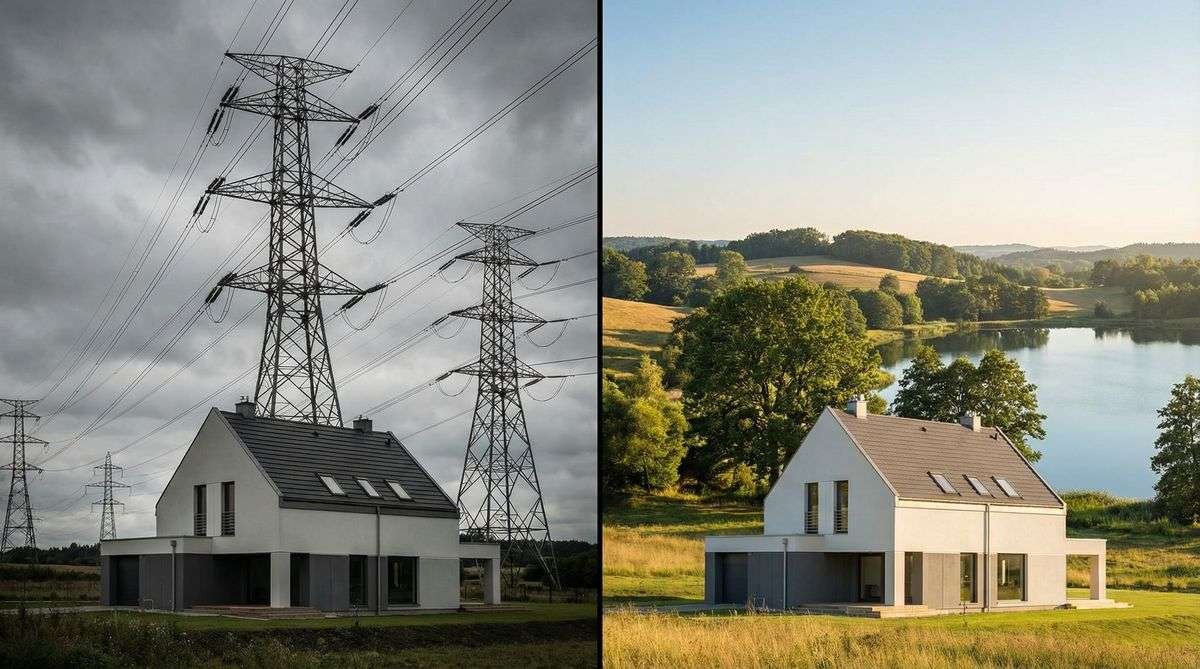

High voltage transmission lines are among the most polarizing features in residential real estate. Some buyers walk away immediately; others see an opportunity to purchase a home at a meaningful discount, observe SGI Dallas experts. The reality, as with most real estate decisions, is more nuanced than either reaction suggests.
This guide examines the genuine pros and cons of buying a house near a high voltage power line, covering property value impacts, health research, noise and aesthetic factors, and the specific due diligence steps that help buyers make an informed decision rather than an emotional one.
1. Property Value Impact: The Data
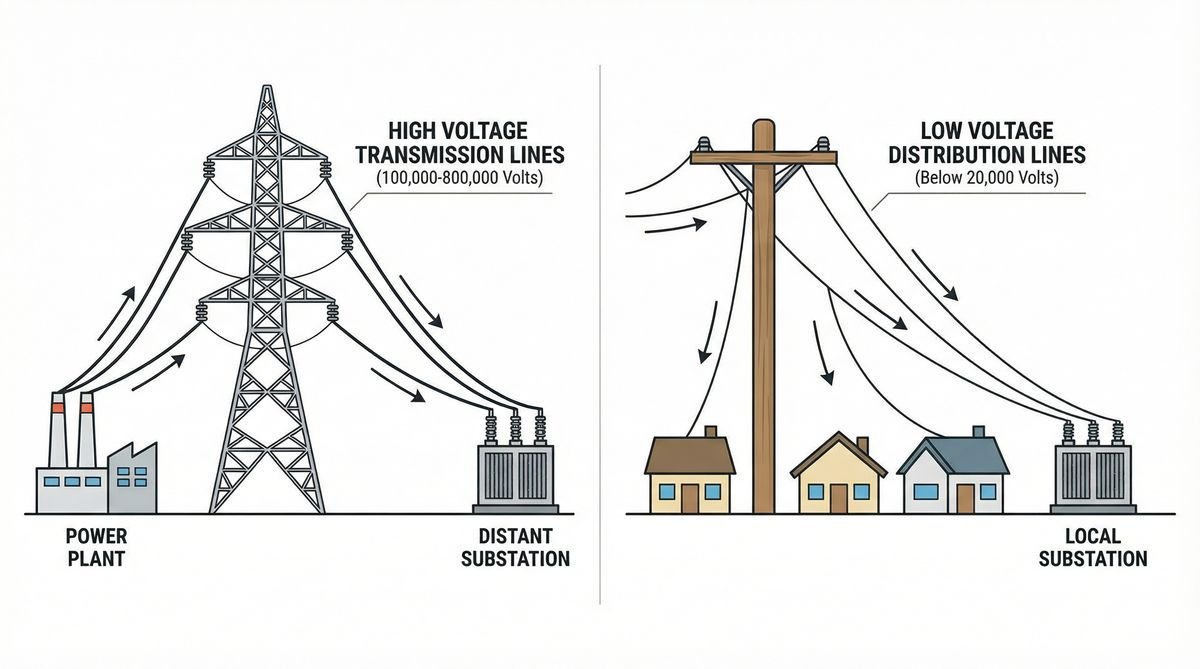
Answer Capsule: Research consistently shows that homes within 300–500 feet of high voltage transmission lines sell for 2–10% less than comparable homes without power line proximity. The discount varies by line voltage, visual impact, and local market conditions. Homes directly under or immediately adjacent to lines see the largest discounts; homes 500+ feet away with limited visual impact see minimal price effects.
A 2020 study published in the Journal of Real Estate Research found that homes within 100 feet of high voltage lines sold for an average of 6.3% less than comparable properties. The discount decreased to approximately 2% for homes 300–500 feet away and became statistically insignificant beyond 500 feet. The visual prominence of the lines — whether they are visible from the home’s primary living areas and yard — was a stronger predictor of the discount than distance alone.
The resale implication is significant: if a home is purchased at a 6% discount due to power line proximity, the buyer must accept that future buyers will likely demand a similar discount. The power line discount does not disappear at resale — it is a persistent feature of the property’s market position.
2. Health Considerations: What the Research Actually Shows
Answer Capsule: Decades of research have not established a definitive causal link between living near high voltage power lines and adverse health effects. The World Health Organization classifies extremely low frequency (ELF) electromagnetic fields as “possibly carcinogenic” — the same classification as coffee and pickled vegetables. The scientific consensus is that the evidence is inconclusive, not that proximity is proven safe or harmful.
The primary concern is exposure to extremely low frequency (ELF) electromagnetic fields (EMF) generated by transmission lines. Studies in the 1970s and 1980s suggested a possible link between childhood leukemia and proximity to power lines. Subsequent large-scale studies have produced inconsistent results, and no mechanism by which ELF-EMF could cause cancer has been identified.
The WHO’s International Agency for Research on Cancer (IARC) classified ELF-EMF as Group 2B (“possibly carcinogenic”) in 2002 — a classification that reflects limited and inconsistent evidence, not established risk. For context, Group 2B also includes aloe vera extract, talc-based body powder, and gasoline engine exhaust. The classification does not mean the substance is known to cause cancer.
3. Pros and Cons Summary
| Factor | Pro | Con |
|---|---|---|
| Purchase price | 2–10% discount vs comparable homes | Resale discount is persistent |
| Health | No proven causal health risk at typical distances | Scientific uncertainty; buyer perception |
| Noise | — | Audible hum in wet weather (corona discharge) |
| Aesthetics | Open views if lines run behind property | Visual intrusion; reduced curb appeal |
| Easement restrictions | Buffer zone may prevent future development nearby | Restrictions on landscaping and structures in easement |
| Financing | — | Some lenders require additional appraisal review |
| Insurance | — | Some insurers add surcharges for proximity |
4. Due Diligence Steps Before Buying
Answer Capsule: Before purchasing a home near high voltage lines, verify the easement boundaries and restrictions with the utility company, measure the actual distance from the home to the nearest line, research comparable sales to quantify the local discount, and check with the mortgage lender about any appraisal requirements. Visit the property in wet weather to assess the audible hum from corona discharge.
The utility easement is the most practically important factor. Easements typically prohibit construction, deep-rooted trees, and certain landscaping within the corridor. Understanding the easement boundaries before purchase prevents future conflicts with the utility company and ensures the buyer knows exactly what can and cannot be done with the portion of the property within the easement.
Frequently Asked Questions
What is a safe distance from high voltage power lines?
No regulatory body has established a “safe distance” because the research has not identified a proven health risk at any specific distance. Most health-focused guidelines suggest that 300–500 feet provides EMF exposure levels comparable to normal household appliance exposure. The property value discount becomes negligible beyond 500 feet in most markets.
Do power lines affect mortgage approval?
Most conventional and FHA lenders do not automatically decline mortgages for homes near power lines. However, some lenders require an additional appraisal review or environmental assessment for properties immediately adjacent to transmission lines. VA loans have specific guidelines about proximity to high voltage lines that may affect approval. Confirming lender requirements early in the process prevents surprises.
Can the power line discount be negotiated into a lower price?
Yes. Comparable sales data showing the typical discount for power line proximity in the local market is the most effective negotiating tool. A buyer’s agent can pull comps specifically for homes near power lines versus comparable homes without this feature to quantify the appropriate discount and support a lower offer price.
Conclusion
Buying a house near a high voltage power line involves real tradeoffs that deserve honest evaluation rather than reflexive avoidance or dismissal. The property value discount is real and persistent. The health concerns are scientifically unresolved but not proven. The noise and aesthetic impacts depend heavily on distance and the specific property configuration.
For buyers who can accept the resale discount as a permanent feature of the property’s value and who are comfortable with the current state of the health research, power line proximity can represent a genuine opportunity to purchase more home for the money. The due diligence steps — easement review, comparable sales analysis, lender confirmation — are the tools that transform this decision from a guess into an informed choice.
References
- World Health Organization (WHO). “Electromagnetic Fields and Public Health: Power Lines and Electric Devices.” 2024.
- International Agency for Research on Cancer (IARC). “IARC Monographs Volume 80: Non-Ionizing Radiation.” 2002.
- Journal of Real Estate Research. “Power Lines and Property Values.” 2020.
- National Association of Realtors (NAR). “Environmental Issues in Real Estate.” 2024.

Most Viewed