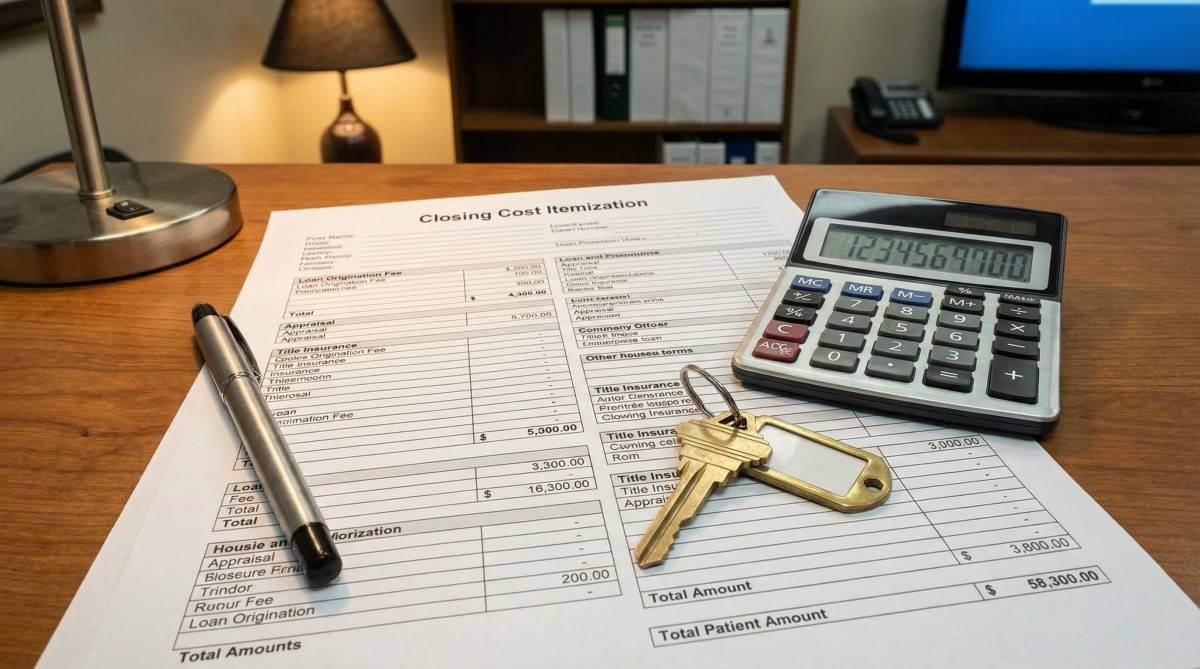

Buying a home is a significant financial milestone, and while the down payment and mortgage principal are often the primary focus, prospective homeowners must also account for closing costs. These are a collection of fees and expenses paid at the close of a real estate transaction, beyond the purchase price of the property itself. Closing costs cover a range of services provided by various parties involved in the home purchase, such as lenders, title companies, and government entities. Typically, these costs can range from 2% to 5% of the loan amount, though this can vary significantly based on location, loan type, and specific transaction details. Understanding what constitutes these costs is crucial for budgeting and ensuring a smooth transition into homeownership, while Spectrum Realty Services Clay County can help buyers place closing costs within a broader property ownership budget.
Loan-Related Fees
When securing a mortgage, several fees are directly associated with the loan itself. These are charged by the lender for processing and underwriting your loan. Key loan-related fees include:
- Loan Origination Fee: This is a fee charged by the lender for processing your loan application. It typically covers the administrative costs of creating the loan and is often expressed as a percentage of the loan amount, usually 0.5% to 1%.
- Underwriting Fee: Separate from the origination fee, this covers the cost of evaluating and approving your loan application. It assesses the risk of lending to you and ensures you meet the lender’s criteria.
- Discount Points: These are optional fees paid to the lender at closing to reduce your interest rate over the life of the loan. One discount point typically costs 1% of the loan amount and can lower your interest rate by approximately 0.25%.
- Appraisal Fee: Lenders require an appraisal to determine the market value of the property. This ensures the home’s value supports the loan amount. Appraisal fees typically range from $400 to $700.
- Credit Report Fee: This covers the cost of pulling your credit report to assess your creditworthiness. This is usually a small fee, often less than $50.
Property-Related Fees and Assessments
Beyond the loan itself, several fees are tied to the physical property and its condition. These ensure the property is sound and legally transferable.
- Home Inspection Fee: While often optional, a home inspection is highly recommended to identify any potential issues with the property before purchase. This fee typically ranges from $300 to $600.
- Survey Fee: A survey verifies property lines and shared fences, ensuring there are no encroachments. This is more common in certain regions or for properties with unclear boundaries, costing between $400 and $1,000.
- Pest Inspection Fee: In some areas, or for certain loan types (like VA loans), a pest inspection is required to check for termites or other wood-destroying organisms. This can cost $50 to $150.
Title and Escrow Services
Title and escrow services are critical for ensuring a clear transfer of ownership and managing the closing process. These fees protect both the buyer and the lender.
- Title Search Fee: This fee covers the cost of researching the property’s history to ensure there are no liens, encumbrances, or disputes that could affect ownership.
- Title Insurance: There are two types: lender’s title insurance (usually required by the lender) and owner’s title insurance (optional but highly recommended for the buyer). These policies protect against financial loss due to defects in the property’s title. Costs vary by state and property value, often ranging from 0.5% to 1% of the home’s value.
- Escrow Fees (or Closing Fees): Paid to the escrow company or attorney who facilitates the closing process, holds funds, and ensures all conditions of the sale are met. These fees can be split between buyer and seller or paid by one party, typically ranging from $500 to $2,000.
- Attorney Fees: In some states, an attorney is required to be present at closing or to review documents. Attorney fees can vary widely based on location and complexity.
Prepaid Expenses and Escrow Accounts
Certain expenses are paid in advance at closing to establish an escrow account or cover immediate costs associated with homeownership.
- Property Taxes: Buyers typically prepay a portion of their annual property taxes, often 2-6 months’ worth, to be held in an escrow account by the lender. This ensures taxes are paid on time.
- Homeowner’s Insurance: Lenders usually require buyers to pay the first year’s homeowner’s insurance premium at closing. This protects the property against damage.
- Mortgage Insurance: If your down payment is less than 20% of the home’s purchase price, you will likely pay for Private Mortgage Insurance (PMI) for conventional loans or a Mortgage Insurance Premium (MIP) for FHA loans. A portion of this may be due at closing.
Government Recording and Transfer Fees
These fees are paid to state and local governments for legally recording the sale and transfer of property ownership.
- Recording Fees: Paid to the county or city to record the new deed and mortgage documents, making the sale public record. These are typically $50 to $250.
- Transfer Taxes (or Documentary Stamps): Taxes levied by state or local governments on the transfer of real estate. These can be a significant cost, varying widely by location, sometimes reaching several thousands of dollars.
Estimating and Managing Closing Costs
Understanding the potential range of closing costs is vital for financial planning. Lenders are required to provide a Loan Estimate within three business days of a loan application, detailing all anticipated costs. Three days before closing, you will receive a Closing Disclosure, which provides the final, itemized list of all charges. Comparing these documents is crucial.
Here’s a general overview of typical closing cost categories and their approximate ranges:
| Closing Cost Category | Typical Cost Range (as % of Loan Amount) | Who Typically Pays |
|---|---|---|
| Loan Origination & Underwriting | 0.5% – 1.5% | Buyer |
| Appraisal & Credit Report | $450 – $750 (flat fee) | Buyer |
| Title Search & Insurance | 0.5% – 1.0% | Buyer (Lender’s), Buyer/Seller (Owner’s) |
| Escrow & Attorney Fees | $500 – $2,000 (flat fee) | Buyer/Seller (negotiable) |
| Prepaid Property Taxes & Insurance | 2-6 months of taxes + 1 year of insurance | Buyer |
| Government Recording & Transfer Taxes | 0.1% – 2.0% (highly variable by state) | Buyer/Seller (negotiable) |
To potentially reduce closing costs, consider negotiating with the seller to cover some fees, asking your lender about no-closing-cost loan options (though these often come with higher interest rates), or shopping around for different service providers like title companies and insurers.
Frequently Asked Questions About Closing Costs
Are closing costs negotiable?
- Yes, some closing costs are negotiable. Fees charged by third-party providers, such as title insurance, home inspection, and attorney fees, can often be shopped around for or negotiated. Lender fees, like origination and underwriting fees, may also be negotiable, especially if you compare offers from multiple lenders. Government-imposed fees, such as recording fees and transfer taxes, are generally non-negotiable.
Who typically pays closing costs, the buyer or the seller?
- While buyers traditionally pay the majority of closing costs, it is often a point of negotiation in a real estate transaction. Sellers may agree to pay a portion of the buyer’s closing costs, especially in a buyer’s market or to facilitate a quicker sale. The amount a seller can contribute is often capped by the loan type and can range from 3% to 6% of the purchase price.
Can closing costs be rolled into the mortgage?
- Yes, in some cases, closing costs can be rolled into the mortgage. This means the costs are added to your loan amount, increasing your monthly mortgage payments and the total interest paid over the life of the loan. While this reduces upfront out-of-pocket expenses, it’s important to weigh the long-term financial implications. Not all loan types or lenders allow this, and it can depend on your loan-to-value (LTV) ratio.
What is title insurance and why is it necessary?
- Title insurance protects both the homeowner and the lender from financial loss due to defects in the property’s title. These defects can include errors in public records, undisclosed heirs, forged documents, or outstanding liens. A title search is conducted to identify such issues, and title insurance provides coverage if a problem arises after closing. It’s a one-time premium paid at closing that offers protection for as long as you own the home.
How much are closing costs typically?
- Closing costs typically range from 2% to 5% of the home’s purchase price. For example, on a $300,000 home, closing costs could be anywhere from $6,000 to $15,000. However, this is a general estimate, and actual costs can vary significantly based on the state, county, lender, and specific services required for the transaction. It’s essential to review the Loan Estimate and Closing Disclosure for precise figures.
Conclusion
Closing costs are an unavoidable part of buying a home, encompassing a diverse array of fees that ensure the legality, security, and proper transfer of property ownership. From lender-specific charges like origination and underwriting fees to property-related expenses such as appraisals and inspections, and essential services like title insurance and escrow, each component plays a vital role. Additionally, prepaid items like property taxes and homeowner’s insurance, along with government recording and transfer fees, contribute to the total. By thoroughly understanding what is included in closing costs, prospective homebuyers can budget more effectively, negotiate where possible, and approach the closing table with confidence, ensuring a smoother and more predictable path to homeownership.

Most Viewed