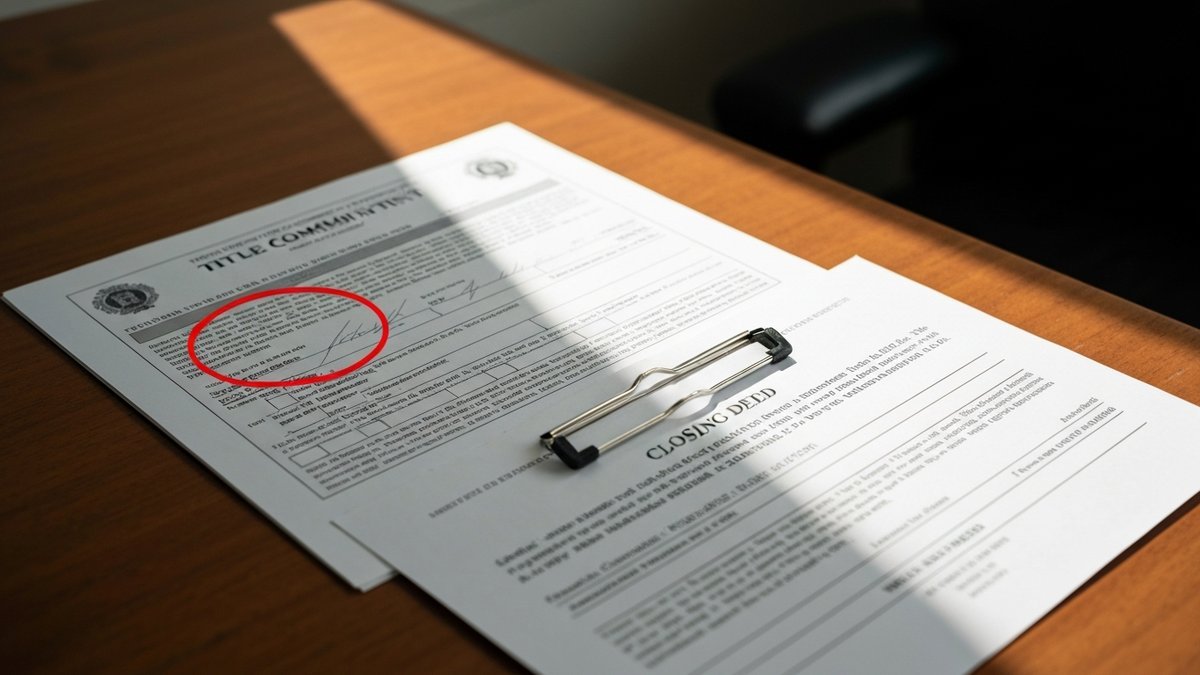

A home purchase is the largest financial transaction most people ever make, governed by a 15-page contract written by lawyers for lawyers. Most buyers sign it after reading the price, the closing date, and nothing else. A year later, when an undisclosed mechanic’s lien surfaces during a refinance, or a neighbor claims an easement across the backyard that was buried in Schedule B of the title commitment, the question is not whether it could have been prevented. The question is why no one read the documents before the money changed hands.
Real estate agents cannot give legal advice. This is not a preference. It is the law in every state. An agent who tells a buyer that a contingency clause is “standard and nothing to worry about” is practicing law without a license. The importance of legal representation in real estate is the difference between understanding what you signed and finding out what you signed when it is too late to change it.
| Role | Can Do | Cannot Do | Typical Cost |
|---|---|---|---|
| Real Estate Agent | Market property, negotiate price, fill standard forms | Give legal advice, interpret contract language | 5-6% commission |
| Real Estate Attorney | Review contracts, examine title, resolve liens, prepare deeds | Market property, advise on pricing, show homes | $800-$2,500 flat fee |
| Title Company | Title search, issue insurance, prepare closing docs | Represent buyer or seller, give legal advice | $500-$1,500 |
| Self-Representation | Sign documents | Everything else — at significant risk | $0 (upfront) |
A real estate closer at a law firm described a deal where the buyer arrived at closing to discover a $12,000 mechanic’s lien had been filed two days earlier. Because no attorney was involved, no one had run an updated title search on the morning of closing. The lien had to be satisfied from the seller’s proceeds, delaying closing by a week. An attorney runs the morning-of title update as routine.
u/deleted in r/AMA, 2 upvotes, 18 comments
What a Real Estate Attorney Actually Does at Each Stage
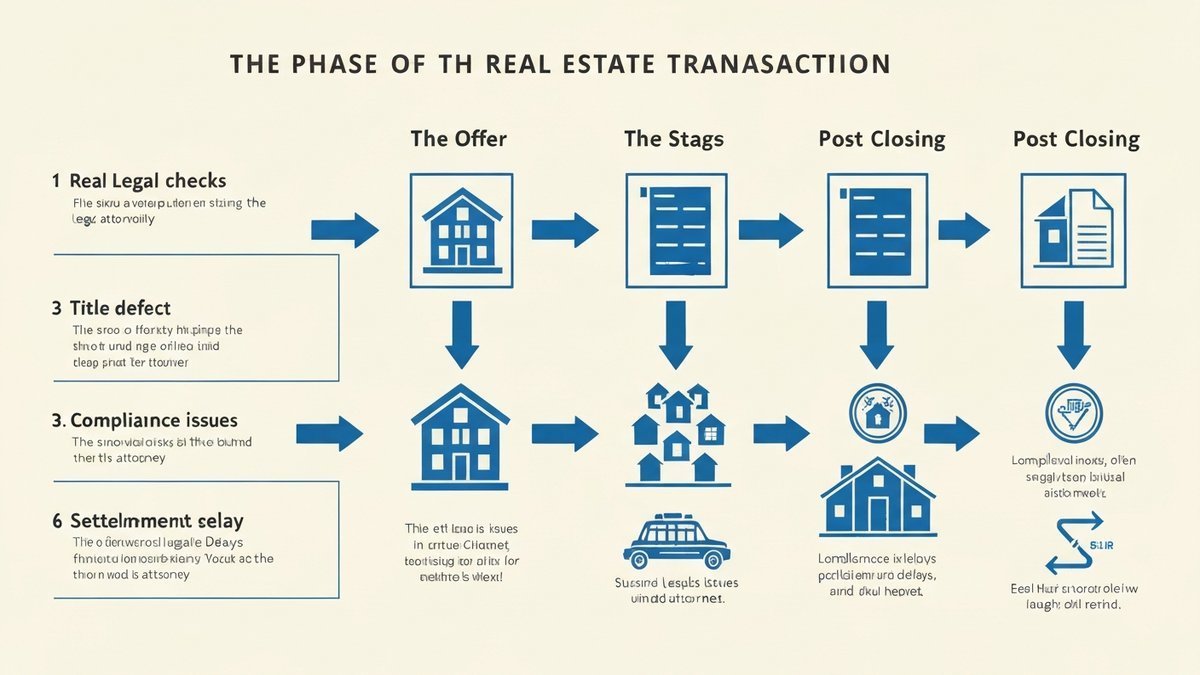
A real estate attorney’s work begins before the contract is signed and continues past the closing date. During the offer stage, they review or draft the purchase agreement, identifying clauses that expose the client to unnecessary risk. During the inspection period, they translate inspection findings into legally enforceable repair requests or credits — something an agent can negotiate but cannot draft with legal precision. During title review, the attorney examines the title commitment line by line, flagging every exception, easement, lien, and restriction listed in Schedule B. A title agent issues the commitment. Only an attorney can tell you which of those exceptions will cause problems.
At closing, the attorney reviews the settlement statement against the contract to ensure the numbers match, confirms that all agreed-upon repairs were completed, verifies that the deed is correctly prepared, and oversees the execution and recording of documents. After closing, the attorney ensures the mortgage satisfaction is recorded, the title policy is issued, and any post-closing obligations — such as escrow holdbacks for repairs — are fulfilled. No other party in the transaction performs all of these functions. The agent markets. The lender underwrites. The title company insures. Only the attorney represents the client’s legal interests across the entire timeline.
When Legal Representation Is Mandatory Versus When It Pays for Itself
Eight states require attorney involvement in every residential closing: New York, New Jersey, Massachusetts, Georgia, South Carolina, North Carolina, Alabama, and Mississippi. In these states, the attorney typically represents the lender but may also represent the buyer or seller in a dual-role or separate-representation arrangement. Total attorney fees range from $800 to $2,500 depending on transaction complexity and local rates. The fee is non-negotiable because the law requires the service.
In the remaining 42 states, attorney involvement is optional. Most transactions in title-company states close without a lawyer present. The title company conducts the search, issues the policy, prepares documents, and disburses funds. But the title company does not represent the buyer or the seller. It represents the transaction. When a dispute arises, the title company steps aside and tells both parties to hire counsel. By then, the deal is already at risk.
The transactions where an attorney adds the most value, measured in problems prevented per dollar spent, are the ones where the standard form contract has been altered: for-sale-by-owner agreements written by amateurs, short sales requiring lender approval of complex terms, estate sales where the seller’s legal authority to convey title may be uncertain, new construction where the builder’s contract contains provisions heavily favoring the builder, and any transaction involving commercial property, multiple parcels, or boundary line adjustments. If the contract was not produced by a licensed agent using state-approved forms, an attorney should review it before you sign. The $1,500 fee is the cheapest insurance policy in real estate.
The Specific Title Defects an Attorney Catches
The Schedule B section of a title commitment lists every exception to coverage — every easement, lien, restriction, encroachment, and claim that the title insurance policy will not cover. A standard residential title commitment may contain 10 to 20 exceptions. Most are routine. Some are not. An undisclosed mechanic’s lien from a contractor the seller never paid attaches to the property, not the seller, and becomes the buyer’s obligation unless resolved before closing. An old mortgage that was paid off but never properly recorded as satisfied clouds the title and prevents clean transfer until the satisfaction is recorded. An easement granted to a utility company 30 years ago that runs through the spot where the buyer plans to build an addition is legally binding and permanent.
Title insurance covers some of these risks after closing. It does not cover boundary disputes, encroachments, or issues that a current survey would reveal. An attorney identifies these before the money moves. The cost of resolving a title defect before closing — a few hundred dollars for a satisfaction recording or a lien release — is trivial compared to the cost of litigating the same defect after closing, which routinely exceeds $50,000 in legal fees alone, not counting the lost use of the property or the inability to sell with a clouded title.
Real Stories From the Industry
Real estate paralegals, closers, and attorneys who work in the industry every day see the same pattern repeated: a transaction that could have been routine becomes a crisis because no one read the documents. One closer described a deal where the buyer arrived at the closing table to discover a $12,000 mechanic’s lien had been filed two days earlier by a contractor the seller had disputed with and never paid. Because no attorney was involved, no one had run an updated title search on the morning of closing. The lien had to be satisfied from the seller’s proceeds, delaying the closing by a week and nearly killing the deal. An attorney would have run the morning-of title update as a matter of routine.
Another closer described a for-sale-by-owner transaction where the seller wrote the purchase contract themselves using a template found online. The contract omitted a financing contingency entirely. The buyer’s loan was denied two weeks before closing. The seller attempted to keep the earnest money, the buyer sued for its return, and both parties spent more on lawyers than the earnest money was worth. A single hour of attorney review of that contract before it was signed would have prevented the entire dispute.
How Much an Attorney Costs Versus How Much Not Having One Costs
A residential real estate attorney charges $800 to $2,500 for a standard transaction. At the median U.S. home price of approximately $420,000, that represents 0.2% to 0.6% of the purchase price. A single undisclosed lien that becomes a lawsuit costs $25,000 to $75,000 in legal fees to resolve after closing, according to data from real estate litigation firms. A boundary dispute that requires a quiet title action costs $15,000 to $30,000. An encroachment issue that prevents resale can cost the entire equity in the home.
The cost-benefit analysis is not close. The attorney fee is a fixed, known, relatively small cost. The cost of not having an attorney is a variable, unknown, potentially catastrophic cost. Insurance exists precisely for risks with this profile: low probability but high severity. The attorney is the insurance policy. Unlike title insurance, which pays after the damage is done, the attorney prevents the damage from occurring in the first place.
Frequently Asked Questions
Do I need a real estate attorney if I am buying a home?
If you are in an attorney-closing state, you are legally required to have one. In other states, you should hire one if the transaction involves a non-standard contract, a short sale, an estate sale, new construction, commercial property, or any situation where the contract was not drafted by a licensed real estate agent using state-approved forms. An attorney costs $800 to $2,500. A title defect lawsuit costs $25,000 to $75,000. The math is straightforward.
What is the difference between a real estate agent and a real estate attorney?
An agent markets property, negotiates price and terms, and facilitates the transaction. An agent cannot give legal advice, interpret contract language, identify title defects, or represent a client in a legal dispute. An attorney reviews and drafts contracts, examines title commitments, resolves liens and encumbrances, prepares closing documents, and represents clients in litigation. The two roles serve different functions. The most well-structured transactions use both.
How much does a real estate attorney cost?
Attorney fees for a standard residential transaction range from $800 to $2,500 as a flat fee. High-cost metro areas such as New York, San Francisco, and Los Angeles may see fees of $1,500 to $3,500. Complex transactions involving commercial property, multiple parcels, or significant title issues may be billed hourly at $250 to $500 per hour. Most residential transactions are billed at a flat rate quoted in advance.
Can a title company replace a real estate attorney?
No. A title company conducts the title search, issues the title insurance policy, prepares standardized closing documents, and disburses funds. It does not represent the buyer or seller. It cannot give legal advice, interpret contract language, negotiate legal remedies, or resolve title defects beyond recording standard documents. A title company insures the title. An attorney protects the client. They are complementary, not alternative, forms of protection.
What is the most common problem an attorney catches that would otherwise be missed?
Undisclosed liens filed shortly before closing. Contractors, taxing authorities, and homeowners associations can file liens that attach to the property without the owner’s knowledge. A standard title search run two weeks before closing will not catch a lien filed three days before closing. An attorney runs a title update on the morning of closing as a matter of routine. A title company in a transaction without attorney involvement may not perform this update. The difference is a wire transfer sent to a seller whose property carries a lien the buyer just inherited.

Most Viewed