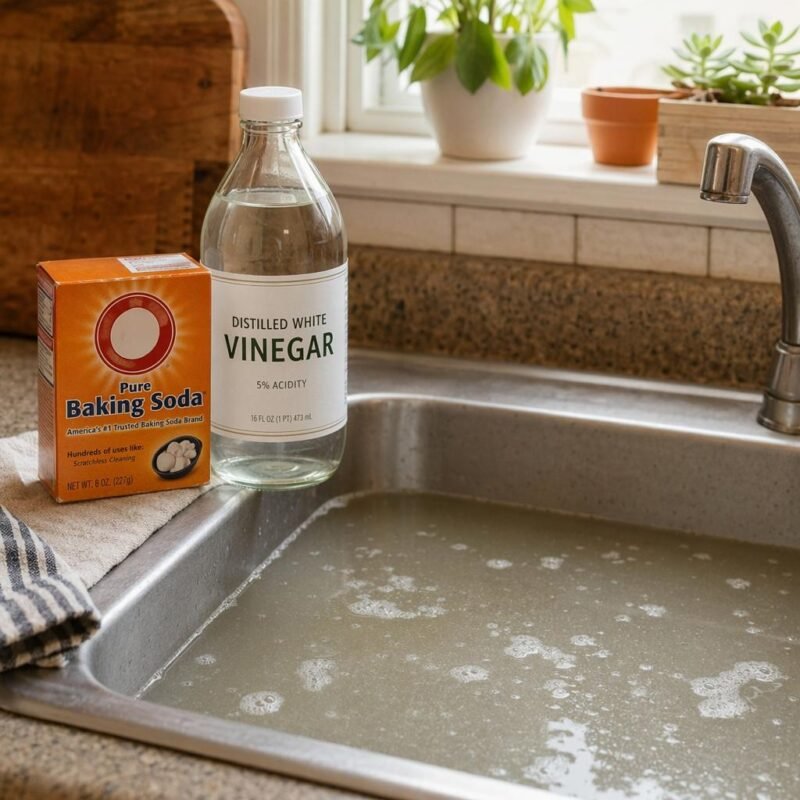

Boiling water and a half cup of baking soda will clear most kitchen sink clogs within 15 minutes, with no chemicals required. Kitchen drains clog for two main reasons: grease buildup and food particle accumulation. Natural methods work well on both when you match the right approach to the type of blockage — something most quick-fix guides skip entirely, observes WSR Property Management professionals.
Why Kitchen Sinks Clog — and Why It Matters for Fixing Them
Grease and soap scum are responsible for roughly 80% of kitchen drain clogs, according to the American Society of Plumbing Engineers. These materials start liquid, coat the pipe walls as they cool, then trap food particles until flow stops entirely. Food particles alone — rice, coffee grounds, pasta — pack differently and respond to different treatments.
Understanding the cause changes which method you reach for first. A grease clog near the drain’s P-trap responds well to hot water and dish soap. A compacted food blockage farther down the line usually needs mechanical help — a plunger or a drain snake.
One pattern shows up repeatedly in real-world drain repairs: people try baking soda and vinegar three times, get no results, then call a plumber who finds a grease plug that plain boiling water and dish soap would have dissolved in minutes. The fizzing reaction looks dramatic but does little against solid grease.
Method 1: Boiling Water and Dish Soap
Boiling water combined with grease-cutting dish soap is the fastest fix for grease-based kitchen clogs. The heat melts the fat, and the dish soap emulsifies it so it flushes away rather than recoating the pipe.
- Boil a full kettle of water (about 1.5 liters).
- Squirt two tablespoons of dish soap directly into the drain.
- Pour the boiling water in a slow, steady stream, not all at once.
- Wait five minutes, then run the hot tap for 30 seconds to flush residue.
Works best on: Greasy buildup, soap scum, light food residue.
Skip this if: You have PVC pipes older than 15 years. Repeated boiling water can soften older PVC joints over time. Use very hot tap water instead.
A plumber who has seen this fix work on hundreds of kitchen drains puts it plainly: “Grease melts at 100°F. Boiling water is 212°F. That’s the whole story.”
Method 2: Baking Soda and Vinegar
The baking soda and vinegar method works by creating a mild fizzing reaction that loosens debris and neutralizes odors, making it most effective on light, organic clogs rather than hardened grease. The science is straightforward: baking soda (sodium bicarbonate) is a base, white vinegar is an acid. When they meet, they produce carbon dioxide gas that dislodges soft buildup clinging to pipe walls.
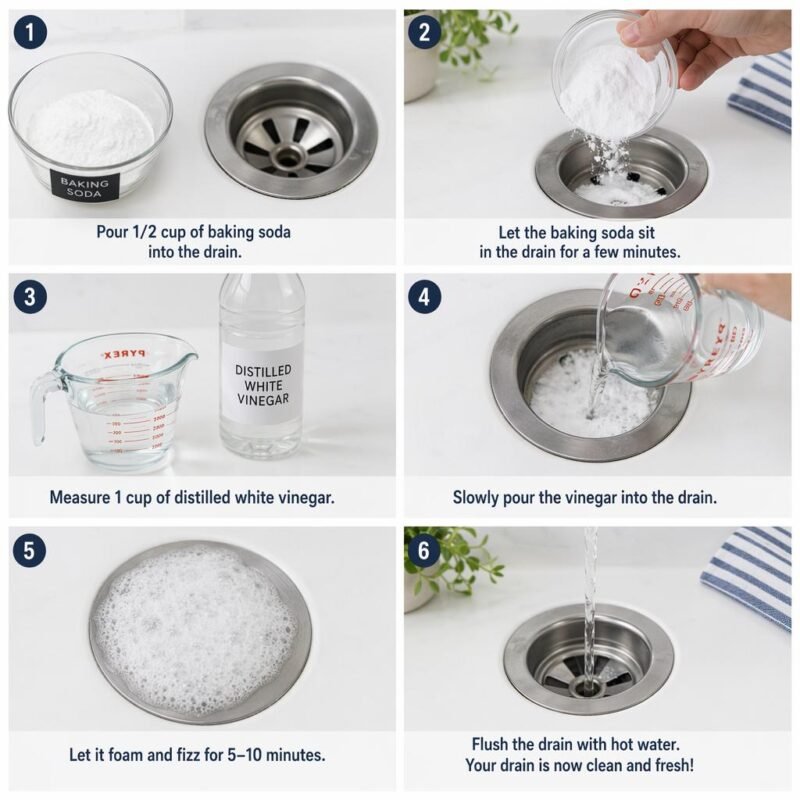
- Remove any standing water from the sink first.
- Pour one cup of baking soda directly down the drain.
- Follow immediately with one cup of white vinegar.
- Cover the drain opening with a stopper or cloth to force the reaction downward rather than bubbling back up.
- Wait 15 to 20 minutes.
- Flush with hot (not boiling) water for 60 seconds.
Works best on: Odors, soft food debris, mild slow drains.
Realistic limitations: Discussions in plumbing communities confirm what plumbers see in the field, this method rarely clears a fully blocked drain. Think of it as a drain refresher, not a drain cleaner.
Method 3: Salt and Hot Water
Salt acts as a mild abrasive and helps break down soft grease deposits when flushed with hot water, making it a useful overnight treatment for slow-draining sinks. Pour half a cup of table salt directly into the dry drain (removing standing water first), then follow with a kettle of very hot water. The salt crystals scrub pipe walls as they dissolve.
This works particularly well as a maintenance step rather than a blockage fix. Run it once a week on any sink that handles cooking grease and the odds of a full clog drop significantly. The cost is negligible: a box of table salt runs about $1.
Method 4: The Right Plunger Technique
A cup plunger (the flat-bottomed style) creates the suction needed to dislodge food blockages that liquid treatments cannot reach. Most failed plunging attempts fail because of one mistake: air escaping around the seal instead of being pushed into the drain.
| Step | What to Do | Common Mistake |
|---|---|---|
| 1. Seal the overflow | Cover the secondary drain opening (double sinks) with a wet cloth | Skipping this releases pressure before it reaches the clog |
| 2. Add water | Fill sink with 2 to 3 inches of hot water to submerge the plunger cup | Dry plunging pushes air rather than water pressure |
| 3. Create seal | Press plunger firmly over drain so no air escapes around the rim | Partial seal kills suction entirely |
| 4. Pump 10 to 15 times | Short, forceful strokes, not slow pushes | Slow strokes don’t generate enough pressure spike |
| 5. Pull sharply upward | The pull stroke often breaks the clog free, not the push | Only pushing, never pulling |
If three rounds of plunging don’t move the clog, the blockage is likely past the P-trap. A drain snake is the next logical step.
Method 5: Baking Soda and Salt Overnight Treatment
Combining baking soda and salt creates a more aggressive cleaning action than either ingredient alone. The salt prevents the baking soda from dissolving too quickly, giving both more time to work against built-up grease. This method works best left overnight.
- Mix half a cup of baking soda with half a cup of table salt.
- Pour the dry mixture into the drain.
- Leave for 8 hours or overnight. Don’t run water during this period.
- In the morning, flush with a full kettle of boiling water.
It’s one of the few natural drain treatments that plumbers occasionally recommend for maintenance, not because it’s dramatically effective on acute clogs, but because regular use keeps slow drains from becoming stopped drains.
When Natural Methods Aren’t Enough
Natural methods clear the majority of kitchen sink clogs, but three situations call for a plumber or a drain snake: water backing up into a second fixture (suggesting a main line issue), gurgling sounds in nearby drains when the sink runs, or clogs that return within days of clearing. These patterns point to problems the P-trap and household methods cannot reach.
| Symptom | Likely Cause | Best Response |
|---|---|---|
| Slow drain only at this sink | Localized clog in P-trap or just beyond | Methods 1 to 5 above, then drain snake |
| Multiple drains slow simultaneously | Main sewer line blockage | Call a plumber immediately |
| Gurgling after flushing toilet | Venting issue or main line partial blockage | Professional diagnosis needed |
| Clog returns within a week | Partial blockage not fully cleared, or root intrusion | Drain camera inspection |
| Foul odor but good drainage | Dry P-trap or buildup in garbage disposal | Ice and salt in disposal, run water to refill P-trap |
Keeping Your Kitchen Drain Clear Long-Term
The most effective prevention strategy isn’t a product. It’s one habit. Run hot water for 30 seconds after every time you wash greasy cookware. Grease that drains while hot flows through the P-trap rather than solidifying inside it. The EPA’s green chemistry guidelines recommend avoiding chemical drain cleaners for routine maintenance, noting that repeated use degrades pipe materials over time, particularly in older homes.
A few other habits that make a measurable difference:
- Use a mesh drain strainer. A $3 strainer catches food particles before they enter the drain. Empty it after every use.
- Pour cooking grease into a jar. Never pour liquid grease down any drain. It cools into a solid inside the pipe.
- Monthly salt flush. Half a cup of salt followed by boiling water, once a month, keeps minor buildup from accumulating.
- Coffee grounds go in the trash. They don’t dissolve and accumulate into dense plugs over time.
- Run the garbage disposal with cold water. Cold water solidifies fats so the disposal blades can chop them rather than coating the drain in liquid grease.
Sodium bicarbonate (the compound behind the baking soda method) has been used as a cleaning agent for over 150 years. Its chemistry makes it genuinely useful for neutralizing organic drain odors. It’s not a degreaser, but it does exactly what its chemistry allows, no more.
Frequently Asked Questions
Does baking soda and vinegar actually unclog drains?
Baking soda and vinegar reliably neutralize drain odors and loosen soft food debris, but this combination is not effective against hardened grease clogs. The carbon dioxide fizzing reaction is mild compared to the pressure a plunger generates. Use it for slow drains and regular maintenance, not as a first response to a fully blocked sink.
Is boiling water safe to pour down kitchen drains?
Boiling water is safe for metal pipes and most modern PVC, but use very hot tap water instead if your home has older PVC pipes (installed before 2000) or if you notice pipes bowing or discolored. For ceramic and porcelain sinks, pour boiling water directly into the drain opening, not onto the sink surface. Sudden temperature changes can crack older ceramic.
How long does it take to unclog a sink naturally?
Most natural methods take 15 to 30 minutes of active work plus wait time. The boiling water and dish soap method works in under 10 minutes. The baking soda and salt overnight treatment requires 8 hours but needs zero monitoring. Plunging typically resolves clogs in 5 to 10 minutes if the technique is correct.
Why does only one side of my double sink clog?
When one side of a double sink clogs while the other drains normally, the blockage is almost always in the individual drain line before the two sides merge. Start with a plunger on the clogged side while blocking the other drain opening with a wet cloth. This forces pressure in the right direction and usually clears the clog within a few minutes.
Are chemical drain cleaners bad for pipes?
Chemical drain cleaners are effective on certain clogs but degrade pipe materials with repeated use. Sodium hydroxide-based cleaners (lye) generate heat when they react with water, enough heat to soften PVC pipe joints over time. The EPA advises using enzymatic or natural methods for routine maintenance and reserving chemical cleaners for clogs that mechanical methods cannot resolve.
The Bottom Line
Start with boiling water and dish soap. It clears grease clogs, which cause most kitchen sink blockages, faster than any other natural method. Move to baking soda and vinegar if the clog persists and you suspect food debris. Reach for the plunger when liquid treatments fail. If the drain doesn’t respond after working through these in order, the blockage is past what household methods can reach and a drain snake or plumber will save time over further experimentation.

Most Viewed