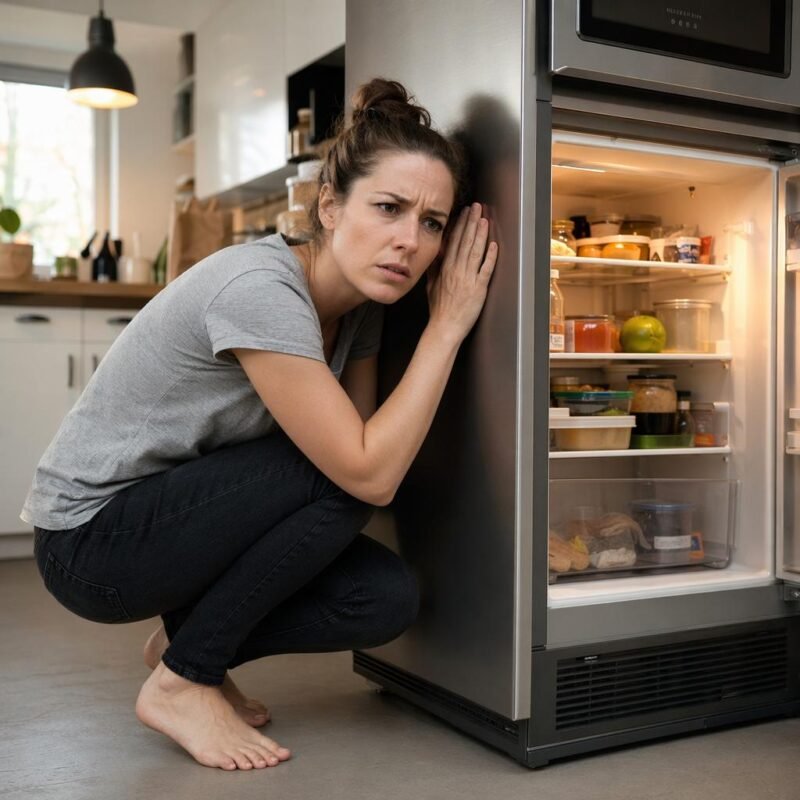

A refrigerator making loud noise is almost always telling you something specific about one of four components: the condenser fan, evaporator fan, compressor, or drain pan. Pinpointing the location of the sound cuts diagnosis time dramatically and tells you whether this is a $0 DIY fix or a $200–$400 service call.
Step One: Where Is the Noise Coming From?
Before pulling the fridge apart, spend 30 seconds narrowing down the source. Location matters more than the sound itself, because the same rattling noise has completely different causes depending on whether it comes from the back, the bottom, or the inside.
| Noise Location | Most Likely Culprit | Urgency |
|---|---|---|
| Back of fridge (exterior) | Condenser fan or compressor | Medium – can worsen quickly |
| Inside freezer compartment | Evaporator fan | High – affects cooling directly |
| Bottom of fridge | Loose drain pan | Low – simple fix |
| Front/door area | Ice maker or water line | Low-Medium |
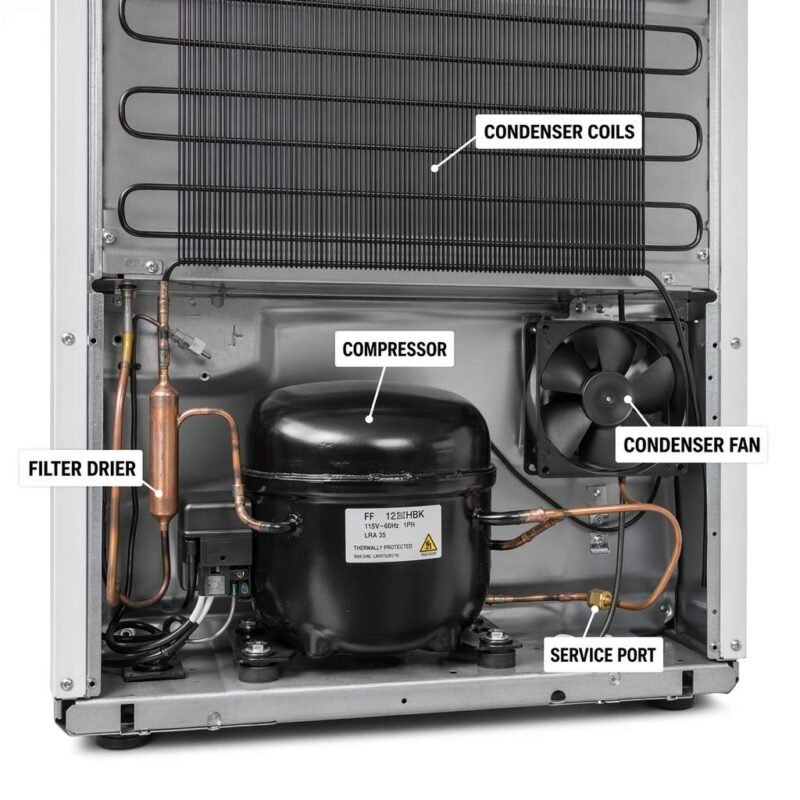
The reason location matters so much: a refrigerator’s refrigeration system runs in a loop. A noise from the back during a cooling cycle points to the compressor or condenser fan. A noise that gets louder when you push the freezer light switch suggests the evaporator fan blade is catching on something. Getting the geography right first saves you from disassembling the wrong part entirely.
7 Common Refrigerator Noises Decoded
Each sound type has a fairly narrow list of likely causes. Matching the sound to the symptom is the fastest path to a fix, and most are identifiable without any tools.
Buzzing or Humming
A steady buzz or low hum is the most common refrigerator complaint. Most of the time, it is completely normal: the compressor and fans produce a low-frequency hum during regular operation. When the buzzing becomes noticeably louder than usual or sounds rough and labored, the most likely causes are dirty condenser coils forcing the system to work harder, a failing evaporator fan motor, or ice buildup around the fan blades. Repair costs for fan motor replacement typically run $120–$200 including parts and labor.
Rattling
A rattle from the back usually means loose condenser fan blades vibrating during operation, or a worn compressor mounting bracket. A rattle from the bottom is almost always the drain pan, which sits in a bracket under the unit and can vibrate loose over time. This is a free fix: slide the pan back into its bracket and confirm it sits flush. Rattling from items placed on top of the fridge is also surprisingly common and easy to overlook.
Clicking
Brief clicking at startup is normal. The compressor relay clicks as it engages, similar to a car engine turning over. Repeated clicking that happens multiple times per hour, though, points to a failing start relay, the small component that kicks the compressor motor on. A failing relay often means the compressor is struggling to start. Replacing just the relay runs $10–$40 as a DIY part, making it one of the most cost-effective fixes possible before committing to a full service call.
Knocking or Gurgling
Knocking sounds, especially from within the freezer, typically involve ice maker parts resetting during the fill cycle, refrigerant lines expanding and contracting with temperature changes, or loose evaporator fan blades hitting ice buildup. Gurgling is almost always refrigerant flowing through the cooling lines, which is completely normal. If the gurgling is unusually loud and sustained, it can occasionally signal a refrigerant issue, though this is relatively rare in modern sealed systems.
Squeaking or Grinding
Squeaking from the door area usually points to dry or worn door hinges. A drop of food-safe machine oil on the hinge pin fixes this in under a minute. Squeaking or grinding from inside the unit is more serious: it typically means the evaporator fan blade is rubbing against an ice obstruction or its mounting has shifted. A grinding noise from the back of the fridge, especially one that stops when the fridge is running normally, often indicates the condenser fan blades are catching on debris. Professional service for fan-related repairs averages $150–$350.
Ticking or Scraping
A periodic ticking or scraping sound, especially one that repeats on a rough 8–12 hour cycle, is a classic sign of a failing defrost timer. The defrost cycle runs roughly twice daily on most refrigerators, and a worn timer can produce audible clicking as it cycles. Frost buildup in the freezer compartment (despite the thermostat being set correctly) confirms this diagnosis. Defrost timer replacement is a mid-range repair at $100–$200.
Loud Compressor Noise
The compressor is the heart of the refrigeration system — see how refrigerators work for a full component breakdown — and it runs in cycles throughout the day. A compressor that runs louder than usual but still cools effectively is usually not an emergency. A compressor that produces loud knocking or clicking and fails to cool is more serious. To isolate compressor noise: disconnect the condenser fan motor, plug the refrigerator back in, and listen. If the noise stops, the condenser fan was the source. If it continues, the compressor itself may need service.
DIY Fixes You Can Do Today
Several of the most common causes of refrigerator noise require no tools and zero cost. These are the steps to try before booking a service appointment, in order from easiest to slightly more involved.
- Secure the drain pan. Slide the fridge out slightly and check that the drain pan under the unit sits flush in its bracket. Press it firmly into place.
- Clean the condenser coils. Dust-clogged coils are among the most common causes of a refrigerator running louder than normal. According to ENERGY STAR, modern refrigerators are 15% more energy efficient than non-certified models, and dirty coils can reduce that efficiency by up to 25%. Unplug the fridge, locate the coils (typically behind or underneath), and vacuum them with a brush attachment. A thorough cleaning every 6–12 months is recommended.
- Check for items touching the fridge. Vibration transfers easily. Cabinets, walls, and even the floor surface can amplify normal compressor vibration into a noticeable rattle.
- Inspect the condenser fan. Unplug the fridge, access the back panel, and check the fan blade for debris. Even a small piece of packaging material caught in the blade can create a surprisingly loud rattle. Spin the blade manually to check for resistance or wobble.
- Defrost the freezer manually. If the evaporator fan is hitting ice buildup, emptying the freezer and leaving the doors open for 24–48 hours lets the ice melt completely. Many cases of “sudden” loud noise inside the freezer resolve this way.
- Level the refrigerator. An unlevel fridge causes the compressor and fan to work at slightly off-balance angles, producing vibration and noise. Use a level on top of the unit and adjust the front feet accordingly.
Appliance technicians report that a majority of noise complaints turn out to be either the drain pan, a debris-clogged fan, or objects touching the fridge exterior. The fix is free. More homeowners than you’d expect skip these steps entirely and pay for a service call that ends with the technician kicking the drain pan back into place.
Normal Sounds vs. Sounds That Need Attention
Not every sound coming from a refrigerator signals a problem. Knowing what is normal prevents unnecessary service calls and helps identify the genuinely concerning noises faster.
| Sound | Normal or Concerning? | When to Worry |
|---|---|---|
| Low hum during cooling cycle | Normal | If it becomes rough or labored |
| Single click at startup/shutdown | Normal | If clicking repeats multiple times per hour |
| Gurgling water sounds | Normal (refrigerant flow) | Rarely |
| Cracking/popping sounds | Normal (thermal expansion) | If accompanied by cooling failure |
| Ice maker fill noise (every few hours) | Normal | If constant or grinding |
| Loud buzz + poor cooling | Concerning | Now |
| Grinding from inside freezer | Concerning | Now |
| Loud clicking, no cooling | Concerning | Now |
The key distinction is always cooling performance. A refrigerator that is noisy but maintaining proper temperature (35–38°F for the fridge compartment, 0°F for the freezer) is rarely in immediate danger. A fridge that is noisy and not cooling is an emergency situation, since food safety becomes a concern within 4 hours at improper temperatures, according to the USDA.
Repair Cost Breakdown by Component
Knowing what repairs typically cost helps make the repair-versus-replace decision clearly. These ranges reflect average U.S. service costs including parts and labor as of 2025–2026.
| Component | Average Repair Cost | DIY Possible? |
|---|---|---|
| Drain pan (reseating) | $0 | Yes |
| Start relay replacement | $10–$50 | Yes (moderate skill) |
| Condenser coil cleaning | $0–$80 | Yes |
| Door hinge lubrication | $0–$50 | Yes |
| Defrost timer replacement | $100–$200 | Yes (moderate skill) |
| Evaporator fan motor | $120–$250 | Sometimes |
| Condenser fan motor | $150–$300 | Sometimes |
| Compressor replacement | $300–$600+ | No (requires refrigerant certification) |
The 50% rule is the standard guideline in the appliance repair industry: if the repair cost exceeds 50% of the cost of a comparable new refrigerator, replacement is typically the better financial decision. A compressor repair on a 12-year-old refrigerator often fails this test. A fan motor replacement rarely does.
When to Call a Technician
Most homeowners are comfortable with the basic checks above. There are specific situations where calling a professional is the right move, not just for complexity but for safety.
Call a technician if: the noise is accompanied by a burning smell (electrical issue); the refrigerator is not cooling despite running constantly; loud clicking continues after you’ve replaced the start relay; you suspect a refrigerant leak (indicated by a chemical or sweet smell near the unit, combined with poor cooling); or the compressor is visibly damaged or makes a grinding metallic sound. Refrigerant work requires EPA Section 608 certification, so compressor and sealed system repairs are not DIY territory.
Most appliance repair companies offer a diagnostic fee of $75–$125 that is typically applied toward the repair cost if you proceed. Getting a diagnosis quote before committing is always reasonable, especially for compressor-adjacent issues where the cost can escalate quickly.
Frequently Asked Questions
Is it normal for a refrigerator to make noise?
Yes. A low hum from the compressor and fans, occasional clicking at startup and shutdown, gurgling from refrigerant flow, and periodic popping from thermal expansion are all completely normal. The concern starts when sounds become noticeably louder than before, are accompanied by reduced cooling, or include grinding, loud clicking that repeats frequently, or a burning smell.
Why is my refrigerator making noise from the back?
Noise from the back of the refrigerator typically points to the condenser fan motor or the compressor. The condenser fan runs along the exterior rear of the unit and can generate noise if its blades collect debris or the motor begins to fail. Unplug the fridge and inspect the fan blade for obstructions as a first step. If the fan is clear and the noise continues, the compressor may need professional evaluation.
Why is my fridge making noise inside the freezer?
Noise from inside the freezer compartment almost always involves the evaporator fan. This fan circulates cold air between the freezer and refrigerator sections and sits behind a panel at the rear of the freezer. If the blade is hitting ice buildup, you’ll often hear grinding or squealing that gets louder when the freezer light switch is pressed. A manual defrost often resolves this without any part replacement.
Why did my refrigerator suddenly start humming loudly?
A sudden increase in humming volume, especially if it coincides with warmer-than-usual temperatures in the fridge compartment, often means dirty condenser coils or a beginning compressor issue. Pull the fridge away from the wall, vacuum the condenser coils thoroughly, and check that ventilation around the unit is clear (at least 1–2 inches on sides, 1 inch on top). If the humming persists after cleaning, schedule a service inspection.
How do I stop my refrigerator from rattling?
Start by checking the drain pan (located underneath the fridge), which rattles loose in a significant number of cases. Then check that nothing is resting on top of or beside the fridge. Level the unit using the adjustable front feet. If rattling persists, access the rear panel and check the condenser fan blades for debris and the compressor for loose mounting brackets. Most rattling fixes require no parts at all.
How long should a refrigerator last before major noise problems develop?
Most refrigerators have a functional lifespan of 10–15 years, according to the Association of Home Appliance Manufacturers (AHAM). Consumer Reports data shows that reliability issues become noticeably more common after year 10. Fan motors and other moving components typically begin showing wear after 8–10 years of continuous use. A fridge under 8 years old with a new noise problem is almost always a repairable issue. A fridge over 12 years old with compressor noise is a stronger candidate for replacement, particularly if efficiency has also declined.
Why is my refrigerator making a loud clicking noise?
Rapid, repeated clicking is usually a failing start relay, the component that triggers the compressor motor. You can test this by removing the relay (it plugs into the side of the compressor) and shaking it. A rattling sound inside the relay confirms it needs replacement. Relays are inexpensive ($10–$40) and available at most appliance parts retailers. If replacing the relay doesn’t stop the clicking, the compressor itself may be failing.

Most Viewed