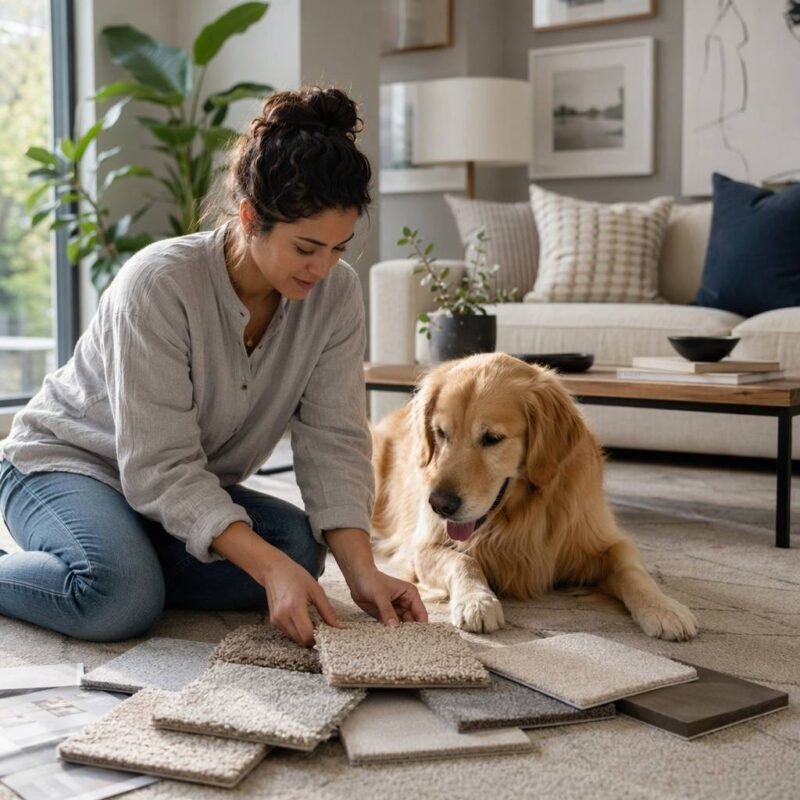

The right carpet for a pet household is short-pile, stain-treated nylon or triexta — full stop. Everything else is a tradeoff, notes USA Property Management professionals. This guide breaks down what that means in practice: which fiber types hold up to claws and accidents, what pile height actually matters for shedding dogs, and how to match the choice to specific rooms in your home.
The Four Factors That Actually Matter
Every carpet decision for pet owners comes down to four things: fiber type, pile height, pile construction, and backing. Get those right and color choices, brand names, and price tiers become secondary. Get them wrong and even an expensive carpet turns into a permanent odor trap within a year.
| Factor | Pet-Friendly Standard | What to Avoid |
|---|---|---|
| Fiber type | Nylon, triexta (Sorona/SmartStrand) | Wool, natural sisal, jute |
| Pile height | Low (<½ inch / 12mm) | Shag or plush >¾ inch |
| Pile construction | Cut pile (saxony, frieze, textured) | Loop pile (Berber) with large loops |
| Backing | Moisture-barrier or sealed backing | Standard jute-backed only |
Pile construction is the detail most buyers skip. Loop pile Berber looks durable and it is — against foot traffic. Against a dog’s dewclaw, a single snag can unravel a run of loops across an entire section of floor. That damage is not repairable. Cut pile construction eliminates this failure mode entirely.
Fiber Types Compared: Nylon, Polyester, Triexta, and Wool
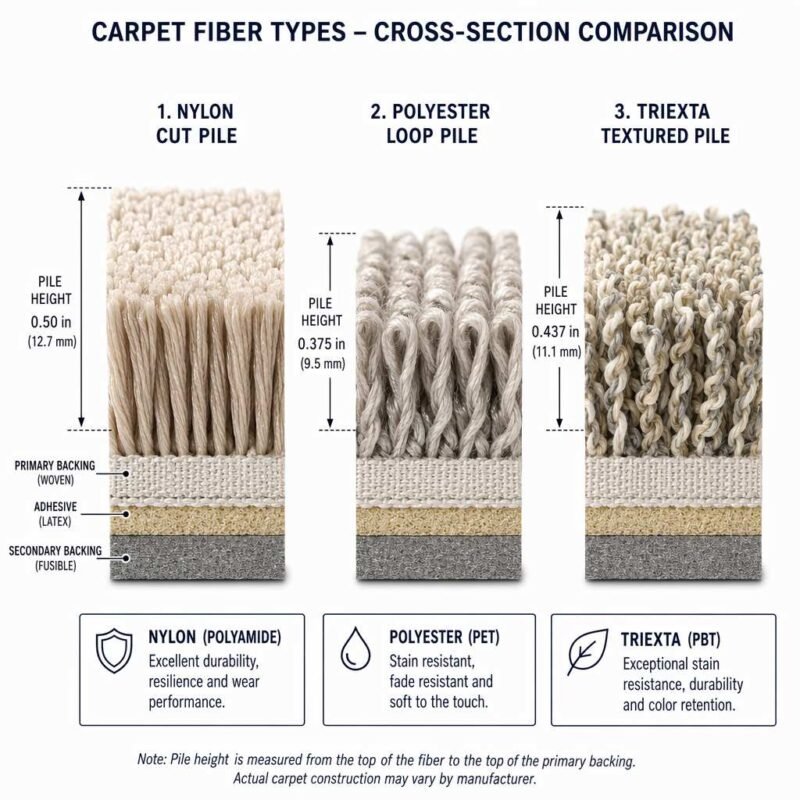
Nylon and triexta are the two best-performing fibers for homes with pets, for different reasons. Polyester is cheaper and softer but absorbs oils from pet fur over time. Wool is beautiful, expensive, and almost incompatible with serious pet ownership.
| Fiber | Durability | Stain Resistance | Odor Resistance | Pet Hair Removal | Typical Cost (installed) |
|---|---|---|---|---|---|
| Nylon | Excellent | Good (with treatment) | Good | Easy | $3–$7/sq ft |
| Triexta | Very good | Excellent (built-in) | Very good | Easy | $3–$6/sq ft |
| Polyester (PET) | Moderate | Good initially | Poor long-term | Moderate | $2–$4/sq ft |
| Wool | Very good | Poor (absorbs stains) | Poor (retains odors) | Difficult | $8–$20/sq ft |
| Olefin (Polypropylene) | Poor (crushes) | Very good | Poor | Easy | $1–$3/sq ft |
Triexta deserves specific attention. It’s a newer synthetic fiber (DuPont’s Sorona, sold as Mohawk SmartStrand) made partially from corn glucose, and its stain resistance is inherent to the fiber itself — not a surface treatment that wears off after cleaning. For households with dogs prone to accidents, that permanence matters considerably more than it looks on a spec sheet. A carpet where the stain protection can be washed away in year two is functionally different from one where it cannot. For a deeper look at how nylon is engineered at the molecular level, Wikipedia’s nylon overview explains why the polymer chain structure gives it both elasticity and abrasion resistance.
Pile Height and Construction: The Practical Numbers
For pet households, keep pile height under ½ inch (12mm). At that length, pet hair sits on top of the fiber surface where a vacuum can reach it. Longer fibers — anything labeled “plush,” “shag,” or “frieze” with pile over ¾ inch — trap hair below the surface layer where standard vacuums don’t reach, requiring specialized attachments or more frequent professional cleaning.
The specific pile heights to look for on product labels:
- Under ¼ inch (6mm): Best for heavy shedders. Commercial-grade low pile. Easiest maintenance, least comfortable underfoot.
- ¼ to ½ inch (6–12mm): The sweet spot for most pet households. Enough cushion to feel comfortable, short enough to vacuum effectively.
- ½ to ¾ inch (12–19mm): Acceptable for light shedders with consistent vacuuming. Starts becoming high-maintenance above ½ inch.
- Over ¾ inch (19mm+): Avoid. Pet hair embeds. Odors penetrate to backing. Not practical for pets regardless of fiber type.
Cut pile comes in three main textures relevant to pet owners: saxony (smooth, formal-looking), textured cut pile (slightly varied height, hides footprints and pet marks well), and frieze (very twisted fibers, extremely durable). Textured cut pile is the most forgiving in practical use, the slight surface variation disguises wear patterns and the occasional muddy paw print between vacuuming sessions.
Stain Protection and Odor Control: What the Labels Actually Mean
Stain-resistant carpet treatments fall into two categories: surface treatments applied after manufacturing, and fiber-inherent resistance built into the polymer. The distinction matters enormously for long-term performance.
Surface treatments like Scotchgard and R2X (Shaw Floors) work by coating fibers to repel liquids. They are effective when new. The problem is that repeated cleaning, especially with alkaline cleaners or hot water extraction, degrades the coating progressively. Most surface treatments need reapplication every 1–2 years in pet households, which adds cost and requires professional application to be effective.
Fiber-inherent protection (triexta/SmartStrand, Anso nylon with solution-dyeing) means the stain resistance is part of the fiber’s molecular structure. It cannot be washed away. For pet accidents specifically, solution-dyed nylon offers an additional advantage: because the color is embedded throughout the fiber rather than applied to the surface, urine cannot bleach the carpet the way it can with surface-dyed alternatives.
Odor control is a separate issue from stain resistance. Carpets with charcoal-infused padding (available from several manufacturers as an add-on) actively absorb ammonia from urine, which reduces the behavioral trigger that causes some pets to re-soil the same spot. The padding choice matters almost as much as the carpet itself for odor management in homes with dogs prone to accidents.
Room-by-Room Recommendations
The right choice varies by how pets actually use each space, traffic patterns, likelihood of accidents, and whether the room gets natural light (which fades lighter carpets faster in sunny homes).
| Room | Best Fiber | Best Construction | Color Strategy |
|---|---|---|---|
| Living room / main traffic | Nylon or triexta | Textured cut pile | Mid-tone, multi-color pattern |
| Bedroom (low traffic) | Triexta or polyester | Saxony cut pile | Medium tone, solid or subtle |
| Hallways / stairs | Nylon only | Low-pile textured | Dark mid-tone, pattern |
| Playroom / dog room | Nylon with moisture barrier | Short cut pile | Darker tones, busy pattern |
| Home office (light traffic) | Any cut pile | Frieze or textured | Any, per preference |
Stairs deserve specific mention. The carpet on stairs takes far more concentrated wear than any flat area, every step multiplies the impact on the same narrow strip of fiber. Nylon is the only fiber worth considering for stairs in a pet household. Anything softer will show wear within two to three years under normal use with a medium-sized dog going up and down multiple times daily.
Color strategy is more practical than it sounds. A carpet that closely matches your pet’s fur color reduces the visible evidence of shedding between vacuuming. It doesn’t reduce the actual shedding, but a home that looks reasonably clean between sessions is meaningfully less stressful to maintain. Mid-tone patterned carpets, neither very light nor very dark, hide both light and dark fur simultaneously and disguise minor soil marks between cleanings.
Frequently Asked Questions
What is the best carpet fiber for homes with pets?
Nylon and triexta (sold as Mohawk SmartStrand or DuPont Sorona) are the two best fibers for pet households. Nylon offers the best durability for high-traffic areas and stairs. Triexta provides built-in stain resistance that doesn’t degrade with cleaning, making it the stronger choice for homes with dogs prone to accidents. Both are cut pile friendly and vacuum easily.
Is Berber carpet good for pets?
Berber carpet with large loops is not recommended for homes with dogs or cats that have their claws intact. A single claw snag can pull and unravel a run of loops, causing damage that is not repairable. Berber with very small, tight loops (sometimes called “level loop”) is more claw-resistant but still less safe than cut pile alternatives. If the look of Berber appeals, a textured cut pile with a similar visual weight is a safer equivalent.
What carpet hides pet hair best?
Low-pile carpets in a color similar to your pet’s fur hide shedding most effectively between vacuuming sessions. Multi-color or patterned carpets in mid-tones conceal both light and dark fur simultaneously. Avoid very light (cream, white) or very dark (charcoal, navy) solid carpets, both show contrasting fur colors sharply. Short cut pile fibers also release pet hair more easily to vacuums than loop or shag constructions.
Is carpet or hardwood better for pets?
Each has real trade-offs. Hardwood is easier to clean thoroughly and doesn’t retain odors, but hard floors are harder on older dogs’ joints, offer no traction for running pets, and scratch visibly from claws. Carpet with a moisture-barrier backing and sealed padding offers cushion for joint health and traction for play, but requires more frequent maintenance. In practice, many pet households use hard flooring in high-traffic areas and carpet in bedrooms and living spaces. The history and construction of modern carpet illustrates how far manufacturing has come in producing fibers specifically for demanding household conditions.
How do I prevent carpet odor from pets?
The most effective approach combines three things: a carpet with built-in odor resistance or charcoal-infused padding, prompt cleaning of accidents (blotting while wet, enzyme cleaner rather than soap), and consistent vacuuming. Enzyme-based cleaners (such as Nature’s Miracle) break down uric acid crystals that cause persistent urine odor, soap and water alone cannot. Odor that has penetrated the backing and subfloor requires professional extraction or, in severe cases, padding replacement.
What pile height is best for pets?
Pile height under ½ inch (12mm) is the practical standard for pet households. At this height, pet hair rests on the fiber surface where a standard vacuum removes it effectively. Longer piles trap hair below the surface layer, require specialized vacuum attachments, and accumulate odor more readily. For heavy shedders, staying under ¼ inch gives the best daily maintenance results.
What carpet won’t get ruined by cat claws?
Cut pile carpet in a short to medium height resists claw damage most reliably. Cats scratch primarily to mark territory and stretch muscles, so they often target vertical surfaces more than floors. The greater floor-level risk is loop pile carpet, a cat kneading or playing can catch a claw in a loop and pull it. Short cut pile nylon or triexta in a textured pattern gives the best combination of claw resistance and recovery from surface scratching.

Most Viewed