

Embarking on a property purchase, whether it’s a cozy starter home or a sprawling commercial space, involves a labyrinth of legalities and paperwork. Among the most critical, yet often overlooked, steps is the title search. This process isn’t just a formality; it’s a deep dive into the historical records of a property to uncover any potential issues that could jeopardize your ownership. Imagine investing your life savings into a new home, only to discover months later that a distant relative of the previous owner has a legitimate claim to the land, or that there’s an unpaid lien from a long-forgotten contractor. Such scenarios, while seemingly dramatic, are precisely what a thorough title search aims to prevent, providing a crucial layer of protection for one of life’s most significant investments. It’s about ensuring that when you receive the keys, you also receive undisputed legal rights to your new property.
What Exactly is a Title Search?
A title search is a comprehensive examination of public records to determine the legal ownership of a property and to identify any claims or encumbrances against it. This process typically involves reviewing deeds, mortgages, tax records, liens, judgments, and other relevant documents filed with local government offices, often spanning several decades. The goal is to establish a clear “chain of title,” proving that the seller has the legal right to transfer ownership and that the property is free from hidden defects that could affect the buyer’s rights. Without this diligent investigation, a buyer might unknowingly inherit significant financial and legal burdens, transforming a dream purchase into a costly nightmare. This meticulous review ensures that the property’s history is transparent, revealing any past transactions, ownership transfers, or legal disputes that could impact the current sale. For instance, a title search might uncover an old, unreleased mortgage that was paid off years ago but never formally removed from the public record, requiring legal action to clear the title before the sale can proceed. This is a common, albeit frustrating, issue that title professionals routinely resolve.
Why is a Title Search Indispensable for Buyers?
A title search is indispensable for buyers because it uncovers potential legal and financial risks associated with a property before the transaction is finalized, safeguarding their investment and ensuring clear ownership. This proactive investigation reveals issues like unpaid property taxes, undisclosed easements, or fraudulent transfers that could otherwise lead to expensive litigation or even loss of the property. For instance, discovering an unreleased mortgage from decades ago, even if paid off, requires legal action to clear the title, a burden no new homeowner wants to face. It acts as a critical due diligence step, providing peace of mind and protecting against unforeseen liabilities that could emerge long after closing.
Uncovering Hidden Liens and Encumbrances
One of the primary reasons for conducting a title search is to identify any outstanding liens or encumbrances against the property. These can include mechanic’s liens from unpaid contractors, tax liens from delinquent property taxes, or judgment liens from court rulings against a previous owner. For example, if a former owner failed to pay a roofing contractor for a major renovation, that contractor could place a lien on the property, meaning the new owner might be responsible for that debt, potentially amounting to thousands of dollars. According to the American Land Title Association (ALTA), over 25% of all residential real estate transactions encounter a title issue, with liens being a common culprit [1]. This statistic underscores the pervasive nature of these hidden financial obligations, highlighting the necessity of a thorough search to avoid inheriting someone’s debts.
Verifying Ownership and Property History
Beyond financial claims, a title search meticulously verifies the property’s ownership history, ensuring that the seller is indeed the rightful owner and has the legal authority to sell. This involves tracing the “chain of title” back through previous owners, often for several decades, to confirm that each transfer was legally sound and properly recorded. Imagine the frustration of closing on a home, only to find out later that a previous transfer was invalid due to a forged signature, an improperly executed deed, or a missing heir’s consent. While rare, such instances can lead to protracted legal battles and significant emotional distress, leaving the new owner in a precarious position regarding their legal rights to the property. A clear chain of title is fundamental to establishing undisputed ownership.
Identifying Easements and Restrictive Covenants
Easements and restrictive covenants are often discovered during a title search and can significantly impact a property’s use and value. An easement grants someone else the right to use a portion of your property for a specific purpose, such as a utility company needing access to power lines for maintenance, or a neighbor having a right-of-way across your driveway to access their own property. Restrictive covenants, on the other hand, are rules governing what you can and cannot do with your property, like limitations on fence height, exterior paint colors, or even the type of landscaping allowed. Discovering a significant easement that prevents future expansion plans, or a restrictive covenant that prohibits the very home-based business you intended to run, can be a moment of genuine frustration, forcing a reconsideration of the purchase. These restrictions, while sometimes minor, can profoundly affect a homeowner’s enjoyment and future plans for the property.
Who Conducts a Title Search and What’s the Process?
A title search is typically conducted by a title company, attorney, or abstractor, who meticulously examine public records to uncover any issues affecting a property’s legal ownership. These professionals are trained to navigate complex legal documents and understand the nuances of property law. The process begins with a request from the buyer or lender, followed by a thorough investigation of documents filed at county courthouses and municipal offices. This includes reviewing deeds, mortgages, judgments, tax records, probate filings, and even divorce decrees, often going back 50 years or more, sometimes even to the original land grant. The findings are then compiled into a “title commitment” or “preliminary title report,” outlining any discovered defects or encumbrances, which then allows for resolution before closing. It’s a detailed, often tedious, but absolutely essential step in securing a clear title, requiring specialized expertise to interpret the historical records accurately and identify potential red flags.
What Happens After the Title Search?
After the title search is completed, the findings are compiled into a preliminary title report or title commitment, which outlines any identified issues, liens, or encumbrances. This report is then reviewed by all parties involved – the buyer, seller, real estate agents, and lenders – to understand the property’s title status. Any discovered defects, such as unreleased mortgages, outstanding judgments, or unrecorded easements, must typically be resolved before the property can be transferred. This often involves the seller clearing the liens, obtaining releases for old mortgages, or negotiating a resolution with affected parties, to ensure a “clear title” is conveyed to the buyer at closing. It’s a critical juncture where potential problems are addressed, ensuring a smooth and secure transfer of ownership. Sometimes, resolving these issues can delay closing by several weeks, a frustrating but necessary step to protect the buyer’s investment. Without this resolution, the buyer risks inheriting significant legal and financial burdens.
FAQ: Understanding Property Title Searches
Q: What is a title search report?
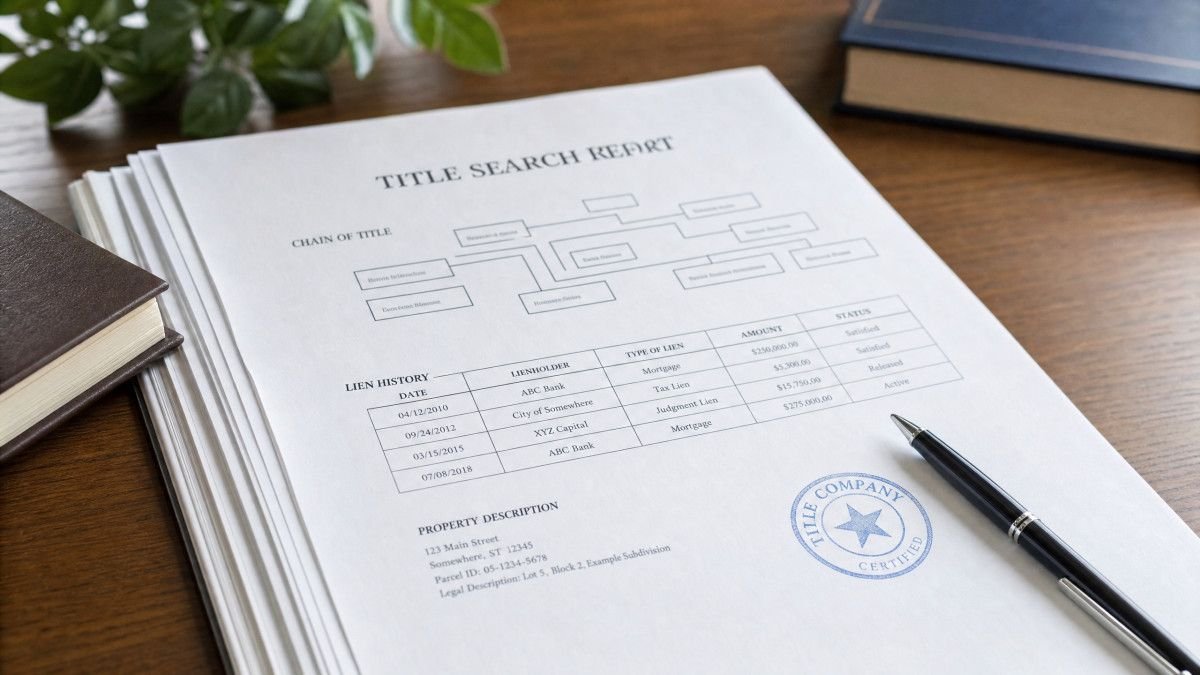
A title search report, also known as a title commitment or preliminary title report, is a document detailing the findings of a title search, including ownership history, liens, easements, and other encumbrances affecting a property.
Q: How long does a title search typically take?
The duration of a title search can vary, generally ranging from a few days to a couple of weeks, depending on the complexity of the property’s history and the efficiency of local record-keeping offices. More complex histories or rural areas might take longer, sometimes extending to a month.
Q: Who typically pays for a title search?
Who pays for a title search can vary by location and negotiation, but it is often a buyer’s closing cost, sometimes shared with the seller, or paid by the seller in certain markets. Local customs and state laws often dictate this, and it’s a point of negotiation in many purchase agreements.
Q: Can I do my own title search?
While technically possible to conduct your own title search by accessing public records, it is generally not recommended due to the complexity of legal documents and the potential for missing critical issues. Professional expertise is invaluable here, as a missed detail could have severe financial consequences.
Q: What is title insurance?
Title insurance protects both the buyer and the lender from financial losses due to defects in the property’s title that were not discovered during the initial title search. It’s a one-time premium paid at closing for ongoing protection, covering potential future claims against the property’s ownership.
Conclusion
The title search, far from being a mere bureaucratic hurdle, stands as a foundational pillar in the complex edifice of real estate transactions. It serves as the buyer’s vigilant protector, meticulously sifting through historical records to unearth any hidden claims or encumbrances that could otherwise transform a joyous home purchase into a legal quagmire. While the process can sometimes feel tedious, or even frustrating when unexpected issues arise, its value is immeasurable. It ensures that the property you intend to call your own is truly yours, free from the ghosts of past ownership disputes or lingering financial obligations. Ultimately, a thorough title search provides the peace of mind essential for a secure and confident property investment, allowing you to focus on building a future in your new home, rather than battling unforeseen legal challenges.

Most Viewed