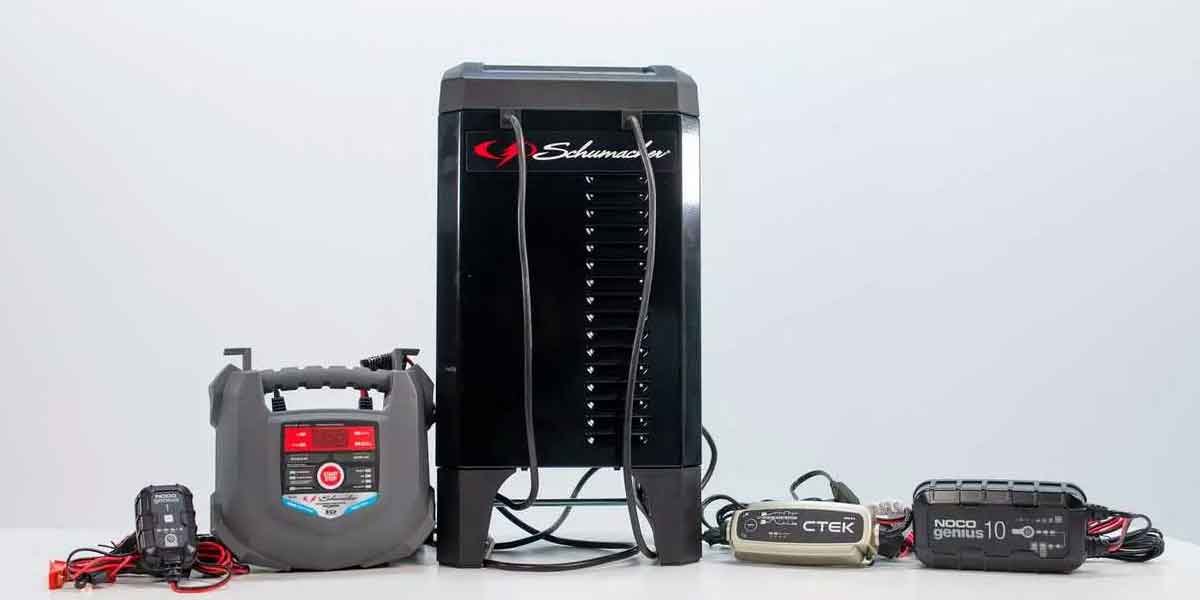

You know that sinking feeling. You turn the key, you press the button, you wait for that familiar rumble—and your car answers with silence. Maybe a faint click. Maybe dashboard lights that look suddenly tired. In that moment, you don’t just need “a tool.” You need a small rescue plan. And that’s exactly what the right charger can be: calm, reliable, and ready before you’re stranded in the rain.
Choosing the right charger isn’t about being a gearhead. It’s about protecting your time, your schedule, and your peace of mind. Let’s walk through the types, what they do, and how you can pick the one that fits your car and your life—without guesswork.
Table of Contents
ToggleWhat a battery charger actually does (and why you should care)
A car battery doesn’t “run out” the way a flashlight battery does. It gets drained—by short trips, cold mornings, a door left ajar, an aging alternator, or even just sitting too long. A charger restores that lost energy by pushing current back into the battery in a controlled way.
And controlled is the key word. Too much current can overheat a battery. Too little can take forever. The right match saves the battery plates, extends lifespan, and makes your mornings feel normal again.
Here’s a quick gut-check: if you drive daily on longer trips, you may rarely need charging. If you take lots of short drives, park for weeks, or own a second “weekend” car, charging becomes less optional and more like basic care.
Types of chargers you’ll see in the wild
Most chargers fall into a few categories, and each one has a personality:
– Manual chargers: Simple, inexpensive, but you must monitor them. They don’t automatically shut off when the battery is full. Great for hands-on folks, risky for forgetful nights.
– Automatic (smart) chargers: These adjust charging stages and often stop or switch to maintenance when full. These are the “set it and breathe” option.
– Maintainers: Designed to keep a battery topped up over long periods rather than recover a deeply drained one.
– Jump starters vs. chargers: A jump starter gives immediate power to start the car; it doesn’t necessarily refill the battery fully. A charger refills.
Think of it like hydration: a jump start is a quick sip to get moving; charging is actually replenishing the tank.
Trickle Charger Basics: When slow and steady is exactly what you need
A trickle charger is built for patience. It delivers a low, steady current—often 1–3 amps—over a longer period. That slow pace is gentle, and it’s especially helpful for vehicles that sit: classic cars, motorcycles, seasonal trucks, or the spare car you swear you’ll drive more often.
But here’s the catch: not all low-and-slow devices are created equal. Some are true maintainers with automatic shutoff or float mode. Others just keep pushing current and require you to unplug them manually to avoid overcharging.
If you’ve ever had a moment where time slipped away—like glancing at a watch and realizing the “quick errand” somehow became an hour—then you already understand why automatic protection matters. Minutes disappear. Batteries don’t forgive.
Smart chargers: the best “daily driver” choice for most people
Smart chargers are often the easiest recommendation because they remove stress. They monitor voltage, adjust current, and switch between stages like bulk charge, absorption, and float/maintenance.
This matters because car batteries are moody. Temperature changes their behavior. Age changes internal resistance. A smart charger adapts without you needing to interpret blinking lights like a secret code.
If you want one charger that fits most scenarios—dead-ish battery, routine top-ups, winter maintenance—a smart model in the 4–10 amp range is a sweet spot for many passenger cars. Faster isn’t always better; it’s only better when the battery and chemistry can handle it.
Battery chemistry: match the charger to what you’re driving
Not all car batteries are the same, and charging the wrong way can shorten life fast. Check your battery label and your owner’s manual for:
– Flooded (wet cell): Common, affordable, needs ventilation during charging.
– AGM (Absorbent Glass Mat): Popular in modern cars with start-stop systems. Likes specific charging profiles.
– Gel: Less common in cars; sensitive to overvoltage.
Some chargers have selectable modes for AGM or gel. If you own a newer vehicle, especially with lots of electronics or start-stop, choosing a car battery charger with AGM compatibility is more than a nice feature—it’s protection.
Charger size: amps, speed, and what you actually need
This is where people get stuck. Here’s the simple guide:
– 1–3 amps: Slow, gentle. Good for maintaining and small batteries.
– 4–10 amps: Practical for most car batteries. Overnight recovery is realistic.
– 10–30 amps: Faster charging, useful for bigger batteries or frequent needs.
– Engine start mode: Some chargers offer a high-current boost to help start. Handy, but not essential if you already own a jump pack.
And yes, bigger numbers look tempting. But heat is the enemy. If you want the battery to last, choose a reasonable charge rate unless you truly need speed.
A quick real-world comparison: calling a charger “fast” is a little like calling a plumber “fast.” Speed is great—until the work is sloppy and you’re left with a bigger mess. The best plumber doesn’t rush the pipe; the best charger doesn’t rush the chemistry.
Features that matter more than you think
When you’re shopping, the box will shout about “power” and “boost.” But the quiet features are often what make ownership easy:
– Automatic shutoff / float mode: Prevents overcharge.
– Reverse polarity protection: Saves you from that heart-stopping clamp mistake.
– Spark-proof clamps: Safer around batteries that may vent gases.
– Temperature compensation: Great if you live where winters bite or summers scorch.
– Desulfation / reconditioning mode: Can help revive batteries left discharged too long (results vary, but it’s a useful tool).
Also consider clamp quality and cable length. Short, stiff cables feel fine in a store and infuriating in a driveway.
How to choose the right battery charger for your car (simple checklist)
Use this as your decision map:
- How often does your car sit unused?
If weeks at a time, choose a maintainer-capable unit.
- What battery type do you have?
Flooded vs AGM matters. Match the charger modes.
- Do you want “set and forget,” or do you enjoy monitoring?
If you want peace, choose automatic/smart.
- How quickly do you need recovery?
Overnight is fine for most people. Choose 4–10 amps.
- Where will you charge?

Chase Durkish
Most Viewed