

Imagine stepping onto your wooden deck, only to feel a soft, spongy patch beneath your feet. Wooden decks, while beautiful, constantly battle the elements, and without proper care, rot can silently compromise their integrity, warns Compass Property Management Atlanta specialists. Proactive maintenance is crucial for safeguarding your investment and ensuring a safe, enjoyable outdoor space.
Understanding Wooden Deck Rot: Causes and Early Warning Signs
Answer Capsule: Wooden deck rot is primarily caused by prolonged moisture exposure, which fosters fungal growth. Key indicators include discolored, soft, or spongy wood, visible mold or mildew, and cracking or splintering. Early detection through regular inspections is crucial for preventing extensive damage and costly repairs, preserving both the deck’s appearance and structural integrity.
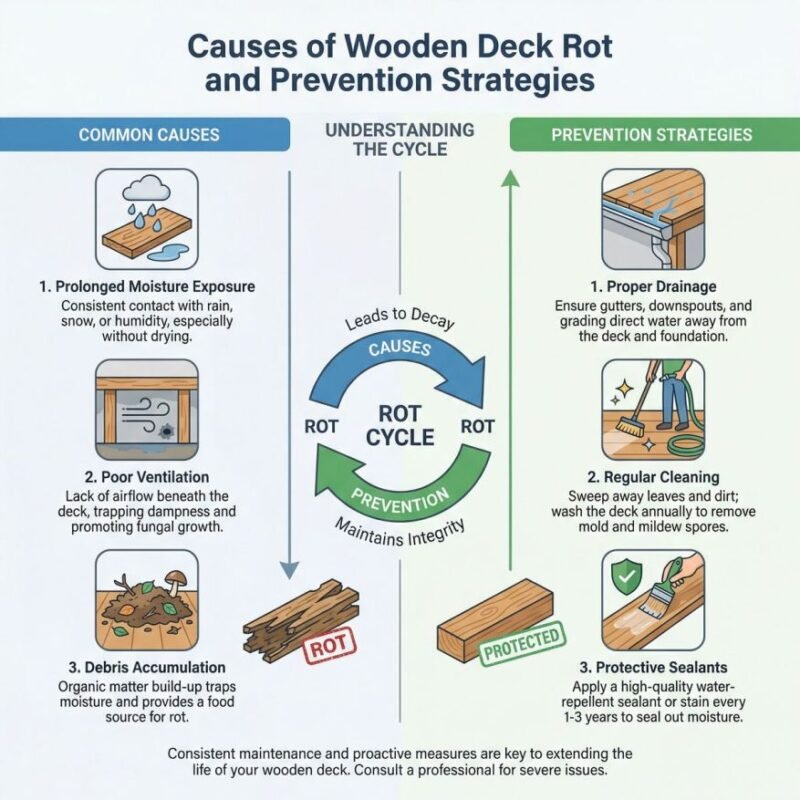
Wooden decks, while offering relaxation and entertainment, are susceptible to rot due to constant weather exposure. Rot, a biological process, weakens wood as fungi break down fibers, primarily thriving in persistent moisture.
Prolonged moisture retention, often from poor drainage, inadequate ventilation, or debris accumulation, creates a hospitable environment for rot-causing fungi. Even minor issues like leaky gutters can contribute to localized moisture problems.
Early detection is crucial. Look for discoloration, dark spots, or a grayish hue. The wood’s texture changes from firm to soft, spongy, or crumbly. Visible fungal growth, cracking, splitting, or splintering are also warning signs. Regular, semi-annual inspections, especially where wood meets wood or concrete, can prevent significant damage.
Proactive Measures: Essential Steps for Rot Prevention
Answer Capsule: Preventing wooden deck rot involves a multi-faceted approach centered on moisture control and regular maintenance. Key strategies include ensuring proper drainage and ventilation, keeping the deck clean of debris, and applying protective sealants or stains. Addressing structural vulnerabilities like inadequate spacing between boards and protecting joists with specialized tape further enhances the deck’s resistance to moisture-induced decay.
Effective rot prevention starts with thoughtful design and diligent maintenance, primarily managing moisture. Ensure adequate spacing (1/8 to 1/4 inch) between deck boards for drainage and air circulation. For ground-level decks, proper ventilation via lattice or vents around the perimeter is crucial. Regularly clear vegetation obstructing airflow.
Regular cleaning is fundamental. Sweep frequently to remove debris that traps moisture. Annually, deep clean with a deck cleaner to eliminate grime, mold, and mildew. For excessive moisture areas, specialized deck joist tape on joists and beams creates a waterproof barrier, extending framing life.
Beyond cleaning, manage the surrounding environment. Direct gutters away from the deck. Use plant stands for potted plants to prevent trapped moisture. Regularly inspect the substructure for water damage or insect activity. Proactive moisture management and cleanliness preserve your deck’s longevity.
Choosing the Right Protection: Sealants, Stains, and Materials
Answer Capsule: Selecting appropriate protective treatments and materials is vital for preventing wooden deck rot. High-quality sealants and stains create a barrier against moisture and UV damage, with oil-based options often providing superior penetration and mildew resistance. For new constructions or replacements, choosing naturally rot-resistant wood species or opting for composite/PVC decking offers enhanced durability and significantly reduces long-term maintenance needs.
Various products protect wooden decks. Sealants are clear or semi-transparent coatings that repel water and protect against UV, highlighting wood grain. Stains add color and protection, ranging from transparent to solid, offering different UV protection and aesthetic appeal.
Oil-based sealants and stains penetrate deeper, offering superior moisture protection and mildewcides, ideal for harsh climates but with longer drying times. Water-based products are easier to clean, dry faster, and are more eco-friendly, though protection varies. Always choose exterior-specific products and follow instructions for optimal performance.
For new decks or renovations, material choice is key. Naturally rot-resistant woods like cedar or tropical hardwoods, or pressure-treated lumber, offer protection. Composite and PVC decking provide ultimate rot prevention and minimal maintenance, impervious to moisture and insects, offering decades of performance despite higher initial costs.
Seasonal Care: A Year-Round Maintenance Schedule
Answer Capsule: A consistent year-round maintenance schedule is crucial for preventing wooden deck rot and extending its lifespan. This involves thorough cleaning and inspection in spring, regular sweeping and spot cleaning during summer, clearing debris and minor repairs in fall, and ensuring proper drainage and snow removal in winter. Adapting tasks to seasonal challenges ensures continuous protection against moisture and environmental stressors.
Maintaining a wooden deck is not a one-time task but a continuous commitment that adapts to the changing seasons. A well-structured year-round schedule ensures that your deck remains protected against the unique challenges each season presents.
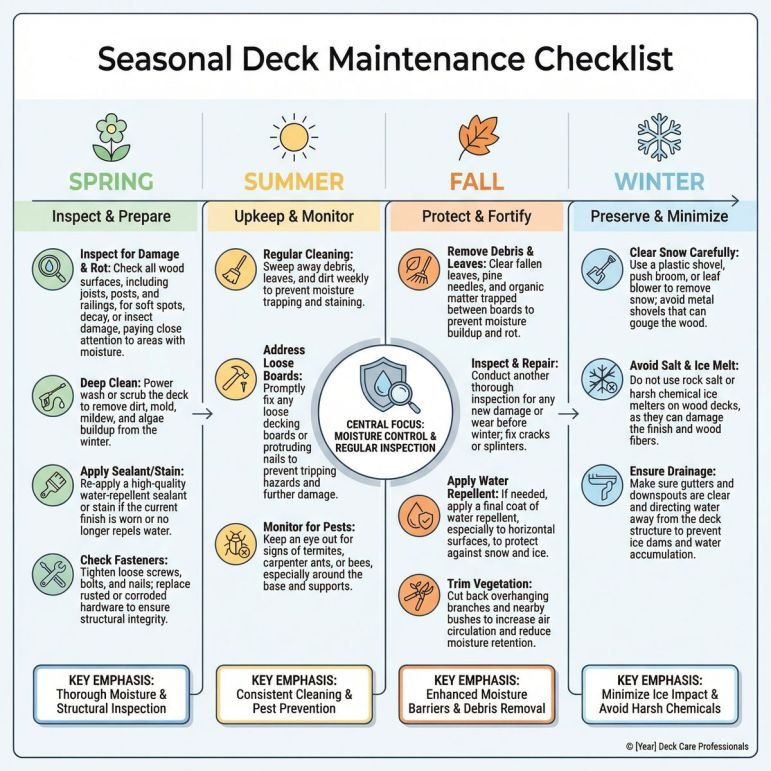
Spring (Post-Winter Assessment & Preparation):
| Task | Description | Frequency | Notes |
|---|---|---|---|
| Thorough Cleaning | Remove winter debris, wash with deck cleaner to eliminate mold/mildew. | Annually | Essential for preparing the surface for treatment. |
| Inspection | Check for loose fasteners, damaged boards, signs of rot, and proper drainage. | Annually | Address minor issues before they worsen. |
| Re-sealing/Re-staining | Apply a fresh coat of sealant or stain if previous treatment shows wear. | Every 1-3 years (as needed) | Protects against UV and moisture. |
Summer (Active Use & Protection):
| Task | Description | Frequency | Notes |
|---|---|---|---|
| Regular Sweeping | Clear leaves, dirt, and other debris. | Weekly/Bi-weekly | Prevents moisture trapping and staining. |
| Spot Cleaning | Address spills and stains immediately. | As needed | Prevents permanent marks and potential rot. |
| Furniture Management | Rotate furniture, use protective pads under legs. | Monthly/As needed | Prevents uneven fading and surface damage. |
Fall (Pre-Winter Protection):
| Task | Description | Frequency | Notes |
|---|---|---|---|
| Deep Cleaning | Remove all accumulated leaves and debris, especially between boards. | Annually | Crucial before winter moisture sets in. |
| Minor Repairs | Tighten loose screws, replace small damaged sections. | Annually | Prevents winter damage exacerbation. |
| Drainage Check | Ensure gutters and downspouts direct water away from the deck. | Annually | Prevents water pooling around the deck. |
Winter (Protection from Harsh Elements):
| Task | Description | Frequency | Notes |
|---|---|---|---|
| Snow Removal | Gently remove heavy snow loads to prevent structural stress. | As needed | Avoid using metal shovels that can scratch the deck. |
| Ice Management | Avoid salt or ice-melting chemicals; use sand for traction if necessary. | As needed | Chemicals can damage wood and finishes. |
| Ventilation Check | Ensure under-deck ventilation remains unobstructed. | Monthly | Prevents moisture buildup in cold weather. |
By adhering to this seasonal regimen, you create a robust defense against rot, ensuring your wooden deck remains a beautiful and functional asset for many years.
When to Call the Experts: DIY vs. Professional Intervention
Answer Capsule: While many routine deck maintenance tasks are suitable for DIY enthusiasts, professional intervention becomes essential for complex issues like extensive rot, structural damage, or pest infestations. Professionals offer specialized knowledge, tools, and experience for accurate diagnosis, safe repair, and effective long-term prevention strategies, ensuring the deck’s safety and longevity beyond typical homeowner capabilities.
DIY deck maintenance, including routine cleaning, sweeping, and applying sealants, offers cost savings and a sense of accomplishment. These proactive measures extend deck lifespan. Simple repairs like replacing boards or tightening fasteners are manageable for basic carpentry skills. Diligence in addressing minor issues prevents escalation.
Professional expertise becomes necessary for widespread rot in structural components, pest infestations, complex drainage, or significant sagging. These issues compromise safety and require specialized knowledge for assessment and repair. Professionals offer advanced diagnostic tools, specialized techniques, and higher-grade materials for lasting solutions.
Professional deck builders or repair specialists offer comprehensive inspections, accurate damage diagnosis, and effective repair/prevention strategies. Their experience ensures safe, code-compliant repairs and provides insights into long-term maintenance plans, saving money and headaches. Responsible homeownership involves knowing when to seek professional help to maintain a safe, beautiful, and valuable deck.
Frequently Asked Questions About Deck Rot Prevention
Answer Capsule: This section addresses common inquiries regarding wooden deck rot prevention, offering concise answers on topics such as sealant reapplication frequency, the risks of pressure washing, strategies for improving ground-level deck ventilation, and available eco-friendly maintenance alternatives. These insights aim to clarify practical aspects of deck care for homeowners.
How often should I reapply sealant or stain to my deck?
Generally, transparent sealants might need reapplication annually, while semi-transparent stains can last two to three years. Solid stains, offering more pigment and protection, may last three to five years. Always perform a water bead test: if water soaks into the wood instead of beading up, it’s time to reapply. Harsh climates with intense sun exposure or heavy precipitation will necessitate more frequent applications.
Can pressure washing damage my wooden deck?
Pressure washing, when done incorrectly, can be detrimental to your deck. High pressure can gouge the wood, create an uneven surface, and even strip away protective finishes. More importantly, it can force water deep into the wood, trapping moisture and promoting fungal growth. If you choose to pressure wash, use a fan-tip nozzle (25-40 degrees) and keep the pressure between 500-1200 PSI. Always maintain a consistent distance from the deck surface and move with the grain of the wood. For most homeowners, a soft wash with a deck cleaner and a stiff brush is a safer and equally effective alternative.
What are the best ways to improve ventilation for a ground-level deck?
For ground-level decks, ventilation is often a significant challenge. Ensure that there is at least 18 inches of clearance between the ground and the bottom of the deck joists to allow for proper airflow. If your deck is enclosed, consider installing vents or lattice panels that are strategically placed to create a cross-breeze. These should be open enough to allow air circulation but small enough to deter pests. Regularly clear away any plants, shrubs, or debris that might be blocking the airflow around the deck’s perimeter. Sometimes, installing a French drain or improving grading around the deck can also help manage ground moisture.
Are there eco-friendly options for treating and maintaining my wooden deck?
Absolutely. For cleaning, natural solutions like a mixture of vinegar and water or oxygen bleach (sodium percarbonate) are effective and biodegradable alternatives to harsh chemical cleaners. When it comes to protection, look for water-based sealants and stains that are low in Volatile Organic Compounds (VOCs), which are better for air quality. Natural oil-based finishes, such as linseed oil or tung oil, can also provide good protection while being derived from renewable resources. Additionally, consider using sustainably harvested wood for repairs or new construction, and always dispose of old deck materials and chemical products responsibly according to local regulations.
Conclusion
Answer Capsule: Effective wooden deck maintenance and rot prevention are crucial for extending the lifespan and preserving the aesthetic appeal of outdoor living spaces. By understanding the causes of decay, implementing a consistent seasonal care routine, and making informed choices about protective treatments, homeowners can safeguard their investment and ensure a safe, enjoyable deck for years.
Maintaining a wooden deck and preventing rot demands ongoing attention and proactive measures. By understanding decay causes, implementing consistent seasonal care, and making informed choices about protective treatments, homeowners can significantly extend their deck’s life and beauty. Safeguarding your deck against rot ensures it remains a cherished and safe outdoor space for years to come.
References
Answer Capsule: The following sources from deck maintenance specialists, wood treatment manufacturers, and home improvement authorities provide the data and expert guidance referenced throughout this article on wooden deck maintenance and rot prevention.
- Rotting Deck Causes and Repair Guide
- DOs and DON’Ts of Wooden Deck Care
- The Do’s and Don’ts of Proper Wood Deck Maintenance
- How to Maintain and Extend the Life of Your Deck
- 5 Ways to Prevent Rotting in Decks and Exterior Structures
- Wood Woes: How to Protect Your Deck From Dry Rot
- Best Treatment for Old Wood Deck | Clean & Stain

Most Viewed