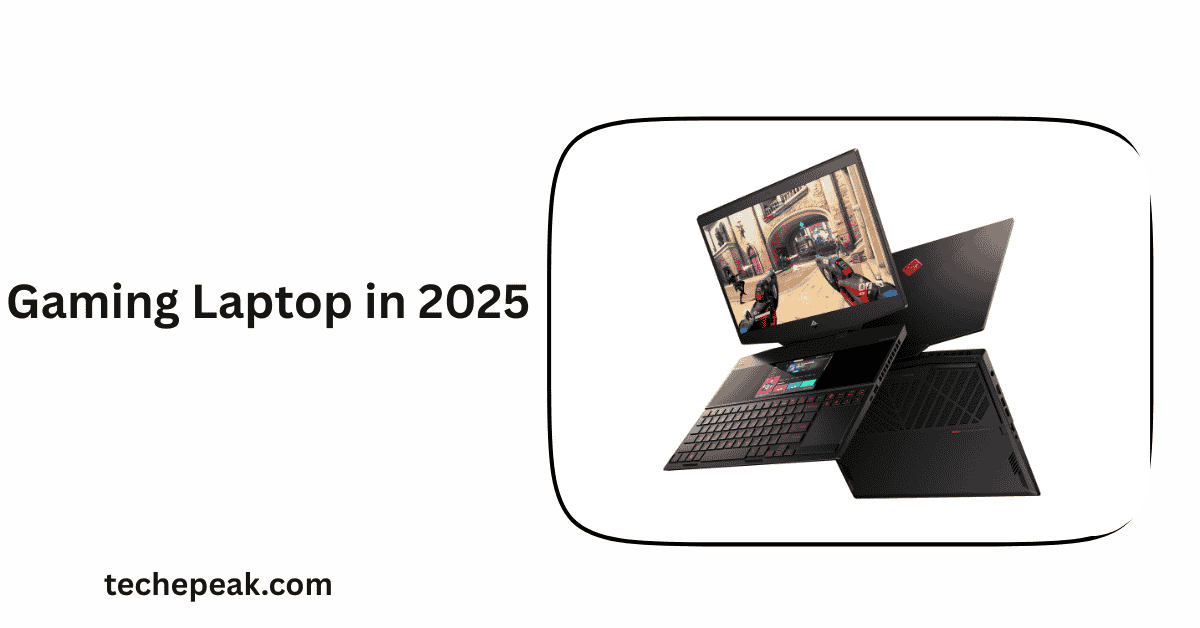

Finding the right gaming laptop is more than just picking a high-powered machine. Modern gamers demand performance, portability, and versatility to handle AAA titles, esports, and productivity tasks. With laptops now rivaling desktops in performance, understanding specifications, cooling, and design is essential before investing in one.
| Feature | Description |
|---|---|
| GPU | Dedicated graphics card like NVIDIA RTX or AMD Radeon for high FPS |
| CPU | High-performance processor such as Intel i7/i9 or AMD Ryzen 7/9 |
| RAM | Minimum 16GB recommended for modern gaming |
| Storage | SSD preferred for fast load times; HDD for additional storage |
| Display | High-refresh-rate screens (120Hz, 144Hz, or 240Hz) for smooth visuals |
| Battery Life | Realistic expectations: 3–5 hours under heavy gaming load |
Understanding Gaming Laptops and What Sets Them Apart from Standard Laptops
What Makes a Gaming Laptop Unique?
A gaming laptop stands out due to its specialized hardware designed for intensive processing and high-end graphics. Dedicated GPUs such as NVIDIA RTX 4070 or AMD Radeon RX 7800 deliver smooth gameplay at high resolutions. High-performance CPUs like Intel i7 or AMD Ryzen 9 allow seamless multitasking. Additionally, high-refresh-rate displays of 144Hz or more improve responsiveness, giving competitive gamers a distinct edge.
Portability vs Performance
Gaming laptops are engineered to balance power and mobility. Unlike desktops, which are bulky, laptops incorporate advanced cooling solutions without adding excessive weight. Most modern models weigh between 4 to 6 pounds, allowing gamers to play anywhere without sacrificing performance or comfort.
Why a Gaming Laptop Is Worth the Investment
Investing in a gaming laptop ensures flexibility and longevity. Users can enjoy high-end gaming anywhere, while also benefiting from productivity features like video editing, 3D rendering, and content creation. This combination of performance and portability makes a gaming laptop a smart long-term choice.
Key Specifications to Consider Before Buying a Gaming Laptop
Graphics Card (GPU)
The GPU is the heart of a gaming laptop. Dedicated graphics cards like NVIDIA RTX 4070 or AMD Radeon RX 7800 are essential for running modern AAA games at ultra settings. Integrated graphics can handle basic tasks but fail in complex gaming environments. These GPUs also support ray tracing, VR gaming, and high frame rates for competitive play.
Processor (CPU)
High-end CPUs ensure smooth gaming and multitasking. Intel i7-13700H or AMD Ryzen 9 7945HX are top choices in 2025, providing stability during intensive sessions. Proper CPU selection prevents bottlenecks and ensures that your gaming laptop remains capable of handling future titles without lag.
RAM and Storage
Memory and storage directly impact responsiveness. A minimum of 16GB RAM is recommended for modern games, while 32GB suits streaming or content creation. SSDs significantly reduce loading times compared to HDDs, and NVMe SSDs can reach read speeds up to 7000 MB/s, offering near-instant access to games and software.
Display and Refresh Rate
Display quality is critical. Full HD (1080p) is standard, but 2K or 4K panels offer sharper visuals. High-refresh-rate screens of 144Hz or higher enhance fluidity and reduce screen tearing, especially important for esports titles. Color accuracy and brightness are additional factors for an immersive experience.
Battery Life
Expect realistic performance: heavy gaming sessions yield 3–5 hours, while lighter tasks can extend battery life to 7–8 hours. Manufacturers provide software tools to optimize power consumption without compromising performance, ensuring your gaming laptop remains usable on the go.
Gaming Laptop Features That Impact Performance and Experience

Cooling Systems and Thermal Management
Advanced cooling is essential to maintain performance. Gaming laptops employ multiple fans, heat pipes, and sometimes vapor chambers to prevent overheating. Software-based fan control allows dynamic adjustments during intense gaming, keeping temperatures low and ensuring consistent frame rates.
Keyboard and Trackpad for Gamers
Keyboard quality influences responsiveness. Mechanical keyboards provide tactile feedback, while RGB lighting allows personalization for different games. Travel distance, key feel, and ergonomic layout all affect reaction time and overall gaming experience.
Connectivity and Ports
Gaming laptops require versatile connectivity. USB-C, HDMI 2.1, Thunderbolt 4, and Ethernet ports allow external monitors, VR headsets, and accessories to connect seamlessly. Multiple ports provide convenience and expand the gaming setup without reliance on wireless solutions alone.
Audio and Speaker Quality
Internal speakers are sufficient for casual play, but high-quality gaming headsets are recommended for immersive sound. Features like Dolby Atmos or spatial audio support provide precise directional cues, enhancing performance in competitive games.
Popular Gaming Laptop Brands and Models in 2025
Leading brands combine performance, design, and innovation. ASUS ROG Strix and Zephyrus series are known for high-refresh-rate displays and RGB customization. MSI Raider and Stealth models focus on advanced cooling and powerful GPUs. Alienware x17 and m15 deliver premium build quality and extreme performance. Lenovo Legion series balances specs and thermal efficiency, while HP Omen series offers solid performance at reasonable prices.
| Brand | Popular Models | Key Features | Price Range |
|---|---|---|---|
| ASUS ROG | Strix G18, Zephyrus G15 | High-refresh-rate displays, RGB keyboards | $1,500–$3,000 |
| MSI | Raider GE78, Stealth 17 | Advanced cooling, strong GPU options | $1,400–$2,800 |
| Alienware | x17 R2, m15 R7 | Premium design, excellent performance | $2,000–$4,000 |
| Lenovo | Legion 7, Legion 5 | Balanced specs, good thermal management | $1,200–$2,500 |
| HP | Omen 17, Victus 16 | Solid performance, customizable features | $1,100–$2,200 |
Tips for Choosing the Right Gaming Laptop for Your Needs
Determine Your Gaming Goals
Different priorities affect laptop choice. AAA gaming demands high-end GPU and cooling, while esports focuses on high-refresh-rate displays and CPU responsiveness. VR or content creation requires additional RAM, storage, and a high-end graphics card to handle intense workloads.
Budget vs Performance
Mid-range laptops between $1,200–$1,800 provide smooth 1080p gameplay. High-end models starting at $2,000 deliver 4K capabilities, advanced cooling, and premium components. A careful assessment of budget versus performance ensures a gaming laptop that meets both current and future needs.
Future-Proofing Your Purchase
Upgradability extends laptop lifespan. Models with expandable RAM and storage allow flexibility. Choosing a laptop with the latest GPU generation ensures longevity through driver support and compatibility with upcoming games. Durable materials and efficient cooling systems further enhance usability.
Maintaining Your Gaming Laptop for Peak Performance
Cleaning and Dust Management
Dust can reduce airflow and cause overheating. Regular cleaning with compressed air helps maintain optimal temperatures. Avoid obstructing intake or exhaust vents to preserve performance and prolong component life.
Software Updates and Driver Optimization
Keeping GPU drivers up to date ensures stable performance and access to new features. Manufacturer utilities help monitor system health, optimize fan speeds, and maintain consistent gameplay.
Battery Care and Thermal Monitoring
While gaming laptops are often used plugged in, avoiding constant charging preserves battery health. Monitoring temperatures with tools like HWMonitor prevents overheating and maintains reliable performance over time.
Case Study: Gaming Laptop Performance in 2025
A gamer upgraded from a desktop with RTX 2060, i5 CPU, and 16GB RAM to an ASUS ROG Zephyrus G15 with RTX 4070, Ryzen 9, and 32GB RAM. The laptop delivered comparable FPS in ultra settings while providing portability and battery support for productivity tasks. This case highlights how a modern gaming laptop can match desktops while adding convenience and flexibility.
Conclusion
A gaming laptop in 2025 provides desktop-level performance with unmatched portability. By prioritizing GPU, CPU, RAM, display, and cooling, gamers can find a device that delivers smooth gameplay and future-proof performance. Careful research ensures the laptop meets budget and performance goals, offering years of immersive gaming and productivity. Investing in a quality gaming laptop today guarantees reliability, mobility, and top-tier experiences for both gaming and creative tasks.
Most Viewed