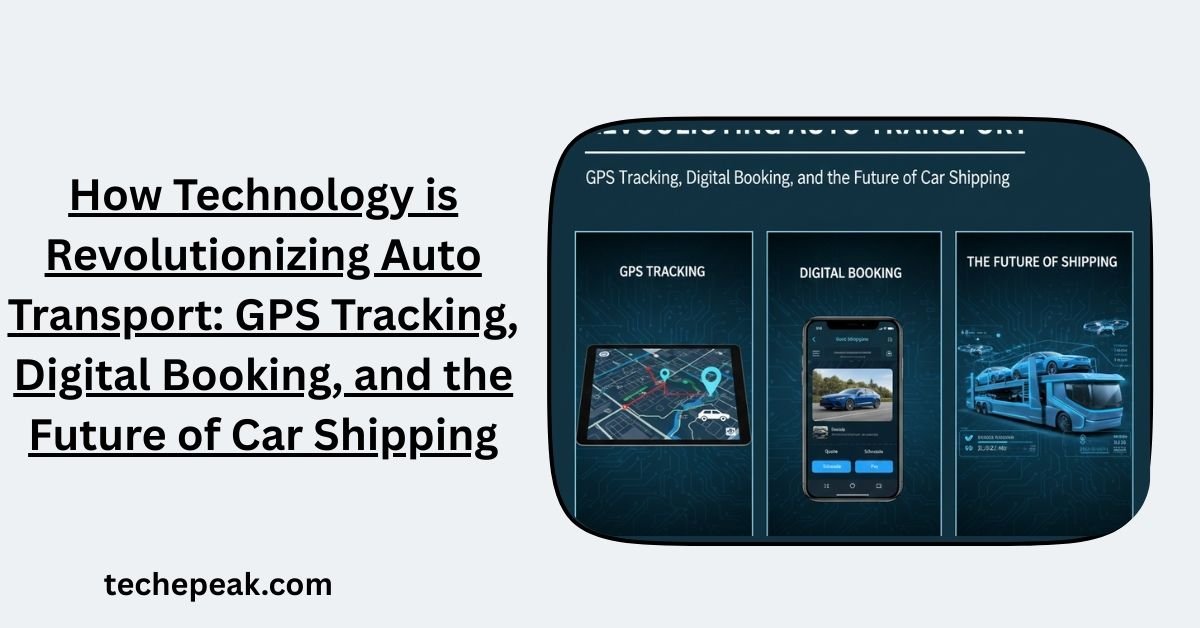

The auto transport industry, long characterized by phone calls, paper manifests, and limited visibility into vehicle location during transit, is experiencing a technology-driven transformation that mirrors changes across the broader logistics sector. From real-time GPS tracking to AI-powered route optimization, digital platforms are fundamentally changing how vehicles move across the country and how customers experience the shipping process.
This revolution matters because vehicle transport represents a significant friction point in American mobility. Whether you’re relocating for work, buying a car from across the country, shipping to a vacation home, or managing corporate fleet logistics, traditional auto transport’s opacity and unpredictability created unnecessary stress and inefficiency. Modern technology is eliminating these pain points while simultaneously improving carrier efficiency, reducing costs, and enabling new service models.
Table of Contents
ToggleThe Legacy System: Understanding Pre-Digital Auto Transport
To appreciate how transformative current technology changes are, we need to understand the system they’re replacing. Traditional auto transport operated much like the trucking industry did in the 1980s—largely analog, relationship-driven, and dependent on phone communication and paper documentation.
The classic process looked like this: A customer seeking vehicle transport would call multiple brokers, provide their information repeatedly, and receive widely varying quotes. The broker would then call various carriers, describe the job, and negotiate rates. Once a carrier accepted the job, communication happened primarily through phone calls—often with delays, missed connections, and information gaps.
Customers had virtually no visibility into where their vehicle was during transit. They’d receive a call when the carrier was a day or two out from pickup, another call when pickup occurred, and then… silence. Days or weeks passed with no information about vehicle location, delivery timing, or progress. The carrier might call when nearing the delivery location, or they might just show up.
This opacity created anxiety for customers shipping expensive vehicles thousands of miles. Is my car okay? Where is it right now? Is the carrier on schedule? When will it actually arrive? These questions had no good answers beyond “call your broker, who will call the carrier, who might call you back.”
Documentation was paper-based. The Bill of Lading (documenting vehicle condition at pickup) was filled out by hand, signatures were collected in person, and photos (if taken at all) were stored on individual devices with no systematic organization. Insurance claims, if necessary, required mailing or faxing documents and waiting weeks for processing.
Payment processing was equally antiquated. Many carriers required cash or money orders at delivery. Credit card processing was limited. Electronic bank transfers were uncommon. The entire transaction felt more like buying something from classified ads than engaging with modern commerce.
The Digital Platform Revolution
The past decade has seen the emergence of digital platforms that fundamentally restructure how customers find, book, and track auto transport services. These platforms inject transparency, efficiency, and user experience standards that mirror what customers expect from other logistics services like package shipping or ride-sharing.
Online quote systems have replaced the traditional multi-call broker process. Customers enter their pickup location, delivery location, vehicle details, and desired timing once, then receive instant quotes from multiple carriers. This transparency lets customers compare options based on price, timing, reviews, insurance coverage, and carrier ratings—all without making a single phone call. Platforms that provide instant comparisons have made it easier for customers to evaluate regional pricing as well, allowing users to quickly review Car Transport Quotes Manchester when arranging vehicle shipping within or beyond the Greater Manchester area.
The underlying technology enabling instant quotes involves several sophisticated systems working together. Backend databases maintain real-time carrier capacity information, tracking which carriers operate specific routes and have availability during requested timeframes. Pricing algorithms factor in route popularity, seasonal demand patterns, fuel costs, vehicle type, and competitive market rates to generate accurate quotes instantly.
Machine learning optimization improves these quote systems over time. The platforms track which quotes convert to bookings, which factors drive customer decisions, and how accurate initial pricing proves compared to final job costs. This data trains algorithms to price jobs more accurately, route jobs to appropriate carriers more efficiently, and reduce the gap between initial quotes and final billing.
Digital booking eliminates phone tag. Once a customer selects a carrier and price, the entire booking process happens online. Upload photos of your vehicle, enter pickup/delivery details, provide contact information, and complete payment—all through a web interface or mobile app. Confirmation and documentation are instant, with automatic email or text confirmations replacing follow-up phone calls.
Integration with carrier dispatch systems means jobs flow seamlessly from customer booking to carrier assignment without manual broker intervention. The platform knows which carriers service specific routes, checks real-time capacity, and matches jobs to carriers automatically or presents options to carriers who can accept with one click. This reduces the time from customer booking to carrier assignment from days to minutes.
GPS Tracking: The Transparency Revolution
Perhaps the single most impactful technology change in auto transport is GPS tracking integration. Modern carriers equip their trucks with GPS devices that provide real-time location data throughout the journey. Customers access this data through online portals or mobile apps, tracking their vehicle’s progress exactly as they’d track a FedEx package.
The customer experience transformation is dramatic. Instead of days of silence punctuated by occasional phone updates, customers can open an app and see exactly where their vehicle is at any moment. Is the carrier making good progress? Check the app. When will they arrive? The app provides an estimated delivery window based on current location and average travel speed. Did they stop overnight? The tracking shows it.
AI and Machine Learning: Optimization at Scale
The large volume of shipments processed through digital platforms generates massive datasets that power machine learning systems driving continuous operational improvements.
Route optimization algorithms process millions of data points to identify the most efficient paths between any two locations. These systems factor in distance, road quality, traffic patterns, weather, fuel costs, toll roads, and carrier-specific preferences to suggest optimal routes. Over time, the algorithms learn which routes consistently perform best, adjusting recommendations based on real-world outcomes rather than just theoretical efficiency.
Dynamic pricing models adjust rates based on supply and demand in real time. When carrier capacity on a specific route is tight (say, Northeast to Florida during peak snowbird season), modern car shipping companies can dynamically increase pricing to balance demand with available capacity. Conversely, when carriers have excess capacity on return routes, pricing can decrease to stimulate demand and improve carrier utilization. This market-based pricing mechanism benefits both customers (who get better rates on less popular routes) and carriers (who can charge premium rates when demand justifies it).
Carrier performance scoring uses machine learning to evaluate carrier reliability, customer satisfaction, damage rates, and delivery accuracy. The platform analyzes thousands of shipments per carrier, identifying patterns that predict future performance. High-performing carriers receive preferential job assignments and can command higher rates. Poor-performing carriers face reduced visibility or removal from the platform. This data-driven approach rewards quality and incentivizes continuous improvement.
Predictive maintenance systems analyze vehicle telemetry data from GPS-equipped carrier trucks to identify maintenance needs before breakdowns occur. By monitoring engine performance, tire pressure, fuel efficiency, and other metrics, the system can alert carriers to service needs before they cause delays or safety issues. This predictive approach reduces unexpected breakdowns that might delay customer shipments.
Customer service automation handles routine inquiries without human intervention. Natural language processing enables chatbots to answer common questions about pricing, timing, documentation requirements, and service options. When issues require human attention, the AI system routes them to appropriate customer service representatives with full context, improving resolution speed and quality.
Blockchain and Trust Systems
Some forward-thinking auto transport companies are experimenting with blockchain technology to address trust and verification challenges inherent in the industry.
Immutable record-keeping captures every event in a vehicle’s transport journey—pickup confirmation, condition documentation, location checkpoints, delivery confirmation—in a blockchain ledger that cannot be altered retroactively. This creates an indisputable record useful for insurance claims, disputes, or quality verification.
Smart contracts automate payment releases based on verified milestones. Rather than paying upfront or at delivery, payment can be held in escrow and automatically released when specific conditions are met: 25% at pickup confirmation, 25% when the vehicle reaches the halfway point, 50% at delivery confirmation. This protects both customers (who don’t pay until services are rendered) and carriers (who receive payment automatically when they complete their work).
Reputation systems built on blockchain create persistent, transferable carrier ratings that follow drivers even if they change companies. This long-term reputation tracking incentivizes quality service since carriers can’t escape poor performance by simply joining a new company or platform.
Internet of Things (IoT) and Vehicle Monitoring
Advanced auto transport services are beginning to incorporate IoT devices that monitor vehicle condition during transport, providing unprecedented visibility into the vehicle itself rather than just the carrier truck’s location.
OBD-II monitoring devices plug into a vehicle’s diagnostic port and track mechanical systems throughout transport. These devices monitor battery voltage, engine temperature (if the vehicle is periodically started during long transports), and other systems, alerting carriers to potential issues before they become problems.
Battery maintenance systems automatically monitor and maintain vehicle batteries during extended transport periods. Long-distance transport can drain batteries, particularly in newer vehicles with parasitic electrical loads. Smart monitoring systems can trigger trickle charging when needed, ensuring vehicles arrive with functional batteries.
Integration with Automotive Retail Technology
As automotive retail increasingly moves online, integration between vehicle shopping platforms and transport services is becoming more sophisticated.
Direct transport booking from automotive marketplaces allows buyers to purchase a vehicle online and arrange transport in a single transaction. The car shopping site passes vehicle details, buyer location, and seller location directly to the transport platform, pre-filling all necessary information. The buyer sees transport cost alongside the vehicle price, making the total cost of acquisition clear upfront.
For auto retailers and dealerships, integration with auto transport platforms streamlines logistics. When a dealer sells a vehicle to an out-of-state buyer, their inventory system automatically triggers a transport quote request. The dealer arranges transport on behalf of the buyer, building the cost into the transaction and ensuring professional delivery without the buyer needing to coordinate separately.
Fleet management systems for corporate or commercial vehicle fleets integrate with transport platforms to handle routine relocations, maintenance transport, and fleet rebalancing across multiple locations. API integration allows fleet managers to book transport directly from their fleet management software, tracking vehicle movements alongside other fleet data.
The Customer Experience: Then vs. Now
The cumulative effect of these technology changes transforms the customer experience from opaque and anxiety-inducing to transparent and confidence-inspiring.
The traditional experience involved multiple phone calls, days or weeks of uncertainty, limited visibility into where your vehicle was or when it would arrive, paper documentation that could be lost or disputed, and significant stress throughout the process. Customer reviews on sites like A4 Auto Transport from the pre-digital era often focused on anxiety about the black-box nature of the service and relief when vehicles arrived safely despite lack of information during transit.
The modern technology-enabled experience provides instant online quotes with transparent pricing, one-click booking through user-friendly interfaces, real-time GPS tracking showing exactly where your vehicle is throughout transit, automated notifications at every milestone, digital documentation accessible from anywhere, and predictive delivery windows accurate to within hours rather than days. The result is dramatically reduced customer anxiety and significantly higher satisfaction rates.
Industry Challenges and Technology Solutions
The auto transport industry faces several persistent challenges that technology is uniquely positioned to address.
Carrier capacity imbalances plague the industry. Routes from warm-weather destinations to cold-weather areas in summer (as snowbirds return north) and the reverse in fall/winter (southbound snowbird migration) create seasonal supply-demand mismatches. Technology platforms address this through dynamic pricing that incentivizes carriers to serve less popular routes and through better matching algorithms that help carriers find backhaul opportunities.
Driver shortages affecting the trucking industry overall impact auto transport as well. Technology helps by improving driver experience—better route planning means less wasted time, faster payment processing improves cash flow, and automated paperwork reduces administrative burden. Platforms that provide consistent loads and reduce empty return trips help retain drivers in the industry.
Quality consistency varies widely across carriers. Technology-driven rating and review systems create transparency that rewards high-quality carriers with more business while exposing poor performers. Machine learning-based carrier scoring provides more nuanced quality assessment than simple customer ratings, identifying patterns that predict future performance.
Fraud and scam prevention benefits from technology platforms’ ability to verify carrier credentials, maintain rating histories, and process payments through secure systems. Traditional broker arrangements where customers paid deposits to unlicensed brokers who disappeared led to numerous fraud cases. Digital platforms with integrated payment processing and verified carrier networks largely eliminate these risks.
The Specialized Vehicle Market: Technology for High-Value Transport
High-value, classic, and exotic vehicles represent a specialized segment where technology creates particularly significant value.
Enclosed transport for valuable vehicles benefits from IoT monitoring that tracks environmental conditions, impact events, and vehicle-specific parameters throughout transport. Owners of six-figure vehicles can see real-time temperature, humidity, and vibration data, ensuring their investment receives proper handling.
Auction and dealership integration connects specialized vehicle sales with appropriate transport. When a classic car sells at Barrett-Jackson or an exotic car moves between dealerships, integrated transport booking ensures the vehicle is handled by carriers experienced with high-value transport and equipped with appropriate insurance coverage.
White-glove auto transport service coordination for ultra-high-value vehicles ($500,000+) involves technology platforms managing complex logistics: specialized carriers, detailed condition documentation, enhanced insurance coverage, and precise scheduling. These platforms coordinate between sellers, buyers, transport specialists, and sometimes even security escorts for extremely valuable vehicles.
For businesses like NJ Auto Retailers Unite, technology platforms help coordinate vehicle movements between dealerships, auction houses, and customers. The integration between automotive retail technology and transport platforms streamlines operations while maintaining the high service standards expensive vehicles require.
Environmental Impact and Sustainability Technology
The auto transport industry is increasingly focused on reducing environmental impact, with technology playing a key role in sustainability efforts.
Route optimization reduces fuel consumption and emissions by eliminating unnecessary miles. AI-powered routing considers not just distance but also terrain, traffic patterns, and carrier load capacity to identify the most fuel-efficient paths. Industry estimates suggest optimal routing reduces fuel consumption by 8-12% compared to traditional planning methods.
Load optimization ensures carrier trucks operate at efficient capacity. Rather than hauling partially empty carriers, technology platforms help aggregate shipments heading in the same direction, maximizing vehicle capacity per trip. This reduces the total number of carrier trucks on the road and the associated fuel consumption and emissions.
Electric and alternative fuel carrier integration is beginning as some forward-thinking carriers experiment with electric trucks for regional routes. Technology platforms that can route jobs specifically to alternative-fuel carriers help these early adopters find sufficient work to justify their cleaner equipment investments.
Carbon footprint tracking provides transparency about the environmental impact of vehicle shipping. Some platforms now offer customers the option to see estimated carbon emissions for their shipment and purchase carbon offsets if desired. While this doesn’t directly reduce emissions, it creates market incentives for carriers to adopt cleaner technologies.
The Future: Emerging Technologies
Several emerging technologies promise to further transform auto transport over the next 5-10 years.
Autonomous carrier trucks could revolutionize the economics and logistics of vehicle transport. Self-driving car carrier trucks could operate 24/7 without driver rest requirements, dramatically reducing transport times and costs. While regulatory and technology hurdles remain, pilot programs are testing autonomous trucking technology that could eventually apply to vehicle transport carriers.
Drone-assisted loading and unloading for enclosed transport uses small drones to perform detailed vehicle inspections in tight spaces, capturing high-resolution imagery from angles human inspectors can’t easily reach. This technology improves documentation quality while reducing inspection time.
Augmented reality (AR) for virtual vehicle inspections lets customers participate in pickup and delivery inspections remotely. Using AR apps, carriers can stream live video of the inspection while customers watch and approve the condition documentation from anywhere. This technology is particularly valuable for customers who can’t be present for pickup or delivery.
Predictive delivery windows using advanced AI will evolve from “sometime between Tuesday and Thursday” to “Tuesday at 2:47 PM with 95% confidence.” By analyzing weather forecasts, traffic predictions, carrier historical performance, and real-time progress, AI systems will provide increasingly precise delivery predictions.
Vehicle-to-infrastructure communication as autonomous vehicle technology matures will enable transported vehicles to communicate their status directly to the transport management system. A vehicle could report its own battery status, tire pressure, or system warnings while being transported, alerting carriers to potential issues before they become problems.
Making Technology Work for You
For consumers and businesses using auto transport services, understanding available technology helps you choose providers offering the best experience and value.
Demand real-time tracking when booking transport. Any modern carrier should offer GPS tracking with customer access through an app or web portal. If a carrier can’t provide this basic technology, they’re either using outdated systems or have something to hide about their operations.
Use review platforms and data-driven ratings to evaluate carriers. Sites that aggregate thousands of customer reviews and generate performance scores based on actual delivery data provide better insights than marketing claims or traditional broker recommendations.
Take advantage of digital documentation features. Use mobile apps to photograph your vehicle thoroughly before pickup and after delivery. These timestamped, geotagged photos provide indisputable evidence of condition at each stage, protecting both you and the carrier if any disputes arise about transport damage.
Ask about insurance verification through digital platforms. Reputable carriers can provide instant insurance certificate verification through integrated systems that confirm active coverage. If a carrier can’t quickly prove they’re properly insured, that’s a red flag.
Consider integrated payment options that protect both parties. Payment through secure platform escrow systems provides more protection than paying individual carriers directly in cash or check.
The Transformation Continues
The auto transport industry’s technology revolution is far from complete. As more carriers adopt modern systems, as platform capabilities expand, and as new technologies like autonomous vehicles mature, the industry will continue evolving rapidly.
The ultimate beneficiaries are customers who need vehicle transport technology that works seamlessly, reduces stress, provides transparency, and delivers their vehicles safely and on time. The days of opaque, anxiety-inducing vehicle shipping are ending, replaced by a technology-enabled experience that meets modern expectations for logistics services.
For an industry that once operated much like it did in the 1950s, the pace of change over the past decade has been remarkable. And the next decade promises even more dramatic improvements as emerging technologies mature and industry-wide adoption of best practices accelerates.
Whether you’re shipping a vehicle across the country, managing a fleet of vehicles across multiple locations, or operating a business that regularly needs vehicle transport, the technology revolution in auto transport matters to you. The question isn’t whether to embrace these technologies—it’s how quickly you’ll adopt them to improve your experience and outcomes.
The future of vehicle transport is transparent, efficient, technology-enabled, and customer-centric. That future is already arriving, one GPS-tracked shipment at a time.

Shaker Hammam
The TechePeak editorial team shares the latest tech news, reviews, comparisons, and online deals, along with business, entertainment, and finance news. We help readers stay updated with easy to understand content and timely information. Contact us: Techepeak@wesanti.com
More PostsMost Viewed