
In November 2025, Indian police made a significant arrest that sent shockwaves through the film industry. Immadi Ravi, the mastermind behind iBomma1, was caught after months of investigation. What they discovered was staggering: 21,000 pirated movies, 50 lakh (5 million) stolen personal records, and a sophisticated criminal network earning Rs 20 crore annually. Yet many people still don’t understand what iBomma1 really is or why it matters.
This article pulls back the curtain on iBomma1. You’ll learn exactly how this piracy network operates, why it’s far more dangerous than most people realize, and what legal alternatives actually exist. Whether you’re curious about the technology behind it, concerned about your own safety, or simply wondering why the film industry is fighting so hard against piracy, this guide has the answers.
The truth is simple: free movies come with hidden costs. Those costs aren’t just financial—they’re personal, legal, and sometimes devastating. By the end of this article, you’ll understand why choosing iBomma1 over legitimate streaming services is a decision that could haunt you.
What Exactly is iBomma1? Understanding the Piracy Network
iBomma1 is an illegal movie piracy platform that specializes in Telugu cinema. It offers free access to thousands of movies, web series, and OTT content without any licensing or authorization from filmmakers or production houses. Think of it as a massive, unauthorized library where someone else is stealing the books and giving them away.
The platform emerged as a successor to the original iBomma after its operator was arrested. What makes iBomma1 particularly appealing to users is its laser focus on Telugu-speaking audiences. Unlike global streaming platforms that prioritize Hindi or English content, iBomma1 caters exclusively to people who want movies in their native language. This regional specialization gave it a fiercely loyal user base.
The scale is enormous. At its peak, iBomma1 attracted approximately 5 million users monthly. The network operates through a decentralized system of mirror websites—over 110 different domains all serving the same pirated content. When one site gets shut down, another springs up. It’s like playing digital whack-a-mole, which is precisely why law enforcement has struggled to contain it.
Users can stream or download content in various quality levels, from low-resolution to HD. There’s no registration required, no payment needed, and no verification process. The interface is deliberately simple and intuitive, making it easy for first-time visitors to find what they’re looking for. For someone seeking convenience without cost, iBomma1 seems like an obvious choice. The problem is what happens behind the scenes.
How iBomma1 Actually Works: The Technical Infrastructure
Understanding how iBomma1 operates requires looking beyond the surface. This isn’t just someone uploading movies to a website. It’s a sophisticated, decentralized criminal enterprise with international reach.
The Mirror Site Strategy
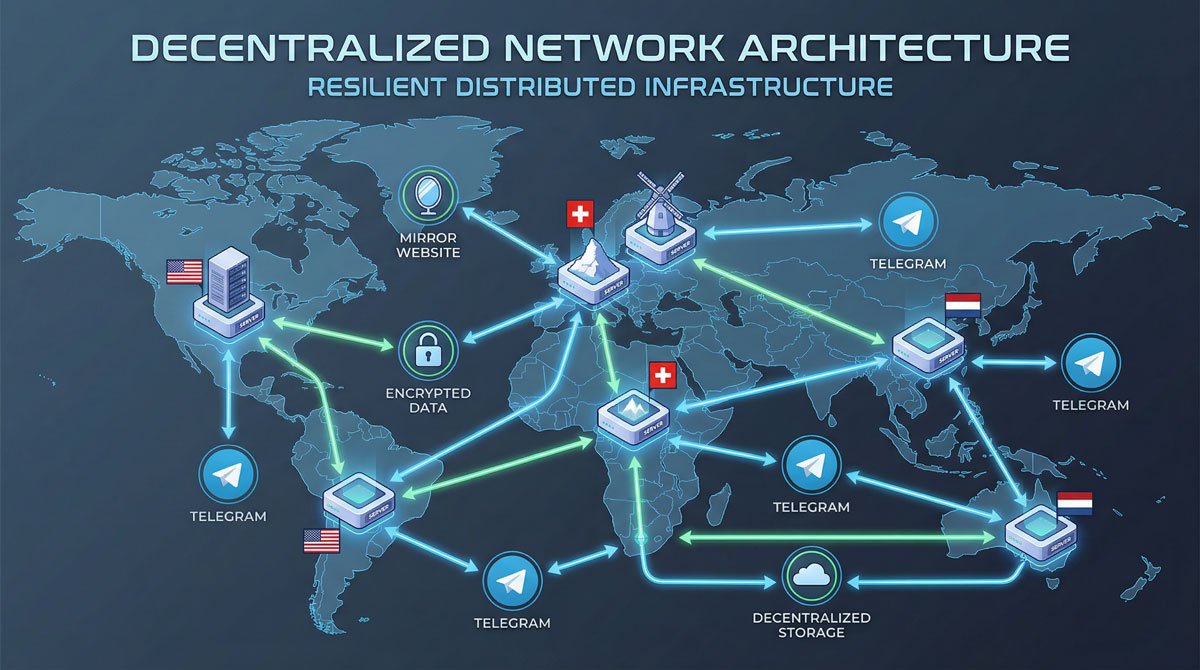
The genius—and criminality—of iBomma1 lies in its mirror site strategy. Rather than relying on a single website, the network operates 110+ different domains. Each domain hosts identical content and serves the same purpose. When authorities shut down one site, users simply switch to another mirror. It’s architectural redundancy designed specifically to evade law enforcement.
These aren’t haphazardly created websites either. They’re professionally maintained, regularly updated, and strategically distributed across servers in different countries. The operator, Immadi Ravi, had created over 900 websites throughout his career. He understood web infrastructure intimately. This technical expertise made iBomma1 remarkably resilient.
The decentralized approach also means there’s no single point of failure. Even if police arrest the operator or seize the primary servers, the ecosystem continues functioning. Associates in various countries maintain the mirror sites as administrators, ensuring continuous availability regardless of what happens in India.
Content Sourcing and Distribution
So where does iBomma1 get its movies? The answer reveals the network’s complexity. Content comes from multiple sources: OTT platforms like Netflix and Amazon Prime, hackers who breach production company servers, and other piracy websites. The network uses Telegram—a messaging app known for its privacy features—to coordinate content sharing and uploads.
Here’s how it typically works: someone obtains a movie file, uploads it to Telegram, and iBomma1’s team downloads it and adds it to their servers. Movies often appear on iBomma1 within hours of theatrical release. For recent releases, the quality is surprisingly good—often HD or near-HD. This speed and quality combination is precisely what makes iBomma1 so attractive to users.
The platform offers multiple quality options deliberately. Some users have slower internet connections or limited data plans. By providing low-resolution versions alongside HD options, iBomma1 maximizes accessibility and appeal across different user segments.
The Telegram Connection
Telegram plays a crucial role in iBomma1’s operations that most users never see. The platform’s encryption and privacy features make it ideal for coordinating illegal activities. Content distributors use Telegram channels to share pirated movies with iBomma1’s team. Administrators use it to coordinate maintenance across mirror sites. Associates in different countries use it to communicate without easy detection.
This reliance on Telegram makes law enforcement’s job significantly harder. Unlike traditional websites, Telegram communications are encrypted end-to-end. Police can’t simply monitor server logs or intercept communications. They must conduct more sophisticated investigations, which is exactly what happened with Immadi Ravi.
Follow the Money: iBomma1’s Revenue Model
Here’s a question that puzzles many people: if iBomma1 gives away movies for free, how does it make money? The answer is more sinister than most realize.
Gambling Ads: The Real Revenue Stream
iBomma1 earned approximately Rs 20 crore (about $2.4 million USD) annually. None of this money came from movie subscriptions. Instead, it came from advertising—specifically, gambling advertisements.
Here’s how it works: users visit iBomma1 to watch a movie. While they’re watching, they encounter advertisements for online betting platforms like 1win and 1xbet. These aren’t subtle banner ads. They’re intrusive, embedded directly into the movie experience. Click one, and you’re redirected to a gambling website.
The betting platforms pay iBomma1 a commission for every user they redirect. It’s a referral arrangement. The more users iBomma1 sends to gambling sites, the more money it earns. This creates a perverse incentive: iBomma1 isn’t just interested in providing free movies. It’s actively trying to funnel users toward gambling platforms.
The Gambling Trap
This is where the real damage occurs. Users arrive at iBomma1 seeking entertainment. They leave with gambling accounts and depleted bank balances. The betting platforms use sophisticated psychological manipulation to keep users engaged and spending money. Attractive promotions, easy deposits, and carefully designed interfaces all encourage continued betting.
Police investigations revealed something even more disturbing: multiple suicides have been linked to gambling losses incurred through iBomma1’s redirects. Young people, often from middle-class families, lost their life savings to betting platforms they discovered through iBomma1. The “free movie” wasn’t free at all. The cost was measured in financial ruin and, in some cases, lives.
Data Monetization
Beyond gambling referrals, iBomma1 made money by stealing and selling user data. The platform used APK files (Android application packages) to infiltrate users’ phones. These APK files contained malicious code that harvested personal information: names, phone numbers, email addresses, banking details, and browsing history.
Police found 50 lakh (5 million) people’s personal data on Immadi Ravi’s hard drives. This data has immense value in the criminal underworld. It can be sold to cybercriminals, used for identity theft, or leveraged for financial fraud. A single person’s complete data profile might sell for just a few rupees, but multiply that by 5 million, and you’re looking at significant revenue.
| Revenue Stream | Amount | Method |
|---|---|---|
| Gambling Ad Referrals | Rs 15-17 crore | User redirects to betting sites |
| Data Sales | Rs 2-3 crore | Selling stolen personal information |
| Premium Features (attempted) | Rs 0.5-1 crore | Attempted premium subscription model |
| Total Annual Revenue | ~Rs 20 crore | Multiple illegal streams |
From Vishakapatnam to the Caribbean: Immadi Ravi’s Story
Understanding iBomma1 requires understanding Immadi Ravi. He wasn’t a typical criminal. He was a highly educated, technically brilliant individual who chose to use his skills for illegal purposes.
The Background
Ravi holds a B.Sc. degree in Computer Science from Vishakapatnam, a coastal city in Andhra Pradesh. He later pursued an MBA, giving him both technical expertise and business acumen. In 2019, he ventured into the piracy business. What started as a side project during the COVID-19 pandemic exploded into a massive criminal enterprise.
By 2025, iBomma1 had become one of India’s largest piracy networks. Ravi had evolved from a single operator to a criminal entrepreneur managing a sophisticated international organization. The growth wasn’t accidental. It was the result of deliberate strategy, technical innovation, and ruthless expansion.
The Technical Genius
Ravi’s technical skills were exceptional. Throughout his career, he created over 900 websites. He understood web architecture, server management, encryption, and anonymization techniques at a sophisticated level. This expertise allowed him to build iBomma1 as a resilient, distributed network rather than a vulnerable centralized platform.
He implemented advanced security measures to protect his operation from law enforcement. He used VPNs and proxy servers to mask his location. He employed encryption to protect communications. He created multiple layers of separation between himself and the actual piracy operations. For years, these measures worked.
The International Network
By 2025, Ravi had transformed himself into a truly international criminal. He held dual citizenship—Indian and Saint Kitts and Nevis (a Caribbean nation). This dual citizenship gave him options. If Indian authorities closed in, he could flee to the Caribbean. If one country’s legal system threatened him, another might offer refuge.
His server infrastructure spanned the globe. Primary servers operated in the United States, Switzerland, and the Netherlands. These countries were chosen deliberately—they have strong privacy laws and complex extradition processes. Shutting down iBomma1 would require international cooperation, which is far more complicated than domestic law enforcement.
Ravi frequently traveled internationally. He visited France, Thailand, Dubai, and other countries. These trips weren’t vacations. They were business meetings with associates who helped maintain the iBomma1 ecosystem. He had partners in various countries who acted as administrators, ensuring the network continued functioning regardless of what happened in India.
The financial infrastructure was equally sophisticated. Police discovered that Ravi maintained 35 different bank accounts. Money from gambling referrals and data sales flowed through these accounts, making it difficult to trace the full extent of his criminal proceeds.
The Arrest
The end came suddenly. On October 1, 2025, Ravi left India for France, apparently sensing that police were closing in. He used IP address switching and other evasion techniques to avoid detection. But he made a critical mistake: he returned to India in mid-November.
Police had been tracking his movements using mobile phone signals. When he landed, they were waiting. The arrest happened at his residence in Hyderabad’s Kukatpally area. What followed was a forensic investigation that revealed the full scope of his criminal operation.
Police seized his hard drives and found 21,000 pirated movies. They discovered evidence of 110 domains, 5 million monthly users, and Rs 20 crore in annual revenue. They found records of 50 lakh stolen personal data entries. They uncovered connections to international gambling platforms and evidence of multiple suicides linked to gambling losses.
Four cases were registered against Immadi Ravi under the IT Act and Copyright Act. Major Bollywood and Tollywood personalities—including megastar Chiranjeevi, actor Nagarjuna, and director SS Rajamouli—attended press conferences praising the police for their work. The arrest sent shockwaves through India’s film industry.
Timeline of Immadi Ravi’s Rise and Fall:
- 2019: Enters piracy business during COVID-19
- 2020-2024: Builds iBomma1 into massive network
- 2022: Renounces Indian citizenship, obtains Caribbean citizenship
- 2024: Network reaches 5 million monthly users, Rs 20 crore revenue
- October 1, 2025: Flees India to France
- November 2025: Returns to India, arrested
- Present: Facing multiple criminal charges
Why You Should Never Use iBomma1: The Real Dangers
The convenience of free movies comes with serious, often hidden costs. Using iBomma1 exposes you to multiple categories of danger.
Cybersecurity Threats
Malware and viruses are among the most immediate threats. iBomma1’s website displays aggressive advertising. Some of these ads are legitimate (though intrusive). Others are malicious. Clicking the wrong ad can trigger automatic downloads of harmful files. Your device becomes infected without your knowledge.
Once infected, malware can do various things. It might steal your passwords, monitor your keystrokes, or access your files. Some malware specifically targets banking information. Other variants encrypt your files and demand ransom. The damage can range from annoying to catastrophic.
Fake download buttons represent another common trick. A user sees what looks like a legitimate “Download Movie” button. They click it. Instead of downloading a movie, they’ve installed unwanted software—adware, spyware, or worse. By the time they realize something’s wrong, the damage is done.
Data Privacy and Identity Theft
iBomma1 doesn’t just expose you to random malware. The platform actively steals your data through APK files. These malicious applications infiltrate your phone and harvest personal information. Your name, phone number, email address, and banking details are all at risk.
Once stolen, this data enters the criminal underworld. It might be sold to identity thieves who open accounts in your name. It might be used for phishing attacks targeting your bank. It might be sold to scammers who call pretending to be from your bank or government agency.
The 50 lakh people whose data was stolen from iBomma1 now face years of potential fraud and identity theft. Many don’t even know their information was compromised. They’ll discover it when fraudulent charges appear on their accounts or when they’re denied credit because someone opened accounts in their name.
Legal Consequences
In most countries, accessing or downloading copyrighted content without permission is illegal. India has strict laws against piracy. The Copyright Act and Information Technology Act both provide penalties for copyright infringement.
What many people don’t realize is that merely accessing pirated content can constitute infringement. You don’t have to download the movie. Simply streaming it from iBomma1 could expose you to legal liability. Internet service providers monitor activity and send warnings to users accessing piracy sites. Ignore these warnings, and you risk losing your internet connection.
More serious consequences are possible. Criminal prosecution can result in imprisonment and fines. Civil lawsuits from production companies can result in damages. The legal system is increasingly aggressive in pursuing piracy, especially after high-profile cases like Immadi Ravi’s arrest.
The Gambling Exploitation
Perhaps the most insidious danger is the gambling connection. Users visit iBomma1 for movies and are redirected to betting platforms. These platforms employ sophisticated psychological techniques to encourage continued betting. They offer attractive bonuses, create a sense of urgency, and use variable reward schedules (the same mechanisms that make slot machines addictive).
Young people are particularly vulnerable. They might think they’ll place a small bet, win some money, and leave. Instead, they find themselves betting repeatedly, chasing losses, and gradually depleting their savings. The psychological manipulation is deliberate and effective.
Police investigations revealed that multiple suicides have been linked to gambling losses incurred through iBomma1. These weren’t isolated incidents. They represent a pattern of exploitation and harm. The “free movie” wasn’t free. The cost was measured in financial ruin and, in some tragic cases, lives.
| Risk Category | Specific Danger | Potential Impact |
|---|---|---|
| Cybersecurity | Malware, viruses, ransomware | Device compromise, data theft, financial loss |
| Data Privacy | APK infiltration, personal data theft | Identity theft, fraud, account compromise |
| Legal | Copyright violation, ISP monitoring | Fines, imprisonment, legal action |
| Gambling | Psychological manipulation, addiction | Financial ruin, mental health crisis, suicide |
How Piracy Destroys the Film Industry: Real Examples
Piracy isn’t a victimless crime. It directly harms filmmakers, actors, crew members, and everyone involved in film production.
Movies That Suffered
Several major Telugu films were significantly impacted by piracy through iBomma1. Game Changer, a big-budget action film, was leaked on iBomma1 within days of theatrical release. The pirated version was high-quality, making it an attractive alternative to paying for a theater ticket or subscription. The film’s theatrical run was shortened, and box office revenue suffered significantly.
Thandel, another major release, faced similar challenges. Kingdom and OG also experienced substantial piracy losses. These aren’t small films from unknown directors. They’re major productions with significant budgets, A-list actors, and substantial crew. When piracy impacts these films, it affects hundreds of people’s livelihoods.
The financial impact is substantial. A major Telugu film might earn Rs 50-100 crore at the box office. If 20-30% of potential viewers watch pirated versions instead, that’s Rs 10-30 crore in lost revenue. For smaller productions, piracy can mean the difference between profitability and financial loss.
Industry-Wide Impact
The aggregate impact across the entire film industry is staggering. Piracy costs the Indian film industry an estimated Rs 2,000+ crore annually. This isn’t just lost box office revenue. It includes lost streaming revenue, lost merchandise sales, and lost opportunities for future projects.
When a film loses money due to piracy, producers become more risk-averse. They’re less likely to fund experimental projects or support new directors. Investment in the industry decreases. Jobs in production, distribution, and exhibition are lost. The entire ecosystem suffers.
Smaller production houses are particularly vulnerable. A large studio like Bollywood’s major producers can absorb piracy losses. A smaller Telugu production house might depend entirely on a single film’s success. Piracy can destroy their business.
Industry Response
After Immadi Ravi’s arrest, major film personalities stepped forward to support law enforcement efforts. Chiranjeevi stated that piracy has been robbing the industry of huge revenues. He emphasized that movies like Game Changer suffered greatly due to piracy. SS Rajamouli urged the public not to take piracy lightly, explaining that while it seems free, there are always hidden costs.
The film industry is now collaborating more closely with law enforcement. Police have established dedicated cybercrime units to combat piracy. Production companies are implementing better anti-piracy measures. The industry is pushing for stricter legal penalties and faster enforcement.
Safe and Legal Ways to Watch Telugu Movies in 2026
The good news is that legal alternatives to iBomma1 have become increasingly attractive, affordable, and accessible.
Subscription-Based Platforms
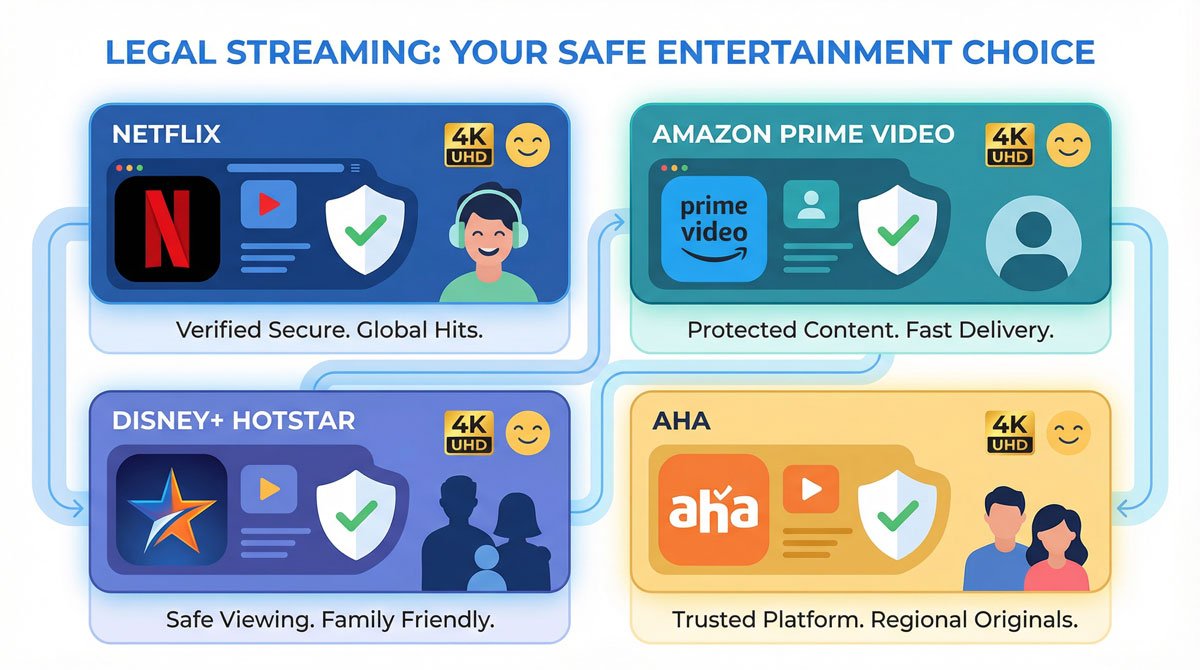
Several platforms now offer extensive Telugu content at reasonable prices. Aha is specifically designed for Telugu cinema enthusiasts. It offers thousands of Telugu movies, web series, and original content. Subscription plans range from ₹99 to ₹499 per month, making it affordable for most users.
Amazon Prime Video includes extensive Telugu content alongside its massive global library. Netflix has been investing heavily in Telugu content and now offers a growing selection. Disney+ Hotstar provides Telugu movies alongside sports, news, and international content. ZEE5 focuses on Indian content and offers excellent Telugu selections. JioCinema, backed by Reliance Industries, offers both free and premium tiers with good Telugu content.
Each platform has different strengths. Aha specializes in Telugu content and offers the most comprehensive regional selection. Prime Video offers the broadest overall library. Netflix provides the highest production quality for original content. Hotstar offers the most entertainment variety (movies, shows, sports). JioCinema offers the best free tier option.
| Platform | Monthly Price | Telugu Content | Best For | Pros | Cons |
|---|---|---|---|---|---|
| Aha | ₹99-499 | Extensive | Telugu enthusiasts | Regional focus, original content, affordable | Limited international content |
| Prime Video | ₹179-1,499 | Good | Broad entertainment | Massive library, fast shipping, value | Requires Prime membership |
| Netflix | ₹149-649 | Growing | Quality content | High production value, international | Fewer Telugu originals |
| Hotstar | ₹99-1,499 | Excellent | Sports + movies | Comprehensive, sports coverage | Ad-heavy on lower tiers |
| ZEE5 | ₹99-999 | Good | Indian content | Indian focus, originals, affordable | Fewer Hollywood films |
| JioCinema | Free-₹299 | Good | Budget-conscious | Free tier available, sports, affordable | Limited free content |
Free and Ad-Supported Options
If budget is a concern, several free options exist. YouTube Movies offers free movies with advertisements. JioCinema’s free tier includes a decent selection of Telugu content. Tubi and Pluto TV offer free movies with ads. These options aren’t as comprehensive as paid subscriptions, but they’re completely legal and safe.
Why Legal Alternatives Are Worth It
Beyond the obvious legal and safety benefits, legal alternatives offer genuine advantages over piracy. The video quality is typically better and more consistent. Streaming is more reliable—no buffering issues or broken links. You can watch on multiple devices simultaneously (depending on the plan). You get customer support if something goes wrong.
Most importantly, you’re supporting the people who create the content you love. Actors, directors, cinematographers, editors, and hundreds of crew members depend on legitimate revenue to continue making films. By choosing legal alternatives, you’re directly supporting the film industry and ensuring that quality content continues being produced.
Frequently Asked Questions About iBomma1
The Bottom Line: Why iBomma1 Isn’t Worth the Risk
iBomma1 promised free movies. What it actually delivered was a sophisticated criminal enterprise designed to exploit users, steal their data, and funnel them toward gambling platforms. The arrest of Immadi Ravi in November 2025 revealed the true scale of the operation: 21,000 movies, 50 lakh stolen personal records, Rs 20 crore in annual revenue, and multiple suicides linked to gambling losses.
The dangers are real and multifaceted. Cybersecurity threats can compromise your device. Data theft can lead to identity theft and financial fraud. Legal consequences can result in prosecution and imprisonment. Gambling exploitation can lead to financial ruin and, in tragic cases, suicide.
Meanwhile, legal alternatives have become increasingly attractive. Aha, Prime Video, Netflix, Hotstar, ZEE5, and JioCinema all offer extensive Telugu content at affordable prices. Free options like JioCinema’s free tier and YouTube Movies provide completely legal access. The excuse that legal alternatives are too expensive or inconvenient no longer holds water.
The choice is clear. Make the switch to legal streaming today. Support the filmmakers, actors, and crew members who create the content you love. Protect your device, your data, and your future. The few rupees you save by using iBomma1 aren’t worth the risks you’re taking. Choose safety. Choose legality. Choose legal streaming.
Your devices, your data, and your conscience will thank you.

Most Viewed