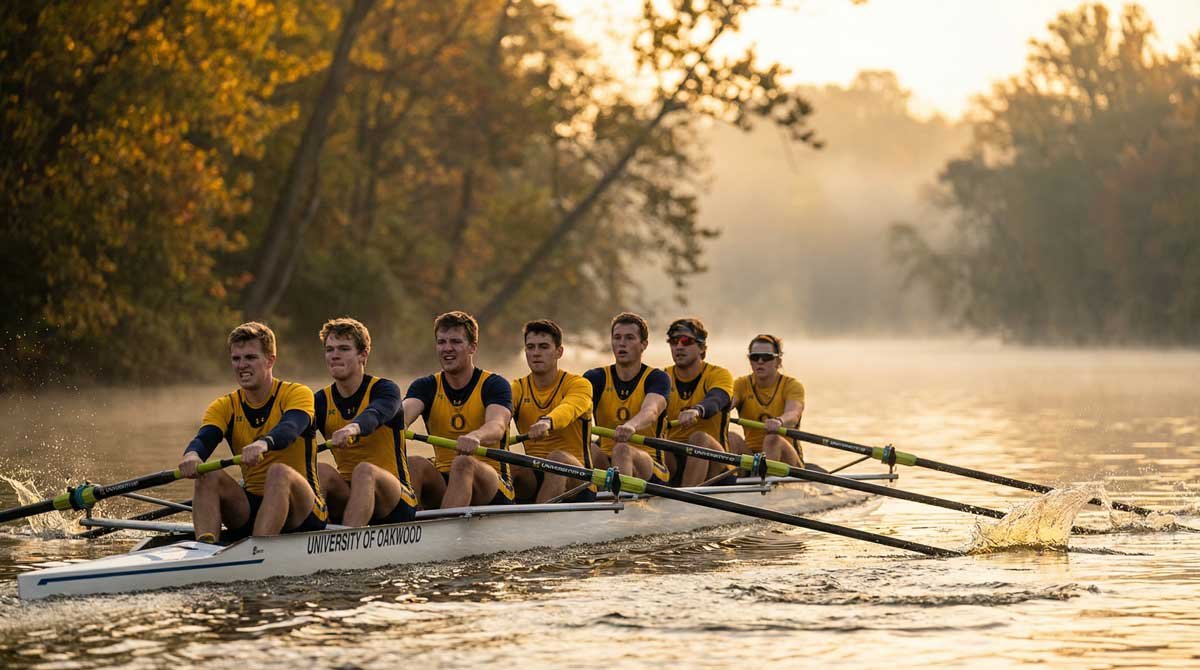

Have you ever watched a sports movie so intense and emotionally gripping that you found yourself asking, “Is this a true story?” With the recent surge in popularity of Heart of Champions on Netflix, that’s the exact question on everyone’s mind. The film’s raw portrayal of an Ivy League rowing team’s struggle for greatness feels incredibly authentic, blurring the lines between reality and fiction.
This article provides a complete analysis, going far beyond a simple yes or no. We will dissect the real-life inspirations behind the script, separate fact from fiction with a detailed breakdown, and explore the behind-the-scenes efforts that made the movie feel so genuine. By the end, you’ll have a definitive answer and a much deeper appreciation for the film’s creation.
Is Heart of Champions Based on a True Story? The Quick Answer
The short and direct answer is no, Heart of Champions is not based on a single true story. The characters, the university, and the specific events depicted in the film are fictional creations. There was no Beeston University rowing team that experienced this exact journey in 1999.
However, the story is not pure fantasy. It is deeply rooted in the real-life experiences of its writer, Vojin Gjaja. The film’s authenticity stems from Gjaja’s personal history as both a collegiate rower and a military veteran. This foundation of genuine experience is what makes the fictional narrative resonate so powerfully with audiences, leading many to believe it must be a true story. The movie masterfully translates the spirit and challenges of elite rowing and military discipline into a compelling, albeit fictional, narrative.
The Writer’s Real-Life Inspiration
The soul of Heart of Champions lies in the personal history of its writer, Vojin Gjaja. His unique background provides the authentic texture that makes the film’s world feel so lived-in and believable. Understanding his journey is key to understanding the movie’s core.
Vojin Gjaja’s Military and Rowing Background
Before he was a screenwriter, Vojin Gjaja was an elite athlete and a soldier. He was a member of the rowing team at Columbia University, one of the real-life Ivy League institutions. His time there gave him firsthand knowledge of the intense physical and psychological demands of collegiate rowing, the fierce rivalries, and the complex team dynamics.
Following his university years, Gjaja served as an officer in the U.S. Army. This experience instilled in him a deep understanding of discipline, leadership, and the forging of a cohesive unit from a group of individuals. It’s easy to see how these experiences directly shaped the character of Coach Jack Murphy, the tough-as-nails Vietnam veteran who transforms the Beeston team with his militaristic approach.
From Personal Experience to Fictional Narrative
Gjaja skillfully wove elements from his past into a new, fictional tapestry. Instead of documenting a specific season or team, he used his experiences as a palette to paint a universal story about teamwork, sacrifice, and redemption. The decision to create a fictional university (Beeston) and original characters allowed him the creative freedom to distill the essence of his experiences without being constrained by historical accuracy.
This approach enabled him to heighten the drama, create more compelling character arcs, and focus on the universal themes that resonate beyond the world of rowing. The story is not about what happened, but about what it feels like to be part of such a demanding and transformative environment.
What’s Real vs. Fake in Heart of Champions
To provide maximum clarity, it’s helpful to break down the movie’s elements into what was fabricated for the story and what was grounded in reality. The blend of these elements is what makes the film so convincing.

The Fictional Elements
The primary components of the story are entirely fictional. Beeston University is not a real Ivy League school. The main characters—Alex Singleton, Chris Davenport, John Kimball, and Coach Jack Murphy—are all original creations, not based on specific real people. The central plot, including the team’s internal conflicts, the love triangle, and the dramatic final race, was crafted specifically for the film.
The Realistic Elements
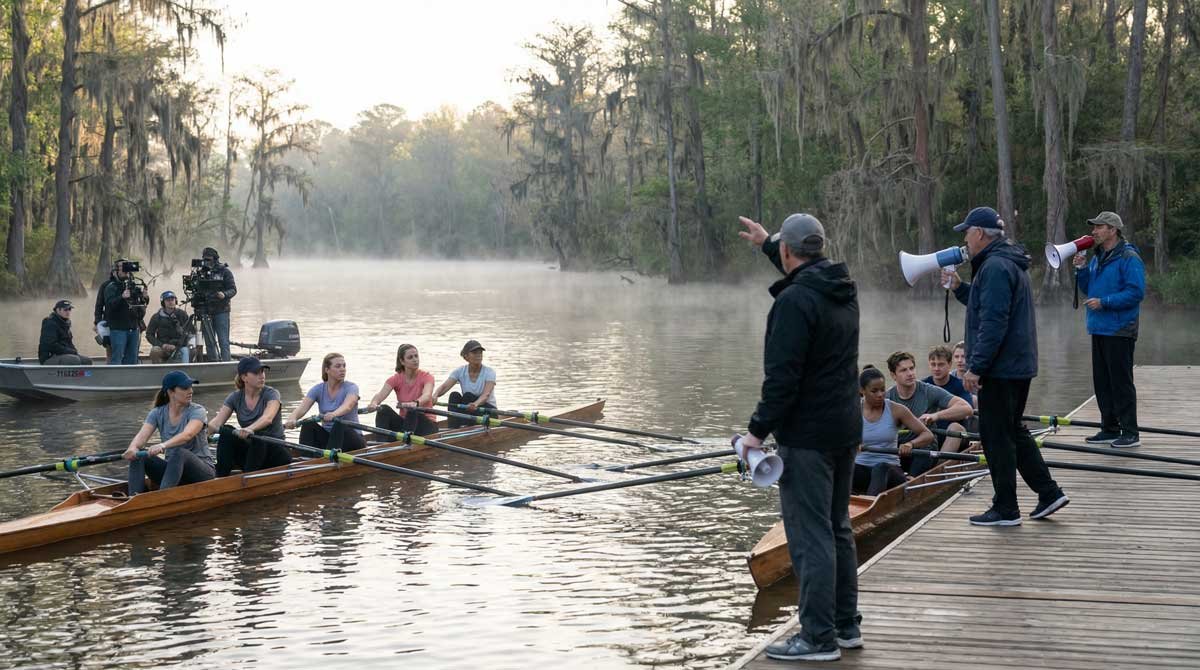
Despite the fictional framework, the film is packed with realism. The depiction of the sport of rowing is highly authentic, thanks to a rigorous training regimen the actors underwent. The production hired Olympian and renowned coach Linda Muri to lead a three-week boot camp on False River in Louisiana. The actors trained for hours each day to ensure their on-screen technique was believable.
Furthermore, the themes of intense inter-team rivalry, the immense pressure on student-athletes, and the demanding coaching styles are all very real aspects of elite collegiate sports. The use of Louisiana State University (LSU) as the filming location for Beeston also lent an air of architectural authenticity typical of a historic university campus.
Real vs. Fictional Comparison Table
This table provides a clear, at-a-glance summary of the movie’s key components:
| Element | Authenticity | Explanation |
|---|---|---|
| Beeston University | Fictional | An invented Ivy League school created for the story. |
| Coach Jack Murphy | Fictional | A character inspired by writer Vojin Gjaja’s military background. |
| The Rowing Scenes | Realistic | Actors underwent intense training with an Olympic coach to ensure authenticity. |
| The 1999 Setting | Fictional | A narrative choice to frame the story in a specific era. |
| Main Characters | Fictional | All characters, including Alex, Chris, and John, are original creations. |
| Military Training Style | Realistic | The coaching methods are based on real principles of discipline and teamwork. |
| Rivalry with Harvard | Realistic | Harvard has a real, and historically dominant, rowing program. |
| Team Dynamics | Fictionalized | While based on real team dynamics, the specific conflicts are scripted drama. |
The Characters: All Fictional Creations
While the story feels real, it’s important to remember that the individuals driving the plot are fictional. They are archetypes designed to explore the central themes of the film.
Alex Singleton – The Conflicted Captain
Alex Singleton, the team captain, represents the struggle between individual ambition and team success. Pressured by an overbearing father, his journey is one of learning to lead through service rather than dominance. He is a composite of the types of pressures and internal conflicts many real-life student-athletes face, but he is not a real person.
Jack Murphy – The Veteran Coach
Coach Jack Murphy, brilliantly portrayed by Michael Shannon, is the film’s moral center. He is the embodiment of Vojin Gjaja’s military and leadership experience. His character serves as a vehicle to explore themes of discipline, sacrifice, and the psychological toll of war. While there are many tough coaches in the world, Jack Murphy is a unique, fictional creation.
Chris Davenport and John Kimball
Similarly, the other key rowers, Chris Davenport and John Kimball, are fictional constructs. They represent different facets of a team: the talented but unmotivated newcomer and the natural, respected leader. Their interactions and the tragic events that unfold are narrative devices used to test the team’s resolve and force them to truly come together.
The Making of Heart of Champions: Behind the Scenes
The film’s authenticity is no accident. It was a deliberate goal of the production, achieved through meticulous planning and dedication from both cast and crew.
The Filming Location: LSU Campus
Producer Lucas Jarach explained in an interview that although the story doesn’t take place at LSU, the campus’s “beautiful campus [was] the ideal setting for [the] story.” The traditional architecture provided the perfect visual backdrop for a prestigious, albeit fictional, Ivy League university.
Actor Training and Authenticity
The commitment to realism was most evident in the actor’s preparation. The cast, including Alexander Ludwig and Charles Melton, was fully immersed in a three-week rowing boot camp. They learned the fundamentals of the sport from one of the best, Linda Muri. This intense training not only made the rowing scenes look authentic but also helped the actors bond as a team, mirroring the film’s own narrative.
Director Michael Mailer’s Vision
Director Michael Mailer’s goal was to balance the technical accuracy of the sport with a compelling human drama. By grounding the fictional story with real training and a realistic setting, he was able to create a world that felt both authentic and emotionally resonant. This balance is what allows the audience to invest so deeply in the characters’ journey.
Heart of Champions vs. Other Sports Drama Films
Understanding where Heart of Champions fits within the sports drama genre helps clarify why it feels so real. Many of the most iconic films in this genre are, in fact, based on true stories.
Comparing True Story Sports Films
Films like Remember the Titans, Glory Road, Moneyball, and Coach Carter have set a precedent. These movies recount the incredible journeys of real-life teams and individuals, cementing the audience’s expectation that a powerful sports story is likely a true one.
Heart of Champions’ Unique Position
Heart of Champions occupies a different space. It belongs to a sub-genre of fictional sports dramas, like the Rocky series, that use a fictional narrative to explore universal truths. Its power comes not from recounting history, but from creating a story that feels emotionally and thematically true.
| Film | Based on True Story? | Inspiration | Fictionalization Level |
|---|---|---|---|
| Remember the Titans | Yes | Real 1971 high school football team | Low |
| Glory Road | Yes | Real 1966 college basketball team | Low |
| Heart of Champions | No | Writer’s personal experiences | High |
| Coach Carter | Yes | Real 1999 high school basketball team | Low |
| Rocky | No | Inspired by boxer Chuck Wepner | High |
Why the Confusion? Understanding the Genre
The widespread confusion over the film’s authenticity is a testament to its quality. Several factors contribute to this.
The Sports Drama Genre Convention
As noted, the sports drama genre is heavily populated with true stories. Audiences are conditioned to see an underdog team overcoming adversity and assume it’s based on real events. The film follows this beloved formula so effectively that it naturally triggers this assumption.
How Heart of Champions Blurs the Lines
The film’s commitment to authenticity is the primary reason for the confusion. The realistic rowing technique, the genuine sweat and strain on the actors’ faces, and the believable team dynamics all create a powerful illusion of reality. The story may be fictional, but the world it portrays feels undeniably real.
The Themes and Real-Life Relevance
Whether true or not, the film’s power lies in its exploration of timeless and relevant themes.
Teamwork and Individual Ego
The central theme is the classic struggle between individual ego and the needs of the team. The movie powerfully argues that true strength comes from unity and that individual talent is meaningless without collective effort. This is a core principle in rowing, often called the “ultimate team sport,” and it’s a lesson that resonates far beyond athletics.
Leadership and Discipline
Coach Murphy’s character provides a deep dive into leadership. His methods, though harsh, are rooted in the belief that discipline forges character and that a leader must sometimes make difficult decisions for the greater good. The film explores the fine line between tough leadership and tyranny, ultimately showing that respect is earned, not demanded.
Personal Growth Through Challenge
Each character undergoes a significant personal transformation. They are forced to confront their fears, insecurities, and personal demons. The crucible of competition becomes a catalyst for growth, demonstrating the universal truth that we often find our best selves in the face of our greatest challenges.
Frequently Asked Questions (FAQ)
- 1. Is Heart of Champions available on Netflix?
- Yes, as of early 2025, Heart of Champions is available for streaming on Netflix in many regions. Its arrival on the platform led to a significant resurgence in its popularity, prompting many viewers to question the story’s origins.
- 2. Who is Coach Jack Murphy based on?
- Coach Jack Murphy is a fictional character. He is not based on a single real person but was heavily inspired by the personal experiences of the film’s writer, Vojin Gjaja, who served as a U.S. Army officer and was a collegiate rower himself. The character is a composite of military leadership and coaching archetypes.
- 3. Are the rowing scenes realistic?
- Yes, the rowing scenes are considered highly realistic. The actors underwent a rigorous three-week training boot camp led by Olympic rowing coach Linda Muri to ensure their technique and the depiction of the sport were as authentic as possible. This commitment to realism is a major reason the film feels so genuine.
- 4. What is Beeston University?
- Beeston University is a fictional Ivy League school created for the movie. It does not exist in real life. The campus scenes were filmed at Louisiana State University (LSU), whose traditional architecture was used to represent the fictional prestigious university.
- 5. Did the actors really learn to row?
- Yes, the actors learned the fundamentals of rowing for their roles. They were trained by a professional coach to ensure their movements were convincing on screen. Actor Alex MacNicoll confirmed in interviews that the training was intense and essential for the film’s authenticity.
- 6. How long did the actors train?
- The main actors participated in a three-week-long, intensive rowing boot camp on False River in Louisiana before filming began. This training involved early morning sessions on the water to build the necessary skills and physique for their roles.
- 7. Where was Heart of Champions filmed?
- The majority of the film was shot in Louisiana. The campus of Louisiana State University (LSU) in Baton Rouge stood in for the fictional Beeston University, and the on-water rowing scenes were filmed on False River.
- 8. Is there a real Harvard rowing team?
- Yes, Harvard University has one of the oldest, most prestigious, and most successful collegiate rowing programs in the United States. Their inclusion as the main rival in the film adds a layer of realism, as they are a perennial powerhouse in the sport.
- 9. What is the movie’s main message?
- The central message of Heart of Champions is that true success is achieved through unity, discipline, and teamwork. It emphasizes that a team is stronger than the sum of its individual parts and that personal ego must be sacrificed for the collective good.
- 10. Are there any real rowing competitions shown?
- The competitions depicted in the film, including the final national championship, are fictional events created for the story’s dramatic climax. They are not recordings of actual historical races but are staged to look and feel like real collegiate rowing championships.
The Verdict: Why This Matters
Ultimately, the fact that Heart of Champions is not a literal true story does not diminish its power. In fact, it may even enhance it.
Understanding Fictional Inspiration
The film serves as a powerful example of how fiction can convey truth more effectively than a simple documentary. By creating a fictional narrative, the filmmakers were able to focus on the emotional and thematic core of the athletic experience. The story is not about one team’s journey; it’s about every team’s journey. It’s a celebration of the spirit of competition, leadership, and camaraderie.
The Impact of Heart of Champions
The movie has had a notable impact, inspiring viewers and bringing greater attention to the demanding sport of rowing. Its success on Netflix demonstrates a public appetite for stories that, regardless of their factual basis, champion themes of perseverance, discipline, and human connection. It proves that a story doesn’t have to be true to be truthful.
In conclusion, while Heart of Champions is a fictional tale, it is crafted from the authentic experiences of its writer and a deep respect for the sport of rowing. It stands as a powerful and inspiring sports drama that resonates because it feels real, reminding us that the most profound truths are often found in the heart, not just in the history books. We encourage you to watch the film and decide for yourself how its powerful message of teamwork and resilience speaks to you.

Most Viewed