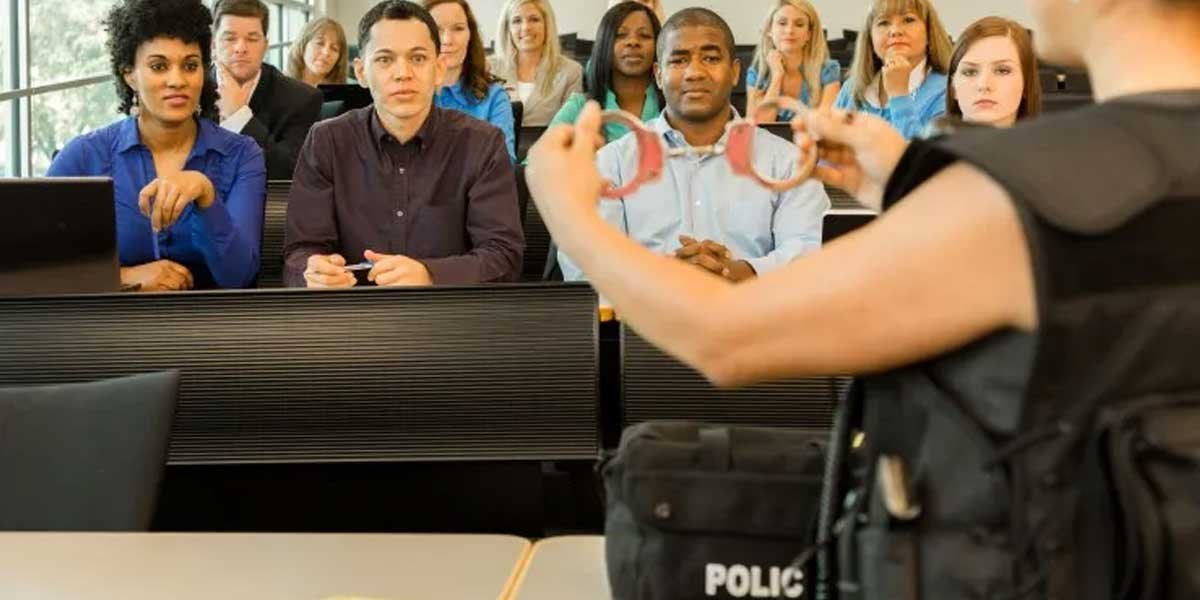

Joining law enforcement begins with police academy training that equips officers with the skills needed to perform their duties. The curriculum combines operational tactics, legal standards, community engagement principles, and various scenario exercises that reflect real policing conditions. Here is more information about the key skills taught in police academy training:
Table of Contents
ToggleBuilding Physical Readiness
Police academies have a team of recruiters who assist new police officers in qualifying for the police academy’s fitness test. This physical preparation provides trainees with a foundation for long-term fitness and equips them to do their job. It also helps prepare recruits to master core skills in physical conditioning and defensive tactics. Assessment blueprints outline performance standards and grading methods prior to academy entry. To maintain long-term fitness, recruits follow a regular regimen that includes running, calisthenics, patrolling pedestrian areas, and hands-on suspect-control training.
Learning Legal Foundations
Police academies teach recruits criminal law so they clearly understand the legal standards that define lawful and appropriate conduct, providing a consistent framework that guides sound and uniform decision-making in their duties. Understanding the potential legal repercussions of their actions helps officers make informed decisions that are more likely to align with applicable legal standards. Formulating priorities of proactive and exemplary policing creates a foundation for daily operations. Learning about legal standards helps in the review of departmental policies and practices.
Advancing Investigative Capabilities
Specialized unit opportunities in investigative capabilities (digital forensics, vice unit, human trafficking) allow for long-term training after academy foundations. These specialized areas broaden an officer’s overall expertise in the field. Foundational knowledge obtained from the academy can be applied to practice. One foundational skill that is applicable across enforcement fields is documentation.
Mentorship-based field training centered on patrol responsibilities plays a key role in shaping the development of officers’ documentation practices. No matter the investigative specialization, documentation supports officers in writing detailed reports on each crime or incident, making sure everything is accurate. Training offers an opportunity to reinforce ethical policing, as it applies to all areas of an investigation. The training also provides an understanding of the rules of evidence documentation, enhancing the ability of officers to collect evidence and protect the rights and welfare of victims and the accused.
Developing Decision-Making Skills
Police officers rely on structured training and field-tested guidance to reinforce judgment in the field. It starts with scenario-based decision-making during the academy. This is where instructors present recruits with realistic challenges that simulate the ones they are likely to encounter on the job. Patrol field training builds on this foundation. It allows officers to apply their knowledge of policies and procedures in a real-world environment.
Before being assigned to specialized units, officers complete initial periods of probation, providing them more time to develop their skills within the structure of each unit. Once in specialized units, officers may benefit from oversight mechanisms, such as briefings or after-action reviews, to formulate responses to a variety of situations.
Strengthening Communication Skills
Academy training focuses on strengthening communication skills. Trainees learn cultural awareness and scenario-based decision-making to support communication and de-escalation during community engagement. The ability to convey instructions and de-escalate tense situations beforehand helps limit escalation to reduce force during hostile exchanges. Post-academy field training and mentoring programs reinforce classroom communication during patrol, positioning skills that extend beyond legal mandates to inform everyday policing.
Discover Police Academy Training Today
Academy training for law enforcement covers policing skills such as investigation and communication. Officers might get a chance to have education support and join specialized training units that help them to increase their skills. Officers trained under academy education master the art of public law enforcement. Contact a professional police academy today to learn more about what they offer.

Chase Durkish
Most Viewed