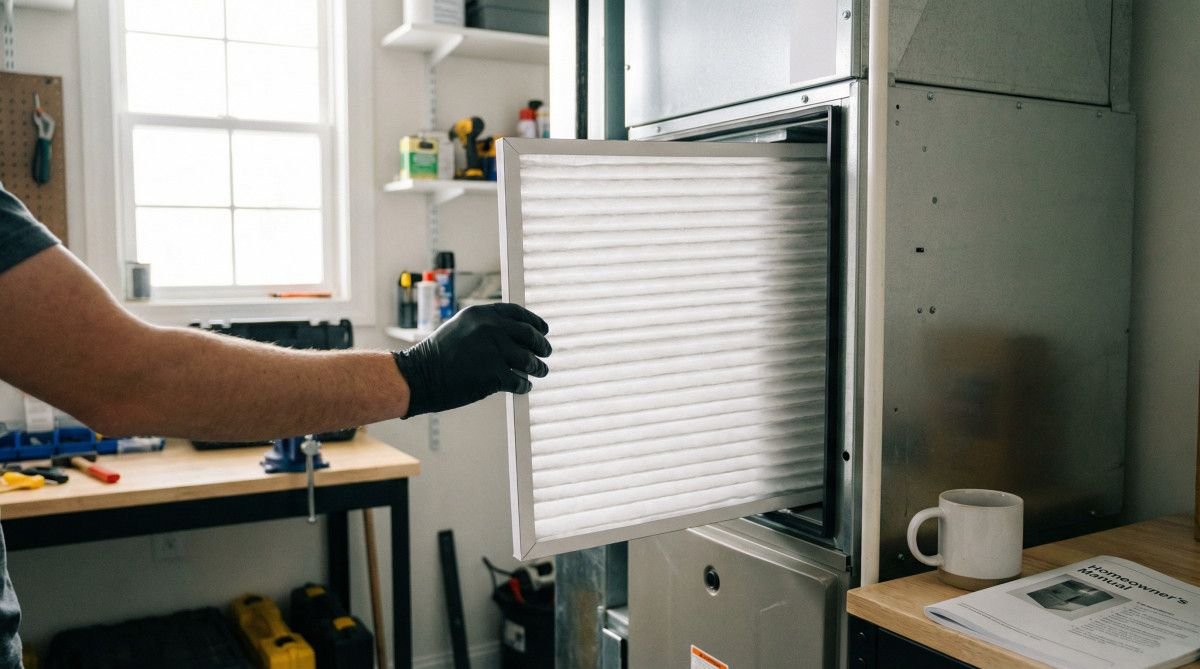

Regular HVAC filter replacement is a critical home maintenance task that directly impacts indoor air quality and system efficiency. By trapping airborne particles, clean filters prevent the circulation of pollutants and protect heating and cooling equipment from damage. This simple action can lower energy costs and improve the overall health of your home environment.
Why HVAC Filter Replacement is Crucial for Every Homeowner
Regular HVAC filter replacement is essential for maintaining a healthy home environment and ensuring your system runs efficiently. A clean filter captures dust, allergens, and other pollutants, preventing them from circulating in your air and protecting your HVAC unit from strain and damage, which can lead to costly repairs.
When an HVAC filter becomes clogged with accumulated dust, debris, and allergens, it significantly impedes airflow through the system. This restriction forces the HVAC unit to work harder to circulate air, leading to several detrimental effects. Firstly, increased strain on the system components can accelerate wear and tear, potentially resulting in premature breakdowns and expensive repair or replacement costs. Secondly, the reduced airflow compromises the system’s efficiency, causing it to consume more energy to achieve desired temperatures, which translates into higher utility bills. Lastly, a dirty filter becomes a breeding ground for mold, bacteria, and other contaminants, which can then be recirculated into your home’s air, exacerbating allergies and respiratory issues for occupants.
Regular filter changes are a simple yet highly effective measure to mitigate these risks. They ensure consistent airflow, allowing your HVAC system to operate at its peak efficiency, thereby reducing energy consumption and extending its operational lifespan. Furthermore, by continuously trapping airborne particles, clean filters contribute significantly to a healthier indoor environment, reducing the presence of irritants and pathogens.
| Benefit | Description | Impact on Homeowners |
|---|---|---|
| Improved Air Quality | Filters trap dust, pollen, pet dander, and other airborne particles. | Reduces allergens and irritants, promoting better respiratory health. |
| Enhanced System Efficiency | Unrestricted airflow allows the HVAC system to operate optimally. | Lowers energy consumption, leading to reduced utility bills. |
| Extended Equipment Lifespan | Prevents strain and wear on HVAC components caused by restricted airflow. | Reduces the likelihood of costly repairs and prolongs the life of the unit. |
| Prevention of Mold/Bacteria Growth | Clean filters inhibit the accumulation of moisture and organic matter. | Minimizes the circulation of harmful microorganisms in indoor air. |
Understanding HVAC Filter Types and MERV Ratings for Optimal Home Filtration
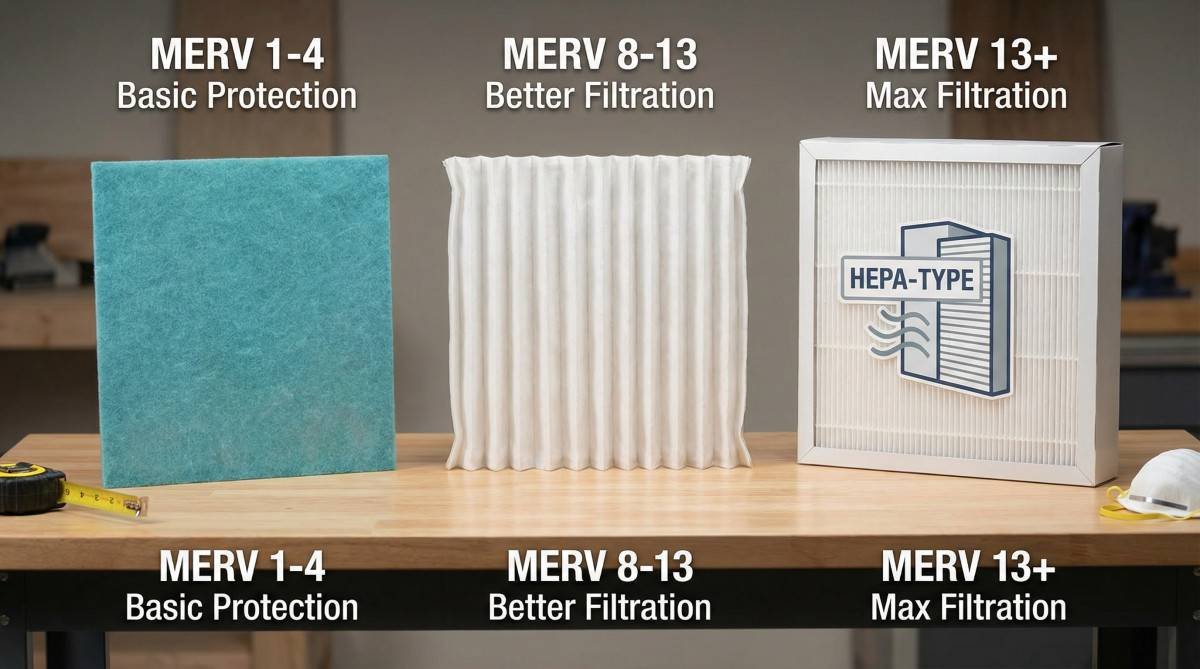
Choosing the right HVAC filter and MERV rating is key to balancing indoor air quality with system performance. The MERV scale measures a filter’s ability to capture airborne particles; a higher rating means finer filtration. Homeowners should select a filter that meets their specific needs without overly restricting airflow.
HVAC filters come in various materials and designs, each offering different levels of filtration and durability. The most common types include:
- Fiberglass Filters: These are typically the most basic and inexpensive option, made from spun fiberglass. They primarily capture larger particles like dust and lint, offering minimal protection against smaller allergens. They usually have a low MERV rating (1-4) and require frequent replacement.
- Pleated Filters: Constructed from cotton, polyester, or paper, pleated filters offer a larger surface area for filtration due to their folded design. This allows them to capture a wider range of particles, including pollen, mold spores, and pet dander. They generally have MERV ratings between 8 and 13, providing a good balance of filtration and airflow.
- Electrostatic Filters: These filters use self-charging electrostatic cotton or polypropylene fibers to attract and trap particles. Available in both disposable and reusable (washable) versions, they are effective against dust, pollen, and some microscopic particles, typically with MERV ratings from 5 to 10.
- HEPA Filters: High-Efficiency Particulate Air (HEPA) filters are the most effective at removing airborne contaminants, capable of trapping 99.97% of particles 0.3 microns or larger. While highly effective for air quality, their dense construction can restrict airflow, making them unsuitable for many residential HVAC systems without modifications. They typically have MERV ratings of 17-20.
The MERV rating is a standardized measure that helps homeowners compare the efficiency of different filters. A higher MERV rating means the filter can capture smaller particles more effectively. However, a filter with too high a MERV rating can restrict airflow, forcing your HVAC system to work harder and potentially causing damage. It’s crucial to consult your HVAC system’s manufacturer recommendations or a professional to determine the appropriate MERV rating for your specific unit.
| MERV Rating Range | Particle Size Captured | Common Applications | Considerations for Homeowners |
|---|---|---|---|
| 1-4 (Low) | Pollen, dust mites, carpet fibers, lint | Basic filtration, protects HVAC equipment from large debris | Inexpensive, frequent replacement, minimal air quality improvement |
| 5-8 (Medium) | Mold spores, pet dander, hair spray, cement dust | Good balance of filtration and airflow for most homes | Cost-effective, suitable for general residential use, improves air quality |
| 9-12 (Good) | Lead dust, auto emissions, humidifier dust, legionella | Enhanced filtration for homes with allergy sufferers or pets | More expensive, may slightly restrict airflow in older systems |
| 13-16 (Superior) | Bacteria, tobacco smoke, sneeze droplets, insecticide dust | Excellent filtration, ideal for individuals with severe allergies or respiratory issues | Higher cost, can significantly restrict airflow; consult HVAC professional |
| 17-20 (HEPA) | Viruses, carbon dust, microscopic allergens | Hospitals, cleanrooms, specialized air purification systems | Not typically suitable for residential HVAC systems due to airflow restriction |
Determining the Right HVAC Filter Size and Replacement Frequency
Using the correct HVAC filter size and following a consistent replacement schedule are vital for system efficiency and clean air. Filter dimensions are usually on the frame, and an exact match is necessary for a proper seal. Replacement frequency depends on filter type, home conditions, and local air quality.
Finding the Correct Filter Dimensions
The most reliable method to determine the correct filter size is to inspect your existing filter. Dimensions are usually printed on the cardboard frame, often in inches (e.g., 20x25x1). If the dimensions are not visible or the filter is missing, measure the length, width, and thickness of the filter slot in your furnace or air handler. It is crucial to use the exact measurements to prevent air bypass, which allows unfiltered air into your system, or a filter that is too large and restricts proper installation. Always ensure a snug fit without forcing the filter into place.
Factors Influencing Replacement Frequency
While a general guideline suggests replacing HVAC filters every 30 to 90 days, several factors can necessitate more frequent changes:
- Occupancy and Pets: Homes with multiple occupants, especially those with pets that shed, accumulate dust and dander more rapidly, requiring monthly or bi-monthly changes.
- Allergies and Respiratory Issues: Households with individuals suffering from allergies, asthma, or other respiratory conditions benefit from more frequent filter replacements to maintain superior air quality.
- Local Environment: Living in areas with high pollen counts, significant air pollution, or ongoing construction nearby will accelerate filter clogging.
- HVAC Usage: Systems that run continuously or for extended periods, such as during extreme weather, will accumulate particles faster than those used intermittently.
- Filter Type: Lower MERV-rated filters, like fiberglass, typically need more frequent replacement than higher MERV pleated filters, which can last longer due to their increased particle-holding capacity.
Regular visual inspection of your filter is also a practical way to gauge its condition. If the filter appears visibly dirty, gray, or clogged with debris, it is time for a replacement, regardless of the last change date. A clean filter is light-colored and allows light to pass through easily, whereas a dirty filter will be dark and opaque.
Step-by-Step HVAC Filter Replacement for Homeowners
Replacing an HVAC filter is a simple DIY task that ensures system efficiency and good air quality. The process involves turning off the power, locating and removing the old filter, and correctly installing the new one, paying close attention to the airflow direction arrow. This prevents common mistakes that can harm your HVAC unit.
Preparing for Replacement
Before beginning the replacement process, gather the necessary materials: a new HVAC filter of the correct size and MERV rating, a marker to note the installation date, and a damp cloth or vacuum for cleaning. It is crucial to turn off the power to your HVAC unit at the thermostat or circuit breaker to prevent accidental activation and ensure safety during the procedure.
Locating and Removing the Old Filter
HVAC filters are commonly found in one of two locations: in a dedicated slot next to the furnace or air handler, or behind a return air vent grille in a wall or ceiling. Once located, observe the arrow printed on the filter frame, which indicates the direction of airflow. This arrow should always point towards the furnace or air handler, indicating the path air takes into the system. Carefully slide out the old filter, taking care to minimize the release of trapped dust and debris.
Installing the New Filter
Before inserting the new filter, take a moment to clean any dust or debris from the filter housing or grille. Then, align the new filter so that its airflow arrow points in the same direction as the old filter, towards the HVAC unit. Slide the new filter firmly into place, ensuring there are no gaps around the edges that could allow unfiltered air to bypass the filter. Once the new filter is securely installed, close the filter housing or reattach the return air vent grille, and restore power to your HVAC system.
| Step | Action | Key Consideration |
|---|---|---|
| 1. Preparation | Turn off HVAC power, gather new filter, marker, cleaning supplies. | Safety first: always disconnect power to prevent injury or system damage. |
| 2. Locate & Remove | Find old filter, note airflow direction, carefully slide out. | Observe the arrow on the old filter for correct new filter orientation. |
| 3. Clean Housing | Wipe down filter housing or grille. | Prevents immediate contamination of the new filter. |
| 4. Install New Filter | Insert new filter with arrow pointing towards HVAC unit, ensure snug fit. | Proper orientation is critical for effective filtration and system performance. |
| 5. Finalize | Close housing/grille, restore power. | Confirm secure installation before restarting the system. |
Frequently Asked Questions About HVAC Filter Replacement
How often should I change my HVAC filter?
Most HVAC filter manufacturers recommend replacement every 30 to 90 days. However, factors like pets, allergies, local air quality, and system usage can necessitate more frequent changes, sometimes as often as monthly. Regular visual inspection is the best way to determine if a filter needs changing.
What does the MERV rating mean?
MERV stands for Minimum Efficiency Reporting Value, a rating system that indicates a filter’s effectiveness at capturing airborne particles. Higher MERV ratings (e.g., MERV 13) signify greater filtration capabilities for smaller particles like bacteria and smoke, while lower ratings (e.g., MERV 5-8) are suitable for larger particles like dust and pollen.
Which way should the HVAC filter arrow point?
The arrow on the HVAC filter frame indicates the direction of airflow. It should always point towards the furnace or air handler, meaning the air flows from the return duct, through the filter, and into the HVAC unit. Incorrect installation can reduce efficiency and potentially damage the system.
Can I use a HEPA filter in my residential HVAC system?
While HEPA filters offer superior filtration, their dense material can significantly restrict airflow, making them generally unsuitable for standard residential HVAC systems without modifications. Using a HEPA filter in an incompatible system can lead to reduced efficiency, increased energy consumption, and potential damage to the unit. Consult an HVAC professional before installing a HEPA filter.
What happens if I don’t change my HVAC filter?
Neglecting HVAC filter replacement can lead to several issues: reduced indoor air quality due to recirculated pollutants, decreased system efficiency resulting in higher energy bills, increased strain on the HVAC unit leading to premature wear and potential breakdowns, and the growth of mold or bacteria within the clogged filter.
Conclusion: Maintaining Your HVAC System
Regular HVAC filter replacement is a fundamental aspect of home maintenance that yields significant benefits for both indoor comfort and system longevity. By consistently ensuring clean and appropriately rated filters are in place, homeowners can actively contribute to a healthier living environment, free from excessive airborne pollutants. This simple, routine task not only optimizes the efficiency of heating and cooling systems, leading to tangible savings on energy costs, but also plays a crucial role in preventing premature wear and tear on expensive equipment. Prioritizing this maintenance step ensures your HVAC system operates effectively, providing consistent climate control and superior air quality throughout your home for years to come.

Most Viewed