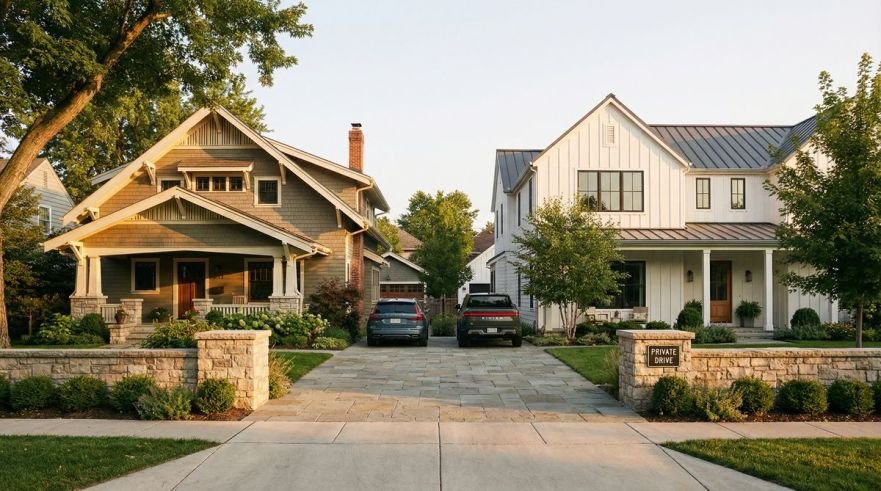

Imagine finding your dream home, only to discover it comes with a shared driveway. For many prospective buyers, this detail can spark immediate apprehension. While often viewed as a potential headache, shared driveways are a common reality in many neighborhoods, offering both unique advantages and distinct challenges, notes Balanced Asset Solutions. Understanding these nuances is crucial for making an informed purchasing decision.
Understanding Shared Driveways: More Than Just Pavement
Answer Capsule: A shared driveway is an access route used by two or more properties, typically governed by legal agreements like easements. These arrangements are common in various residential settings, from older neighborhoods to space-constrained developments, and understanding their structure is the first step to navigating their complexities.
A shared driveway, at its core, is a strip of land that provides vehicular access to two or more adjacent properties. This arrangement is not merely a physical feature but a legal one, underpinned by specific agreements that dictate its use and maintenance. These agreements are often recorded as easements, which are legal rights to use another’s land for a specific purpose. Such driveways can be found in diverse residential landscapes, from historic urban areas where space is at a premium to newer suburban developments designed for efficiency. The presence of a shared driveway necessitates a clear understanding of its legal framework and the practical implications for daily living.
The Upside: Why a Shared Driveway Might Work for You
Answer Capsule: Shared driveways can offer several benefits, including reduced maintenance costs through shared expenses, efficient land use in denser areas, and the potential for fostering a stronger sense of community among neighbors. These advantages can make a shared driveway a practical and even desirable feature for some homeowners.
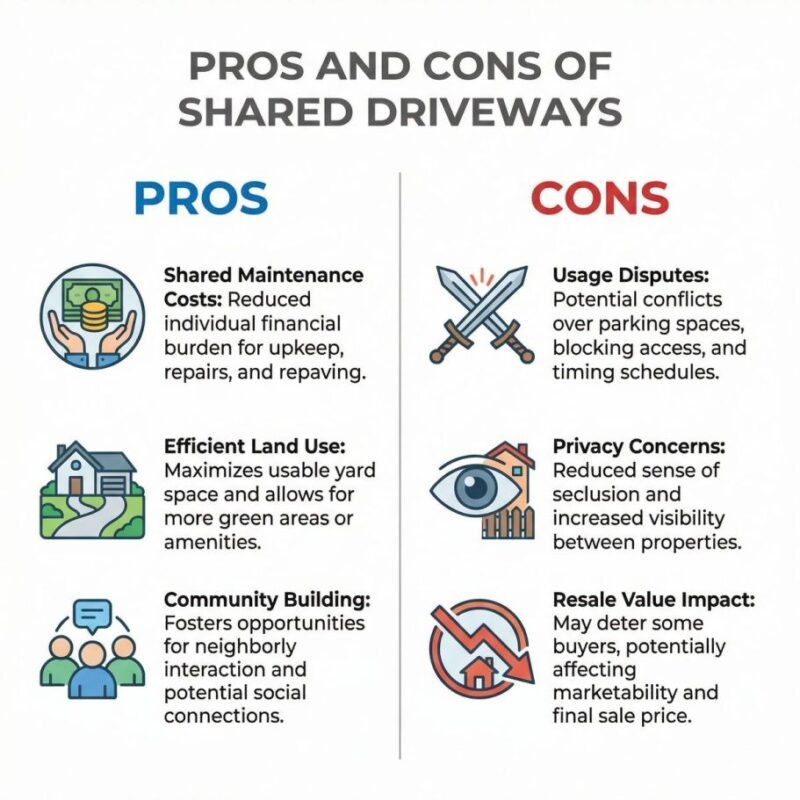
One of the most tangible benefits of a shared driveway is the potential for reduced maintenance costs. When two or more homeowners share a driveway, the expenses associated with repairs, resurfacing, snow removal, and general upkeep can be divided, significantly lessening the financial burden on any single property owner. This cooperative approach can lead to a well-maintained driveway without the full cost falling on one household. Furthermore, shared driveways represent an efficient use of land, particularly in areas where lot sizes are smaller or zoning regulations encourage compact development. This can free up valuable yard space that might otherwise be consumed by an individual driveway, contributing to a more aesthetically pleasing and functional property. Beyond the practical benefits, a well-managed shared driveway can cultivate a unique sense of camaraderie and mutual support between neighbors. This often-overlooked aspect can transform a functional necessity into a positive community-building element, where shared responsibilities lead to stronger relationships. Neighbors who regularly interact over driveway maintenance or usage often develop a closer bond, fostering a more connected and supportive living environment. This can be a significant advantage for those who value community and neighborly interaction.
The Downside: Navigating the Challenges of Shared Access
Answer Capsule: Despite their potential benefits, shared driveways can present significant challenges, including disputes over usage, maintenance responsibilities, and parking. These issues can lead to strained neighborly relations, privacy concerns, and potentially impact the property’s resale value if not properly managed.
The most prominent challenge associated with shared driveways is the potential for disputes over usage and maintenance. What seems like a straightforward arrangement can quickly become a source of contention if expectations or responsibilities are not clearly defined or respected. Disagreements can arise over who is responsible for specific repairs, the timing of snow removal, or even the placement of decorative elements. These conflicts can escalate, leading to strained neighborly relations that detract from the peace and enjoyment of homeownership. Another significant concern is the impact on privacy and personal space. A shared driveway inherently means less private access to your property, and this can be a drawback for those who value solitude. Furthermore, issues such as parking can become a major point of friction. If one neighbor consistently parks in a way that obstructs the other’s access or encroaches on their designated space, it can lead to ongoing frustration. The emotional and psychological toll of ongoing neighbor disputes, even minor ones, is a critical, yet frequently underestimated, disadvantage of shared driveways. While legal agreements provide a framework, the day-to-day friction can significantly detract from home enjoyment, underscoring the importance of clear communication and conflict resolution strategies. This constant low-level stress can make a shared driveway feel less like a convenience and more like a burden, potentially affecting overall quality of life.
Legal Landscape: Easements, Agreements, and Your Rights
Answer Capsule: The legal framework governing shared driveways typically involves easements and written agreements that define rights, responsibilities, and restrictions for each property owner. Understanding these documents, such as appurtenant or prescriptive easements, is paramount to protecting your interests and ensuring clear access.
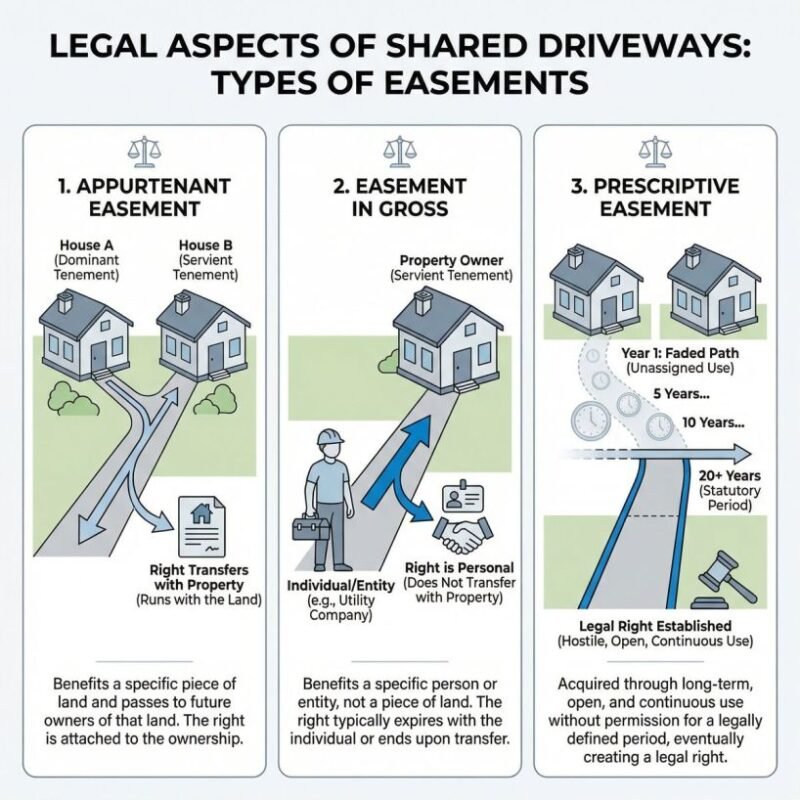
At the heart of any shared driveway arrangement lies its legal foundation. Most commonly, this takes the form of an easement, which is a non-possessory right to use another’s property for a specific purpose. There are several types of easements that can apply to shared driveways. An appurtenant easement is tied to the land itself, meaning the right to use the driveway transfers with the property when it is sold. This provides continuity and predictability for future owners. Conversely, an easement in gross grants a right to a specific individual or entity, rather than the property, and may not transfer with ownership. Less common, but still relevant, is a prescriptive easement, which can be established through continuous, open, and adverse use of another’s property for a statutorily defined period. This type of easement can be complex and often arises from long-standing, informal arrangements. Beyond easements, formal written agreements are crucial. These documents should clearly outline the rights and responsibilities of each property owner, covering aspects such as maintenance obligations, cost-sharing formulas, usage restrictions (e.g., parking, commercial vehicles), and a clear process for resolving disputes. A well-drafted agreement acts as a roadmap, minimizing ambiguity and providing a legal recourse if issues arise. Before purchasing a property with a shared driveway, it is imperative to have a real estate attorney review all relevant legal documents to ensure a complete understanding of your rights and obligations.
Practical Considerations: Maintenance, Parking, and Property Value
Answer Capsule: Practical aspects of shared driveways include establishing clear maintenance schedules and cost-sharing arrangements, adhering to parking rules to prevent obstruction, and recognizing the potential influence on property valuation. Proactive planning and communication are key to managing these day-to-day realities effectively.
Beyond the legalities, the day-to-day practicalities of a shared driveway significantly impact homeownership. Maintenance responsibilities are a primary concern. A clear, written maintenance agreement should detail who is responsible for what, including routine cleaning, pothole repairs, sealing, and snow removal. It should also specify how costs will be shared, whether equally or based on usage. Without such an agreement, disagreements can quickly arise, leading to neglected upkeep and potential safety hazards. Parking is another frequent source of conflict. Shared driveways are primarily intended for access, not for extended parking. Any parking restrictions, whether temporary for guests or permanent for residents, should be explicitly stated in the shared driveway agreement. Obstructing a neighbor’s access, even for a short period, can lead to significant frustration and legal issues. Finally, the presence of a shared driveway can influence property value. While not always a deal-breaker, some buyers may view it as a disadvantage, potentially affecting resale value or the speed of a sale. Conversely, a well-maintained shared driveway with a clear, amicable agreement can be seen as a neutral or even positive feature, especially in areas where such arrangements are common. Understanding these practical aspects and having clear guidelines in place is essential for a harmonious shared driveway experience.
Before You Buy: Essential Questions to Ask
Answer Capsule: Before committing to a purchase, prospective buyers should ask critical questions regarding existing legal agreements, maintenance history, dispute resolution mechanisms, and any unwritten rules. Thorough due diligence ensures a full understanding of the shared driveway arrangement.
Making an informed decision about a property with a shared driveway requires diligent inquiry. Here are essential questions to ask:
- Is there a recorded easement or written agreement? Request copies of all legal documents pertaining to the shared driveway. These documents are the foundation of your rights and responsibilities.
- Who owns the land beneath the driveway? It’s possible one owner owns the entire strip, granting the other an easement for access. A property survey can clarify ownership boundaries.
- How are maintenance and repair costs handled? Look for a clear, written agreement outlining cost-sharing for routine upkeep and major repairs. Understand the process for approving work and collecting contributions.
- Are there any specific parking rules or restrictions? Clarify where and when parking is permitted to avoid future conflicts. Ensure emergency vehicle access is always maintained.
- Have there been any past disputes with neighbors regarding the driveway? While sellers may not always disclose this, asking can provide insight into potential challenges. Public records or local community forums might offer additional information.
- What is the process for resolving disputes? A good agreement will include a mechanism for conflict resolution, such as mediation or arbitration, before resorting to legal action.
- Are there any unwritten rules or informal understandings? Sometimes, long-standing neighbors have informal agreements that are not legally binding but are important for harmonious living. It’s good to be aware of these.
By asking these questions and thoroughly reviewing all documentation, you can gain a comprehensive understanding of the shared driveway arrangement and determine if it aligns with your expectations and comfort level.
Shared Driveway FAQs
Answer Capsule: This section addresses common questions about shared driveways, providing concise answers to help clarify frequently encountered concerns for potential homebuyers.
What is a shared driveway easement?
A shared driveway easement is a legal right that allows one property owner to use a portion of a neighboring property for access to their own land. It’s typically a formal agreement recorded with the property deed, ensuring continuous access even if ownership changes.
Who is responsible for shared driveway maintenance?
Maintenance responsibilities are usually outlined in a written agreement or easement. This document specifies how costs for repairs, snow removal, and general upkeep are divided among the property owners. Without such an agreement, responsibilities can become a point of contention.
How do shared driveways affect property value?
The impact on property value can vary. While some buyers might view a shared driveway as a disadvantage, potentially affecting resale value, a well-maintained driveway with a clear, amicable agreement can be neutral or even positive, especially in areas where they are common. Transparency and clear documentation are key.
Can you park on a shared driveway?
Parking on a shared driveway is generally restricted to avoid obstructing access for other property owners. Any parking rules or limitations should be explicitly stated in the shared driveway agreement. Violating these rules can lead to disputes and legal issues.
How to resolve disputes over a shared driveway?
Disputes are best resolved through open communication and adherence to the written shared driveway agreement. If informal discussions fail, mediation is often a recommended next step to find a mutually agreeable solution before resorting to more formal legal action.
Conclusion: Making an Informed Decision
Answer Capsule: Buying a home with a shared driveway requires careful consideration of both its advantages and disadvantages, alongside a thorough review of legal and practical implications. An informed decision, backed by due diligence and a clear understanding of responsibilities, can lead to a harmonious living situation.
Ultimately, the decision to purchase a home with a shared driveway hinges on a thorough understanding of its implications. While the prospect of shared access can initially seem daunting, many homeowners successfully navigate these arrangements with clear communication, well-defined legal agreements, and a spirit of cooperation. The benefits of shared maintenance costs and efficient land use can be appealing, but these must be weighed against potential challenges related to privacy, usage disputes, and the complexities of neighborly relations. By conducting comprehensive due diligence, including a meticulous review of all legal documents and open discussions with current owners, prospective buyers can make an informed choice that aligns with their lifestyle and long-term homeownership goals. A shared driveway, when approached with careful consideration and preparation, can indeed be a harmonious and practical solution.
References
- Fennemore Law – Top Five Things to Know About Shared Driveway Easements
- The Cameron Team – The Reality of Selling or Buying a Home with a Shared Driveway
- Dean’s Team – What Buyers Should Consider When Purchasing a Home With a Shared Driveway

Most Viewed