

Navigating the complexities of real estate transactions often involves more than just a single offer and acceptance. The counteroffer is a pivotal, yet frequently misunderstood, stage where both buyers and sellers refine terms to reach a mutually agreeable outcome. This negotiation phase requires a blend of strategy, clear communication, and a firm understanding of market dynamics. It’s a dance of proposals and adjustments, where each party aims to secure the best possible deal without alienating the other. For many, this can feel like walking a tightrope, balancing desire with practicality, especially when significant financial commitments are on the line. Understanding how to construct and respond to a counteroffer effectively can be the difference between a successful transaction and a missed opportunity.
What Exactly Constitutes a Real Estate Counteroffer?
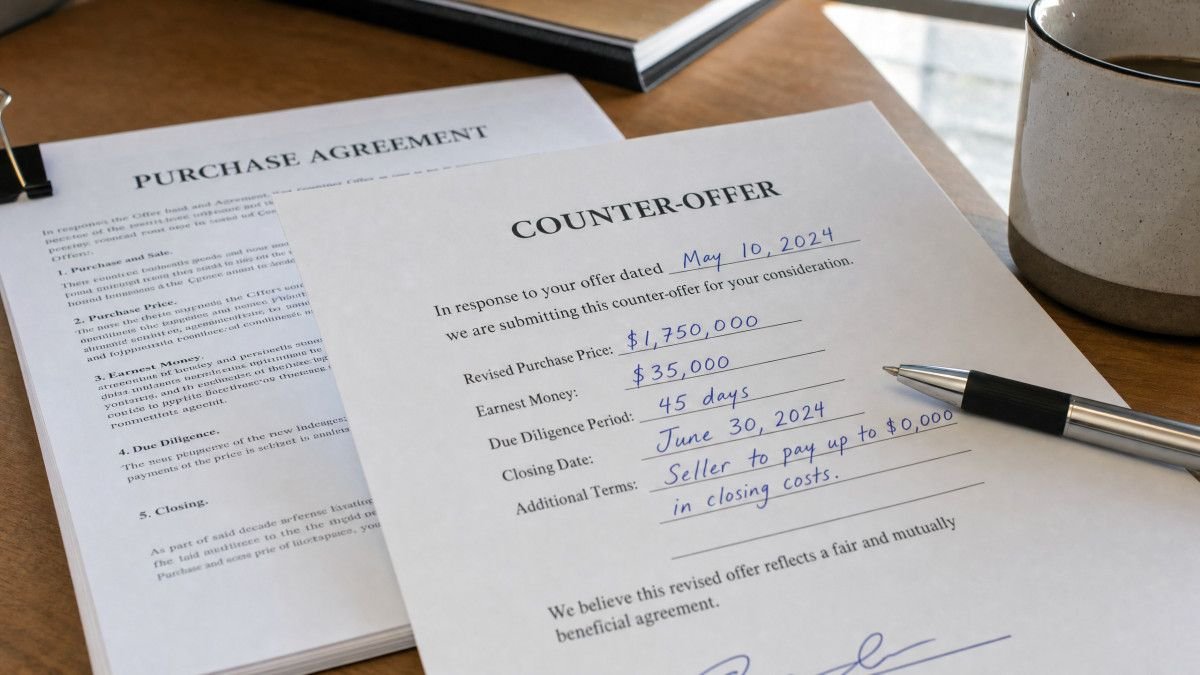
A real estate counteroffer is a formal response to an initial purchase offer, proposing changes to the original terms rather than outright acceptance or rejection. This allows both buyers and sellers to adjust aspects like price, closing dates, contingencies, or inclusions, moving closer to an agreement that aligns with their individual goals.
When a buyer submits an offer on a property, the seller has three primary options: accept the offer as-is, reject it entirely, or issue a counteroffer. The counteroffer essentially voids the original proposal and presents new terms for the other party’s consideration. For instance, if a buyer offers $450,000 for a home listed at $475,000, the seller might counter at $465,000, requesting a quicker closing date, perhaps 30 days instead of the buyer’s proposed 45. This back-and-forth can continue until both parties agree on all conditions, or one party decides to walk away. It’s a critical mechanism for bridging gaps between initial expectations and finding common ground, ensuring that the final agreement reflects a fair compromise for all involved. The process is inherently iterative, sometimes involving several rounds of adjustments, each designed to nudge the deal closer to completion.
Key Elements That Define a Strong Counteroffer
A strong counteroffer is meticulously crafted, addressing not only the price but also other crucial terms such as contingencies, financing, and timelines, all while being supported by market data and a clear understanding of one’s own priorities. It’s about presenting a revised proposal that is both appealing to the other party and advantageous to your position.
For a seller, a robust counteroffer might involve adjusting the purchase price upwards, but also specifying a non-refundable earnest money deposit of 2% of the sale price, or requesting the buyer waive certain non-essential contingencies, such as the sale of their current home. The goal is to strengthen the seller’s position by securing more favorable financial terms or reducing potential risks. Conversely, a buyer’s strong counteroffer might accept a slightly higher price but request the seller cover specific closing costs, perhaps up to 1.5% of the loan amount, or include certain appliances that were initially excluded. The strength often lies in its justification; for example, citing recent comparable sales in the neighborhood that support a particular price point, or detailing necessary repairs identified during an inspection that warrant a price reduction. According to the National Association of Realtors (NAR), clear communication of terms and conditions is paramount to avoid misunderstandings and facilitate a smoother negotiation process [1]. Without a clear rationale, a counteroffer can appear arbitrary and may not be taken seriously, potentially stalling the entire transaction. It’s a delicate balance of assertiveness and reasonableness.
Strategic Considerations for Buyers and Sellers
Both buyers and sellers must approach counteroffers with a clear strategy, understanding their bottom line, the current market conditions, and the motivations of the other party to maximize their negotiation leverage. This involves careful planning and a willingness to adapt.
For buyers, a key strategy involves understanding the seller’s potential motivations. Is the seller in a hurry to move due to a job relocation? Are they looking to avoid costly repairs? Knowing these factors can inform which terms to prioritize in a counteroffer. For example, offering a quicker closing date or agreeing to an as-is sale in exchange for a price reduction can be powerful incentives. Conversely, sellers should research the buyer’s financial standing and pre-approval status. A buyer with a strong pre-approval letter from a reputable lender, like a 20% down payment on a conventional loan, presents less risk and might warrant more flexibility on other terms. Market conditions also play a significant role. In a seller’s market, where demand outstrips supply, sellers have more leverage and can be firmer with their counteroffers, perhaps only conceding on minor points. In a buyer’s market, however, buyers have more room to negotiate, and sellers might need to be more accommodating to secure a sale. It can be frustrating when you feel like you’re constantly giving ground, but sometimes, a small concession can keep a promising deal alive. For instance, if a buyer asks for a $5,000 credit for minor repairs, and you know your home has been on the market for 60 days, it might be wise to agree rather than risk losing the buyer and starting the marketing process anew. This is where a good real estate agent becomes invaluable, providing insights into local market trends and helping to gauge the other party’s willingness to negotiate. They can advise on whether to stand firm or compromise, based on their experience with similar transactions in the area.
Common Pitfalls and How to Avoid Them
Navigating counteroffers can be fraught with missteps, from emotional reactions to overlooking critical contractual details, all of which can jeopardize a successful transaction. Avoiding these common pitfalls requires a disciplined approach and careful attention to the specifics of the deal.
One of the most frequent mistakes is allowing emotions to dictate decisions. Buying or selling a home is a deeply personal experience, often tied to significant life changes, but it is fundamentally a business transaction. Receiving a lowball offer can feel insulting, or a demanding counter from a seller might spark frustration. However, reacting impulsively, such as immediately rejecting an offer without careful consideration or sending an overly aggressive counter, can quickly derail negotiations. A better approach is to take a step back, consult with your agent, and evaluate the offer objectively. Another common pitfall is neglecting the details of contingencies. Buyers might inadvertently waive an important inspection contingency, only to discover costly structural issues after closing. Sellers, on the other hand, might agree to an open-ended financing contingency, leaving them vulnerable if the buyer’s loan falls through weeks into the process. Every contingency has implications, and understanding them thoroughly is crucial. For example, a buyer might initially offer with a 10-day inspection contingency. If the seller counters, they might propose shortening this to 7 days. While seemingly minor, this reduces the buyer’s time to conduct due diligence, which could be a point of contention. It’s also easy to get caught in a prolonged back-and-forth, where multiple counteroffers are exchanged, each with minor adjustments. This can lead to negotiation fatigue and, occasionally, one party simply walking away out of sheer exhaustion. Setting clear boundaries and knowing when to make a final, strong offer or counter can prevent this. I’ve seen deals fall apart because both sides were so entrenched in their positions over a few thousand dollars, losing sight of the bigger picture. It’s a tough lesson to learn, but sometimes, a small compromise is worth the peace of mind and the certainty of closing the deal.
Legal and Contractual Considerations
Every counteroffer, once signed, becomes a legally binding amendment to the original purchase agreement, underscoring the necessity of precise language, clear terms, and adherence to all applicable real estate laws and regulations. Legal implications are significant, and professional guidance is often indispensable.
In most jurisdictions, a counteroffer effectively nullifies the previous offer. This means that if your counteroffer is rejected, you cannot typically revert to accepting the original offer; it’s off the table. This is a critical point that many first-time buyers or sellers overlook, leading to potential disappointment. The contract language must be unambiguous, clearly stating any changes to price, closing date, financing terms, inclusions/exclusions, and contingencies. Vague phrasing can lead to disputes down the line. For instance, if a seller agrees to repair a ‘leaky faucet,’ without specifying which one or the extent of the repair, it can become a point of contention during the final walkthrough. Real estate contracts are governed by state-specific laws, and what is standard practice in one state, such as the use of attorney review periods, might be absent in another. For example, in some states, like New Jersey, an attorney review period is standard, allowing both parties’ attorneys to review and approve the contract within a few business days after it’s signed by the buyer and seller. This period provides a crucial window for legal adjustments. Failure to adhere to these legal frameworks can render a contract unenforceable or lead to costly litigation. It is always advisable to have a qualified real estate attorney review all contractual documents, especially counteroffers, to ensure compliance and protect your interests. This is particularly true when dealing with complex contingencies or unusual terms. I once saw a deal almost collapse because a seller, without legal advice, tried to insert a clause that was legally unenforceable, causing significant delays and distrust. It’s a reminder that while agents are experts in negotiation, legal counsel provides the necessary safeguard against unforeseen complications.
FAQ: Frequently Asked Questions About Counteroffers
Q1: How many counteroffers can be made?
There is typically no legal limit to the number of counteroffers that can be exchanged between parties, though practical considerations often dictate the process. While there isn’t a strict legal cap, the negotiation process can become protracted and frustrating if too many rounds occur. In practice, most transactions involve only a few counteroffers before an agreement is reached or one party decides to withdraw. For example, after three or four exchanges, if the parties are still far apart on price or key terms, it might be more productive to reassess the situation or consider walking away. The duration of this back-and-forth is often influenced by market conditions and the urgency of both the buyer and seller. A seller needing to relocate quickly might be less inclined to engage in numerous rounds of negotiation than one with no immediate time constraints.
Q2: What happens if a counteroffer expires?
If a counteroffer expires without acceptance, it becomes null and void, meaning the terms proposed are no longer binding on either party. When a counteroffer includes an expiration date and time, it creates a firm deadline for a response. If the other party fails to accept, reject, or issue a new counteroffer before this deadline, the expired counteroffer ceases to exist. For instance, if a seller issues a counteroffer valid until 5:00 PM on Tuesday, and the buyer does not respond by that time, the seller is then free to entertain other offers or even re-list the property without any obligation to the original buyer. This mechanism is designed to keep negotiations moving forward and prevent indefinite limbo. It can be a moment of genuine disappointment if you’ve put a lot of thought into a counteroffer, only to have it lapse. It underscores the importance of timely communication and decision-making in real estate transactions.
Q3: Can a seller accept another offer while a counteroffer is outstanding?
Generally, yes, a seller can accept another offer while a counteroffer is outstanding, as the counteroffer itself is not a binding contract until accepted. Until a counteroffer is formally accepted by the recipient, the seller is typically not legally bound to the terms of that counteroffer. This means that if a seller has issued a counteroffer to one buyer, and then receives a more attractive offer from a different buyer, they are usually free to accept the new offer. However, ethical considerations and state-specific real estate practices often dictate that the seller should formally withdraw the outstanding counteroffer before accepting a new one to avoid potential legal complications. This is a nuanced area, and real estate agents often advise their clients on the best course of action to maintain transparency and avoid disputes. It’s a situation that can create frustration for a buyer who believes they are close to a deal, only to find the seller has moved on.
Q4: What are common contingencies in counteroffers?
Common contingencies in counteroffers often include financing, home inspection, appraisal, and the sale of the buyer’s current home, each protecting a party’s interests. These clauses specify conditions that must be met for the contract to proceed. For example, a buyer might counter with a financing contingency, stating the purchase is dependent on securing a mortgage at a specific interest rate. A seller might counter by limiting the scope of a home inspection contingency, perhaps only allowing for major structural or mechanical defects to be addressed, rather than minor cosmetic issues. Appraisal contingencies protect the buyer by allowing them to withdraw if the home appraises for less than the purchase price. The sale of buyer’s home contingency allows a buyer to make an offer contingent on the successful sale of their current property. Each of these contingencies can be negotiated and modified within a counteroffer to suit the needs and risk tolerance of both parties.
Q5: Should I always counter a lowball offer?
While it is generally advisable for sellers to counter a lowball offer, the decision ultimately depends on market conditions, the seller’s motivation, and the offer’s specific terms. Countering a lowball offer signals to the buyer that you are still interested in selling, but not at their proposed price. It opens a dialogue and gives the buyer an opportunity to improve their offer. For example, if a home is listed at $500,000 and a buyer offers $400,000, a seller might counter at $480,000 to test the buyer’s seriousness. However, in a very strong seller’s market with multiple competing offers, a seller might choose to ignore a significantly low offer and focus on more competitive bids. Conversely, in a slow market, any offer, even a low one, might be worth countering to keep potential buyers engaged. It’s a strategic decision that should be made in consultation with your real estate agent, weighing the potential for a better offer against the risk of losing a potential buyer entirely.
Conclusion
Mastering the art of the real estate counteroffer is an essential skill for anyone navigating property transactions. It demands a clear understanding of market dynamics, a firm grasp of legal implications, and the ability to negotiate strategically while keeping emotions in check. By meticulously crafting proposals, understanding when to stand firm or compromise, and avoiding common pitfalls, both buyers and sellers can significantly increase their chances of achieving a favorable outcome. The process, while sometimes challenging, ultimately serves as a vital mechanism for bridging differences and forging agreements that benefit all parties involved. It’s about finding that sweet spot where everyone feels they’ve achieved a fair deal, allowing the excitement of a new home or a successful sale to truly begin.

Most Viewed