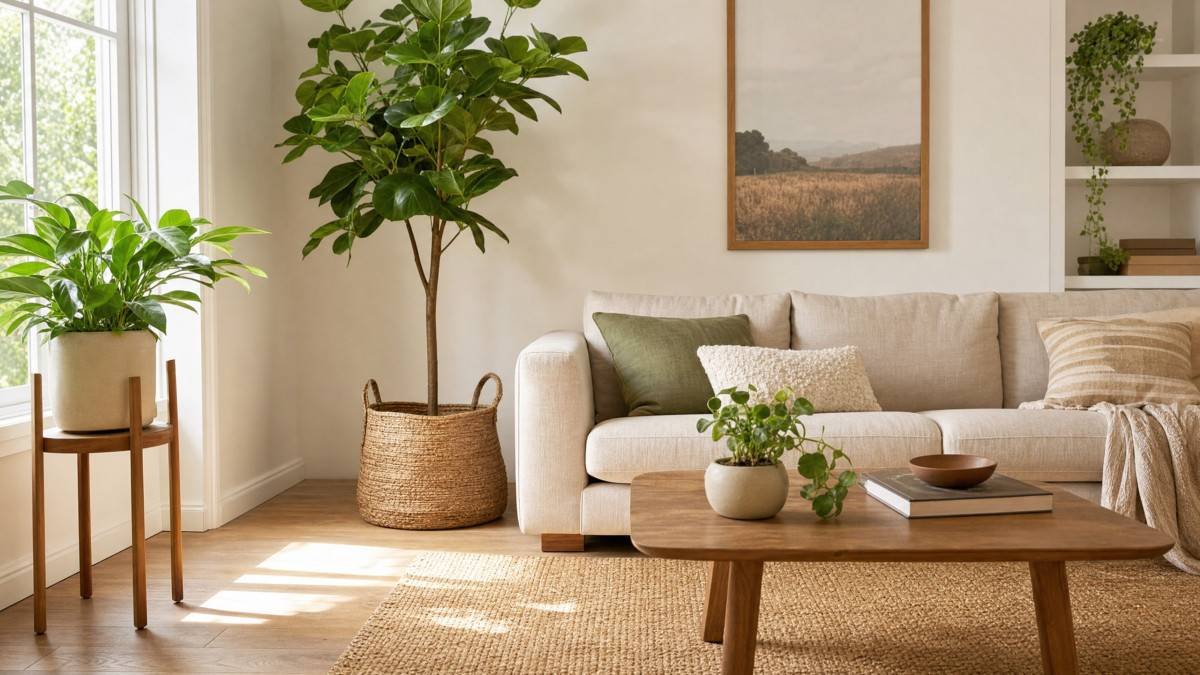

Decorating with plants for a fresh look works best when each plant has a clear job: soften a bare corner, lift the eye toward a shelf, add texture beside hard furniture, or make a practical room feel calmer without turning every surface into a crowded mini greenhouse.
The fresh part does not come from buying more greenery. It comes from choosing plants that suit the light, setting them at different heights, keeping containers visually related, and leaving enough open space for the leaves to matter. That sounds tidy on paper; in a real room, it can be oddly easy to overdo.
A reliable starting point is simple: one floor plant for height, one trailing or arching plant for movement, and one small plant where people naturally pause, such as a side table, entry console, kitchen counter, or desk. From there, the room can grow slowly instead of looking like a plant shop moved in overnight.
Start With Light, Scale, and the Empty Corners
Plant decor looks intentional when the plant’s visual weight matches the room and the plant’s needs match the spot. A tall leafy plant can make an empty corner feel finished, but the same plant will look tired fast if the corner is too dim, too drafty, or impossible to water cleanly.
According to the University of Maryland Extension, indoor plants should not be watered on a fixed schedule because potting media, humidity, and temperature all affect watering needs. The same practical thinking should guide placement: before buying the pot, stand in the room and notice where daylight actually lands.
Scale is the second decision. A floor plant belongs where furniture leaves a visual gap, while a compact plant belongs on a shelf, nightstand, or kitchen ledge where leaves will not brush elbows or block a lamp. A trailing plant is useful when a shelf looks stiff, though it needs enough clearance to hang without tangling in cords or cabinet doors.
| Room Condition | Best Plant Styling Move | Care Caution |
|---|---|---|
| Bright corner beside seating | Use one statement floor plant in a basket or simple ceramic pot | Check whether afternoon sun scorches leaves before committing |
| Low shelf or bookcase | Add one trailing plant and one upright small plant for contrast | Leave space for air movement and easy leaf cleaning |
| Dark hallway or deep corner | Use a shade-tolerant plant only if there is some indirect light, or use faux greenery | A beautiful dark corner is still a difficult growing site |
| Small table or desk | Choose a compact plant with a stable saucer or cachepot | Avoid wide leaves that interfere with daily use |
The rule is this: a plant should solve one visual problem before it creates a care problem. If the corner is awkward, fix the corner. If the corner is also too dark, choose a different kind of greenery rather than pretending the plant will adapt because the pot looks good there.
Build Plant Groupings That Look Designed, Not Crowded
A strong plant grouping uses contrast and repetition at the same time: varied heights and leaf shapes keep the arrangement alive, while related pots keep it from becoming visual noise. The easiest grouping is still three pieces, but the pieces should not all shout at once.
Competitor pages commonly recommend plant stands, shelf layers, and odd-number groupings because those tricks work in ordinary rooms. The better version is more edited. Put the largest leafy plant lowest, lift a smaller pot on a book or stand, and let one trailing plant create movement from above or behind.
Container choice decides whether the grouping feels calm or chaotic. Matching every pot can look a little too staged, almost like a store display; using every finish in the cupboard can look messy. I usually prefer one repeated color family, then a single texture change, such as a woven basket beside matte ceramic.
The University of Maryland Extension explains that watering needs change with potting media, humidity, and temperature, which is a quiet argument for grouping plants with similar care needs. A shelf arrangement is easier to keep fresh when the plants want roughly similar conditions.
| Grouping Formula | Where It Works | What to Avoid |
|---|---|---|
| One tall floor plant, one medium stand plant, one small tabletop plant | Living room corners, reading areas, home offices | Three pots of the same height lined up flat against a wall |
| One trailing plant plus books, framed art, and a small upright plant | Bookcases, floating shelves, console tables | Trailing vines placed where they catch on doors or drawers |
| Three pots in the same color but different sizes | Minimal rooms, rental apartments, small bedrooms | Busy patterned pots competing with patterned rugs and pillows |
| One living plant with faux stems or preserved branches | Dim corners, high shelves, seasonal refreshes | Fake greenery placed at eye level where the leaves are easy to inspect |
Negative space matters. A plant grouping looks fresher when there is blank wall, tabletop, or floor around it, because the leaves need room to cast shadows and show their shapes. Crowding five small pots together may add greenery, but it often removes the lightness people wanted in the first place.
Use Plants Room by Room for a Fresh Look
Each room needs a different plant role. Living rooms can handle anchors and layered corners, kitchens benefit from small useful greenery, bathrooms need moisture-aware choices, bedrooms usually look better with restraint, and work areas need plants that calm the desk without stealing working space.
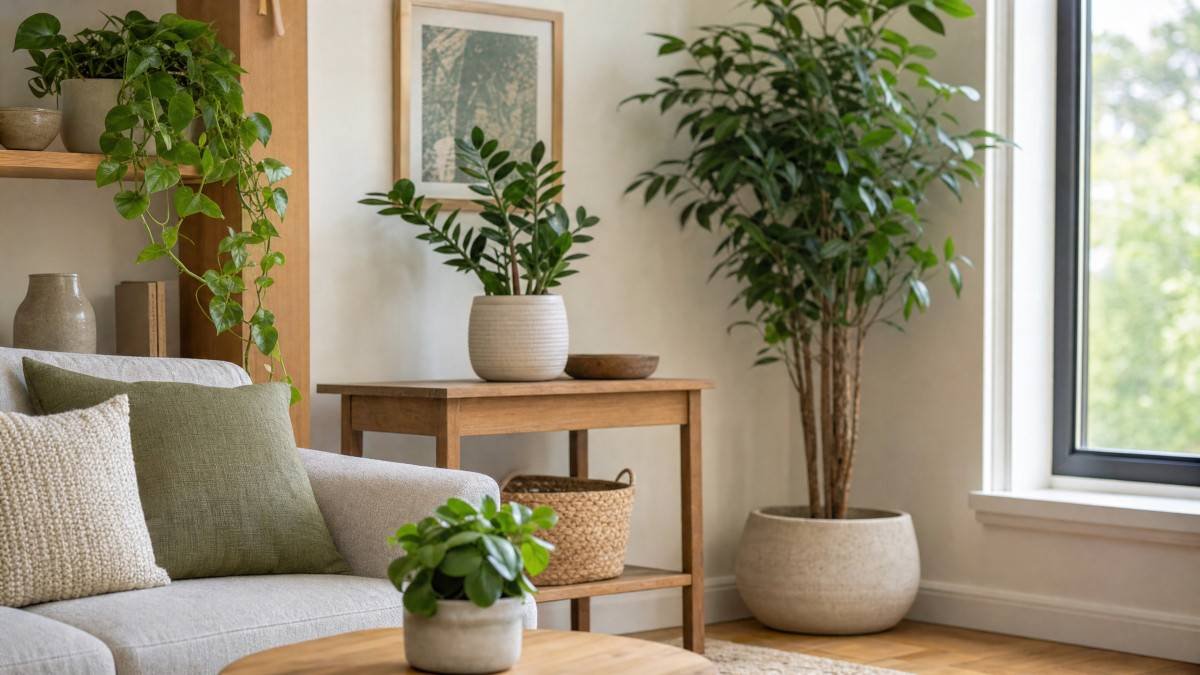
Illinois Extension notes that many homes have less than 30 percent humidity during winter and that some houseplants may suffer in those conditions. It also advises avoiding extreme temperature changes near windows, radiators, heating vents, and air-conditioning vents, which is especially relevant when plants are placed for looks rather than care.
For a living room, use a tall plant as a furniture anchor. A sofa, reading chair, or media console often creates a dead triangle of wall and floor; a plant can fill that gap without adding another hard object. Keep the pot simple if the room already has strong artwork, patterned textiles, or open shelving.
| Room | Fresh-Look Placement | Plant Role | Design Restraint |
|---|---|---|---|
| Living room | Corner near seating, console end, or beside a cabinet | Anchor the furniture and soften hard lines | Use one large plant before adding several small ones |
| Bedroom | Nightstand, dresser, or one quiet floor corner | Add calm texture without cluttering the sleep zone | Keep leaves away from lamps, chargers, and bedside water glasses |
| Kitchen | Window ledge, open shelf, or counter edge | Bring freshness into a functional room | Protect food-prep surfaces from soil and standing water |
| Bathroom | Bright sill, stool, or shelf outside direct splash zones | Make tile, mirrors, and metal fixtures feel softer | Check ventilation; humidity does not replace light |
| Entry or office | Console, desk corner, or vertical shelf | Create a welcoming or focused pause point | Choose stable pots where bags, chairs, or elbows will not knock them |
A kitchen herb pot can look charming, but it only works if the counter can spare the space. A bathroom fern can look lush, but a windowless bathroom is still a windowless bathroom. This is one of those decorating choices where the honest answer is occasionally disappointing, and that is better than replacing the same failing plant three times.
Mix Living Plants, Faux Stems, and Containers
Living plants should carry the touchable, eye-level parts of a room, while faux stems can fill places where real plants struggle, such as high shelves, narrow ledges, and darker corners. The mix looks natural when the best real plant gets the spotlight and the artificial greenery stays in supporting roles.
This is not a purist contest. A real trailing plant on a bookcase may be perfect if the shelf gets light and is easy to reach, but a realistic faux trail can be the better choice above kitchen cabinets or on a tall wardrobe. The design mistake is not using faux greenery; it is using too much of it in places where guests naturally stand close.
Containers do a lot of quiet work. A woven basket softens a large nursery pot, a clear glass vase makes clipped stems feel lighter, and a matte ceramic pot can make a cheap plant look more deliberate. For modern interior design with plants, repeating one pot color across different sizes usually feels cleaner than buying a new decorative pot for every plant.
Illinois Extension warns that plants can suffer near drafts, heating vents, cooling vents, and cold windowpanes. That makes faux stems especially useful in decorative spots where a real plant would be exposed to unstable conditions or would sit too far from usable light.
| Container Choice | Best Use | Fresh-Look Effect |
|---|---|---|
| Woven basket | Large floor plants and corners | Adds warmth and hides nursery pots |
| Matte ceramic pot | Side tables, consoles, and shelves | Keeps the arrangement calm and finished |
| Clear glass vase | Cuttings, branches, and tall stems | Feels airy near windows and narrow surfaces |
| Same-color pot set | Three-plant groups in small rooms | Creates order without making plants identical |
A good container should support the plant, not become the main character every time. If the room already has brass lamps, patterned curtains, colorful art, and open shelving, quieter pots will often make the greenery look fresher than another decorative object would.
Choose Plants by Leaf Shape, Color, and Growth Habit
The freshest plant displays are not built from plant names alone. They come from mixing leaf shape, color depth, and growth habit so each plant contributes something different. A room with only small upright plants can feel dotted and busy, while one with only large leafy plants can feel heavy.
Start with shape. Broad leaves soften sharp furniture and plain walls, narrow leaves add movement without bulk, and trailing leaves make shelves feel more relaxed. If the room already has many rounded objects, such as a curved sofa, round mirror, and circular table, a plant with upright or blade-like leaves can bring useful contrast.
Color matters too, but it should be handled gently. Deep green foliage feels calm and timeless, while variegated leaves can brighten a dark furniture scheme. Too many variegated plants may compete with patterned textiles, so treat them like patterned cushions: one feature is often enough.
| Plant Visual Trait | Decor Effect | Best Placement |
|---|---|---|
| Large broad leaves | Softens corners and gives the room a relaxed focal point | Beside sofas, cabinets, reading chairs, or blank walls |
| Fine or narrow leaves | Adds airy texture without making the room feel crowded | Desks, side tables, slim consoles, and small bedrooms |
| Trailing growth | Breaks up horizontal shelves and creates visual movement | Bookcases, floating shelves, wall ledges, and high plant stands |
| Variegated leaves | Brings brightness and pattern into neutral rooms | Simple rooms with plain walls, calm rugs, and quiet planters |
Growth habit should also match how people move through the room. A trailing plant is beautiful until it catches on a cabinet door. A wide floor plant can be wonderful until it blocks the walking path beside a sofa. The best plant is not only healthy and attractive; it also behaves well in the place where daily life actually happens.
Style Surfaces With Plants Without Losing Function
Plant styling works best when surfaces still do their real job. A coffee table should still hold a cup, a nightstand should still hold a lamp or book, and a desk should still leave room for work. Freshness disappears quickly when every useful surface becomes a display shelf.
On a coffee table, one small plant is usually enough if the table already holds books, candles, trays, or bowls. Choose a compact pot with a saucer or place it on a tray so water marks never become part of the design. On a nightstand, a plant should be smaller than the lamp or at least visually quieter, because the bedside area needs calm more than drama.
Shelves can handle more greenery, but they need rhythm. Instead of filling every shelf with a pot, alternate plant moments with books, framed art, ceramics, and empty space. This is where decorating with plants for a fresh look becomes less about collecting plants and more about editing the room until the greenery has room to breathe.
| Surface | Best Plant Move | Functional Rule |
|---|---|---|
| Coffee table | One compact plant on a tray with books or a small object | Leave enough open area for daily use |
| Nightstand | Small upright plant or simple cutting in a glass vase | Keep it away from lamps, cords, and water glasses |
| Desk | Low-maintenance compact plant at the back corner | Do not block writing space, screens, or arm movement |
| Bookshelf | One trailing plant every few shelves, not every shelf | Leave visual gaps so the shelf does not feel overgrown |
| Entry console | One sculptural plant with a bowl, lamp, or mirror | Preserve space for keys, bags, and mail |
If a surface begins to feel cluttered, remove the smallest object first rather than moving the plant immediately. Plants have irregular shapes, so they often look better beside fewer, calmer objects.
Keep the Fresh Look Fresh After the First Week
Plant decor stays attractive when care is simple enough to repeat. Water only after checking the pot, keep drainage clear, wipe dusty leaves when they stop reflecting light, and rotate plants when growth leans hard toward a window. Good styling becomes easier when maintenance is built into the placement.
The University of Maryland Extension recommends testing soil with a finger about two inches deep and watering most indoor plants when the soil is dry at that depth. It also advises watering until water drains from the bottom of the pot, dumping excess water from saucers, and not letting houseplants sit in water.
That advice affects decorating more than people expect. A plant on a high shelf may look perfect in a photograph, but it becomes annoying if checking the soil requires a step stool every time. A heavy pot without a saucer may look sculptural, but it is risky on wood floors, painted shelves, and woven furniture.
| Care Habit | Why It Protects the Look | Decor-Safe Adjustment |
|---|---|---|
| Check soil before watering | Prevents limp leaves and soggy pots | Place plants where fingers can reach the soil easily |
| Use drainage and empty saucers | Reduces water damage and root problems | Hide functional saucers inside decorative cachepots carefully |
| Group humidity-loving plants | Can help create a more favorable local microclimate | Use a tray or shared shelf instead of scattering them everywhere |
| Keep plants away from drafts | Limits stress from temperature swings | Move pots back from vents, radiators, and cold panes |
Illinois Extension says humidity can be increased with a humidifier, pebble tray, or grouping plants, while also warning against drafts and temperature extremes. So the practical decorating rule is fairly plain: if a plant is difficult to reach, drain, or keep away from vents, the arrangement is probably not finished yet.
Frequently Asked Questions
How do I decorate my living room with plants?
Decorate a living room with plants by using one large plant as an anchor, one medium plant for height variation, and one small plant on a table or shelf. Keep the containers related in color or material so the room feels fresh rather than busy.
How many plants should be in one room?
Most rooms look better when the number of plants matches the room’s scale and available light, not a fixed count. In a small room, three well-placed plants can feel fresh; in a larger living area, one corner grouping plus one tabletop plant may still feel restrained.
What is the best way to decorate a dark corner with plants?
The best way to decorate a dark corner is to use greenery only if the plant has enough indirect light to survive. If the corner is genuinely dim, use a sculptural faux plant, preserved branches, or move the real plant closer to a brighter wall.
Are faux plants okay for a fresh look?
Faux plants are okay when they solve a real placement problem, especially on high shelves, in dark corners, or in rooms where watering is inconvenient. They look more convincing when mixed with living plants and kept away from close eye-level inspection.
How do I keep plant decor from looking cluttered?
Keep plant decor from looking cluttered by repeating container colors, varying plant heights, and leaving blank space around every grouping. Remove one small pot before adding another; plant decor usually looks fresher when the leaves have room to stand out.
Decorating with Plants for a Fresh Look Without Clutter
Decorating with plants for a fresh look feels easier when plants are chosen with the same care as lighting, rugs, or art. Start with the empty corner, the shelf that needs movement, or the table that needs one living detail, then match the plant to the light and the pot to the room.
The most successful rooms look fresh not because they contain the most plants. They look fresh because the greenery has a clear purpose. A tall plant gives height where the furniture stops, a trailing plant loosens a rigid shelf, a compact plant makes a desk or console feel alive, and a coordinated pot makes the whole choice feel intentional.
For many homes, the best first arrangement is modest: one floor plant, one trailing plant, and one small tabletop plant. Live with that for a short trial period. If the room still feels bare and the plants are easy to care for, add another layer. If it already feels calmer, stop there.
A beautiful plant arrangement should not become another chore disguised as decor. It should be reachable, water-safe, suited to the light, and spaced well enough that the leaves can be seen. That is the real secret behind a fresh look: not a perfect collection, but a room where living texture, open space, and daily function stay in balance.

Most Viewed