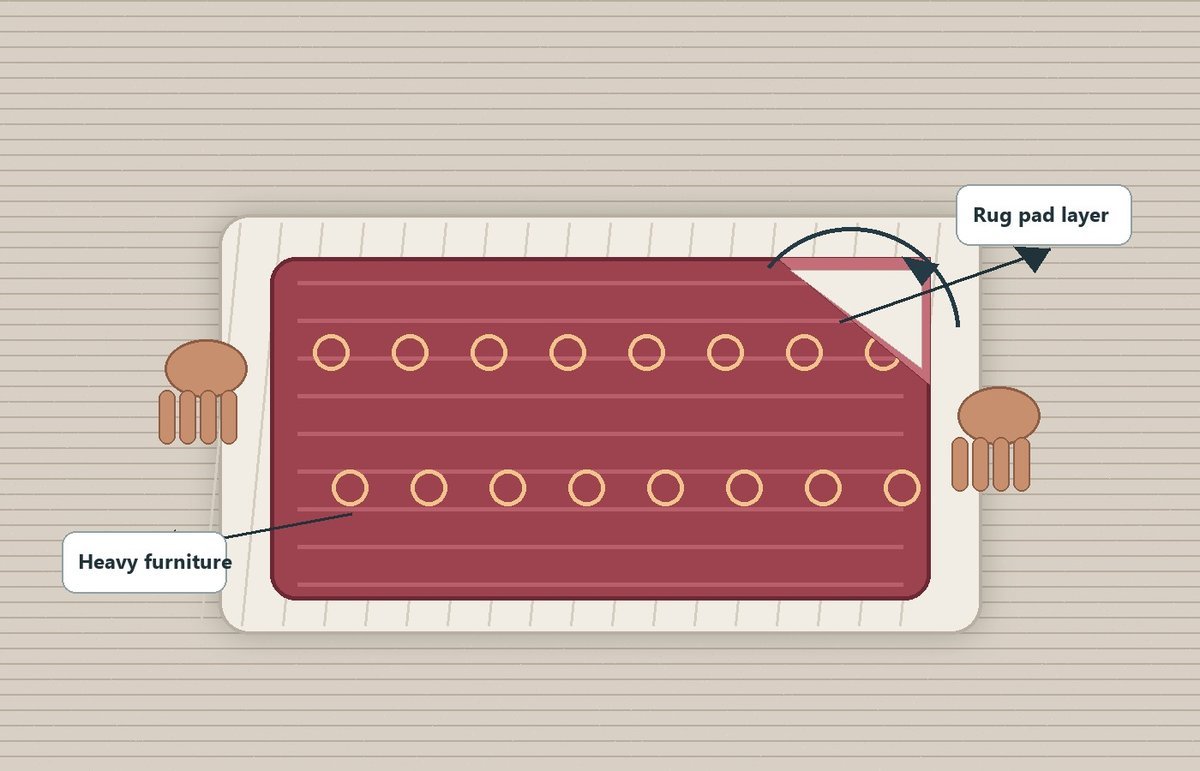

When an area rug works well over carpet
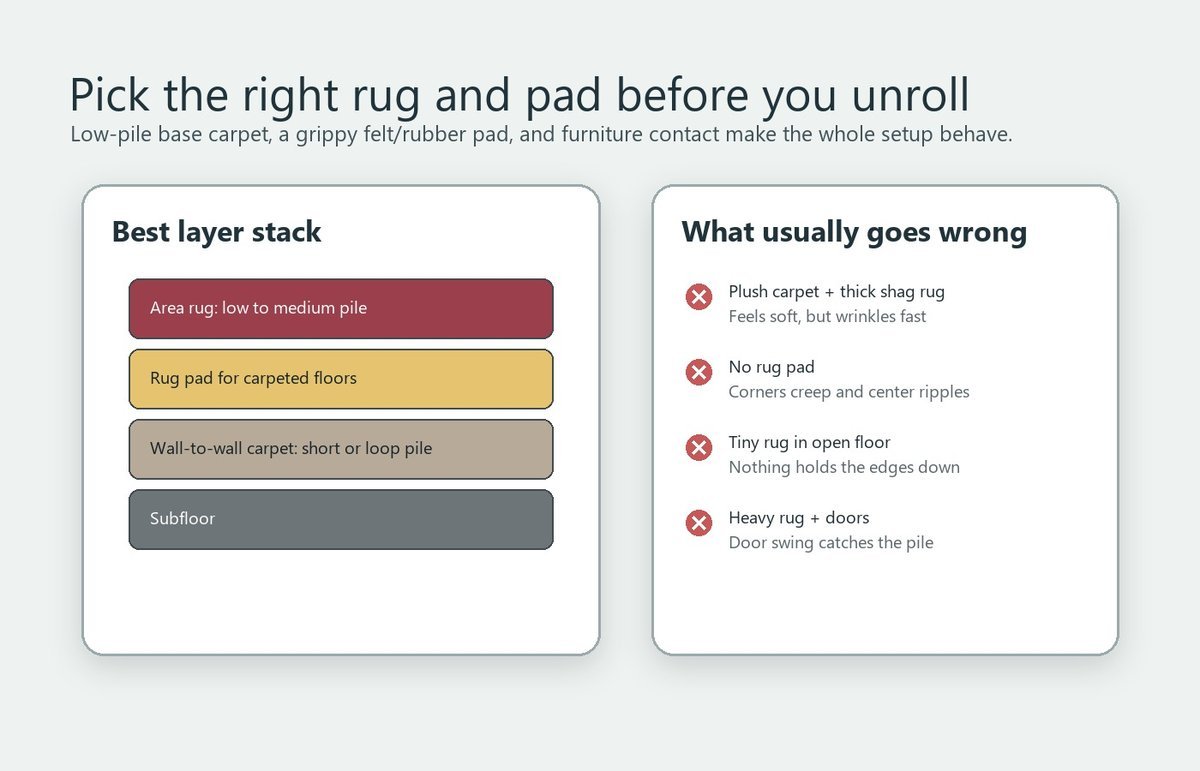
An area rug over carpet usually works best on short-pile or loop carpet, especially when the rug is large enough to feel anchored by the room. The combinations that misbehave are usually thick-on-thick layers, undersized rugs, or layouts where every edge is floating loose.
That pattern shows up in practical flooring and decorating advice again and again. Vary the texture, avoid overly plush pairings, and let furniture or room layout help hold the rug in place instead of expecting the rug alone to do all the work.
| Base carpet | Rug type | How it usually behaves | Best use |
|---|---|---|---|
| Short pile | Flatweave or low pile | Stable and easy to smooth | Living rooms, dining areas, offices |
| Loop carpet | Wool blend or medium pile | Usually good if the rug is dense | Bedrooms, sitting areas |
| Plush carpet | Thin flatweave | Usable, but needs a stronger pad | Light-traffic rooms |
| Plush carpet | Shag or extra-thick rug | Most likely to wrinkle and drift | Usually worth avoiding |
What to choose before you start
The prep matters more than the unrolling. A carpet-safe rug pad, a rug with enough body, and a quick check for door clearance solve most of the problems people run into before the rug even hits the floor.
The most useful rule is simple: the rug should feel flatter than the carpet below it, not fluffier. If both layers are soft and tall, the upper rug has nothing firm to settle against, so it starts to buckle whenever someone pivots, drags a chair, or kicks an edge while walking by.
- Choose a pad labeled for rug-over-carpet use, usually a felt-and-rubber or non-slip combination.
- Pick a rug large enough to sit under at least the front legs of major furniture when possible.
- Favor low-pile, flatwoven, hand-tufted, or tightly woven rugs over deep shag styles.
- Measure the finished height if the rug will sit near a swinging door.
- Vacuum the base carpet first so grit does not create lumps under the rug.
How to lay down an area rug on carpet step by step
If you want to know how to lay down an area rug on carpet and have it sit straight on day one, treat it like a layout job rather than a decorating guess. Square the position first, place the pad deliberately, and smooth the rug from the center toward the edges instead of tugging randomly at the corners.
- Vacuum the carpet and clear the zone completely so there are no hidden crumbs, cords, or furniture feet under the rug path.
- Mark the rug position by measuring from the walls, sofa, bed, or another fixed line in the room.
- Lay the pad first and keep it slightly smaller than the rug on every side so it never peeks out.
- Unroll the rug over the pad, then center it without stretching one corner farther than the others.
- Smooth from the middle outward with your hands or a clean push broom to press trapped air and slack toward the perimeter.
- Set furniture back so at least some weight lands on the rug if the room layout allows it.
- Leave the rug alone for several hours, then do one final edge check after it has had time to relax.
If the rug arrives tightly rolled, do not judge it in the first five minutes. A stubborn corner can simply be shipping memory. Letting the rug rest flat, then weighting the problem edge for a while, often fixes what looks at first like a placement mistake.
How to stop ripples, creeping corners, and bunching
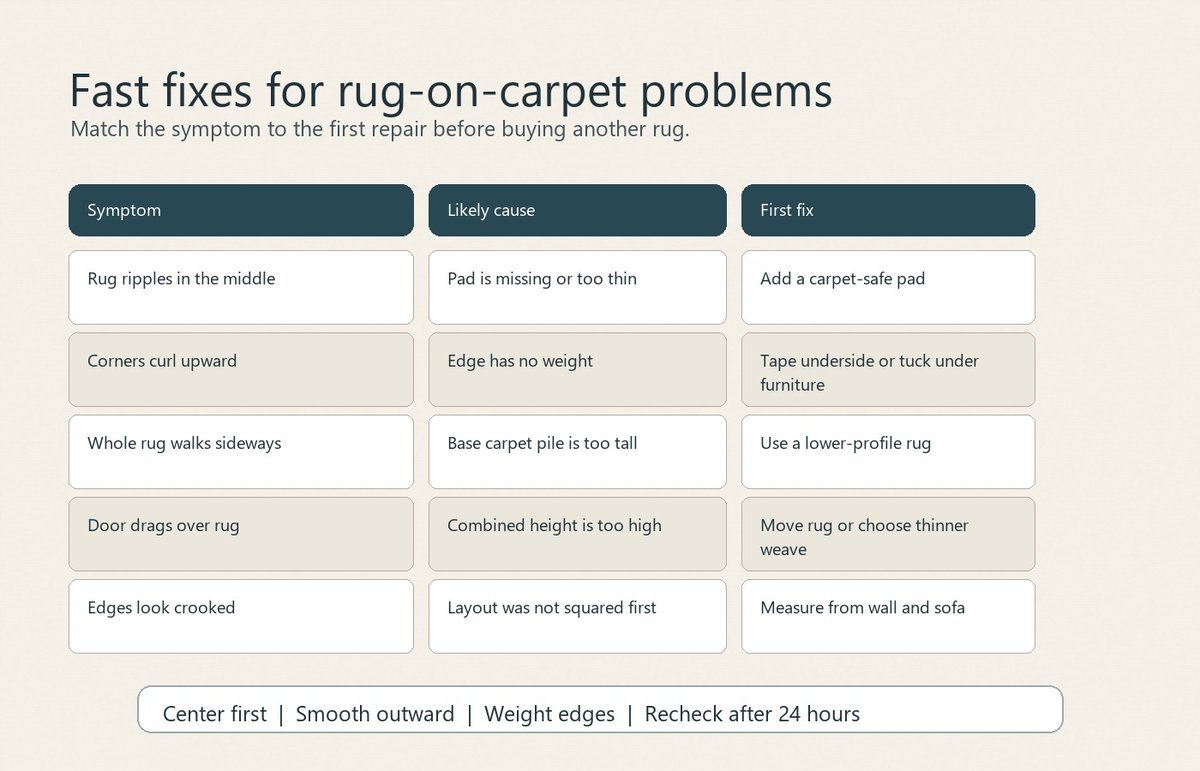
Most failures come from one of three things: too much softness, not enough grip, or no real anchor. Once you identify which one is happening, the fix gets much cheaper and much faster.
| Symptom | Likely cause | First fix |
|---|---|---|
| Middle of the rug forms soft waves | Pad is missing, too slick, or too thin for the carpet pile | Switch to a carpet-safe pad with more grip and body |
| Corners lift or curl | Edge has no weight or the rug was stored tightly rolled | Weight the corners, then anchor with furniture if possible |
| Entire rug shifts sideways over time | Rug is too small or base carpet is too plush | Use a larger, flatter rug or move it to a firmer room |
| Door catches the rug | Combined carpet and rug height is too high | Choose a thinner rug or relocate it away from the swing path |
| Rug looks crooked even after straightening | It was aligned by eye instead of by room lines | Measure from two fixed points and reset the layout |
The fastest repair path is usually this: check the pad, check the thickness, then check whether the rug is actually anchored by the room. People often start by tugging at the corners, but if the real issue is the wrong rug-pad combination, the tugging just burns time.
Room-by-room placement that looks intentional
A rug on carpet looks much better when the room layout explains why it is there. It should define a seating zone, soften the sides of a bed, or visually break up a broad carpeted room rather than landing like a random decorative patch.
Living room
Try to get at least the front legs of the sofa or main chairs onto the rug. That adds physical weight and keeps the rug from looking like a small floating island in the middle of wall-to-wall carpet.
Bedroom
Let the rug extend beyond the sides and foot of the bed so the shape still reads clearly once the bed sits on top of it. Tiny bedside rugs over carpet can work, but they move more and usually add less visual payoff.
Dining or desk area
Keep the rug flat and fairly low profile. A chair that catches the edge every time it rolls back will undo even a careful installation, and that kind of repeated stress tends to create edge curl fast.
Quick checklist before you call it done
A final check keeps small issues from becoming permanent habits in the room. If the rug is still straight, smooth, and fully supported after a day of normal use, the setup is probably right.
- Stand at the doorway and confirm the rug looks square to the room.
- Walk the full perimeter and press down any edge that feels loose.
- Slide a hand across the center to feel for hidden ripples.
- Open nearby doors fully and watch for friction.
- Recheck after 24 hours once the rug has settled into the carpet pile.
Frequently asked questions
Most follow-up questions are really about movement, thickness, and scale. Once those three are handled, laying a rug over carpet is much less dramatic than people expect.
Can you put any area rug on top of carpet?
No. Dense low- or medium-pile rugs behave better than thick shag rugs, and a flatter base carpet gives you a much easier starting point.
How to lay down an area rug on carpet without it moving?
Use a pad made for carpeted floors, place the rug squarely, and let furniture or room weight hold part of the rug whenever the layout allows it.
Do you always need a rug pad?
Usually, yes. Some very heavy rugs stay put better than lightweight ones, but the pad is what helps with grip, cushioning, and smoothing over the carpet pile.
Why does a rug look lumpy on carpet?
That usually comes from a plush-on-plush pairing, a poor pad, or debris trapped underneath. Sometimes it is also just a rolled rug that has not fully relaxed yet.
Can you layer a rug over carpet in a rental?
Yes, and it is one of the easier ways to define a space without changing the permanent flooring. Just avoid adhesive products that could damage the existing carpet or backing.
Final takeaway
The trick is not forcing a rug onto carpet and hoping for the best. Pick a flatter rug, use the right pad, center it carefully, and let the room anchor it. Done that way, the layered look feels deliberate, comfortable, and far more polished than the usual trial-and-error version.

Most Viewed