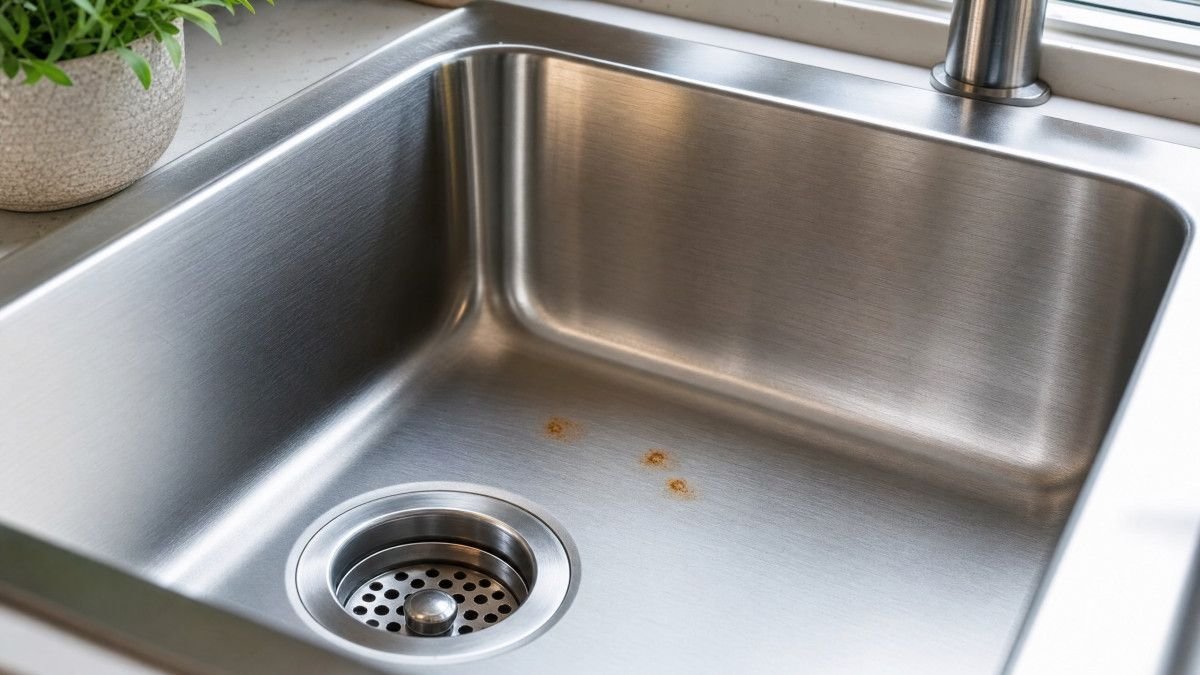

Rust stains on a stainless steel sink are almost never caused by the sink itself corroding. Instead, these orange spots are rogue iron particles—left behind by cast iron pans, steel wool, or hard water—that have oxidized on the surface. You can remove them using a baking soda paste, oxalic acid cleansers, or white vinegar.
Discovering orange spots on a sink labeled “stainless” feels like a betrayal. You bought stainless steel specifically because it was supposed to be immune to this exact problem. Yet, there they are: stubborn rust rings perfectly outlining where a wet pan sat overnight.
The good news is that your sink is probably fine. The rust you see is almost certainly surface contamination, not structural failure. This distinction matters because it changes how you fix the problem. Rather than treating a failing sink, you are simply lifting oxidized iron off a durable surface. We will walk through the exact methods to dissolve these stains without scratching the finish, and outline the daily habits required to keep the steel looking clean.
Why Your Stainless Steel Sink Gets Rust Stains
Stainless steel resists corrosion through a microscopic, self-healing layer of chromium oxide. However, when external iron particles from cast iron cookware, steel wool pads, or hard water settle on the surface and remain wet, those specific particles rust and stain the sink.
To understand why this happens, we have to look at how stainless steel actually works. According to ASTM International, stainless steel is defined as an iron-based alloy containing a minimum of 10.5% chromium by mass. When exposed to oxygen, this chromium forms a passive layer of chromium oxide that acts as an invisible shield against water and air. As long as this shield is intact, the steel beneath it cannot rust.
But this shield does not repel other metals. If you leave a wet cast iron skillet in the basin, tiny iron particles transfer from the pan to the sink surface. The water provides the necessary oxygen, and those loose iron particles oxidize—creating rust. The same process occurs if you leave a tin can sitting in a puddle, or if you scrub a pot with a steel wool pad and leave microscopic steel fibers behind. The sink itself is not rusting; it is simply acting as a canvas for other rusting metals.
Homes with high iron content in their hard water face a similar issue. The water evaporates, leaving behind mineral deposits that include iron. Over time, these deposits oxidize, creating a dull, orange haze that looks identical to a rusting sink basin. In all these cases, the structural integrity of your sink remains perfectly sound.
Three Methods That Actually Work
The most effective methods to remove rust from stainless steel involve mild abrasives or mild acids. A baking soda paste handles light stains, Bar Keepers Friend tackles older or deeper rust using oxalic acid, and white vinegar works well for widespread hard water rust.
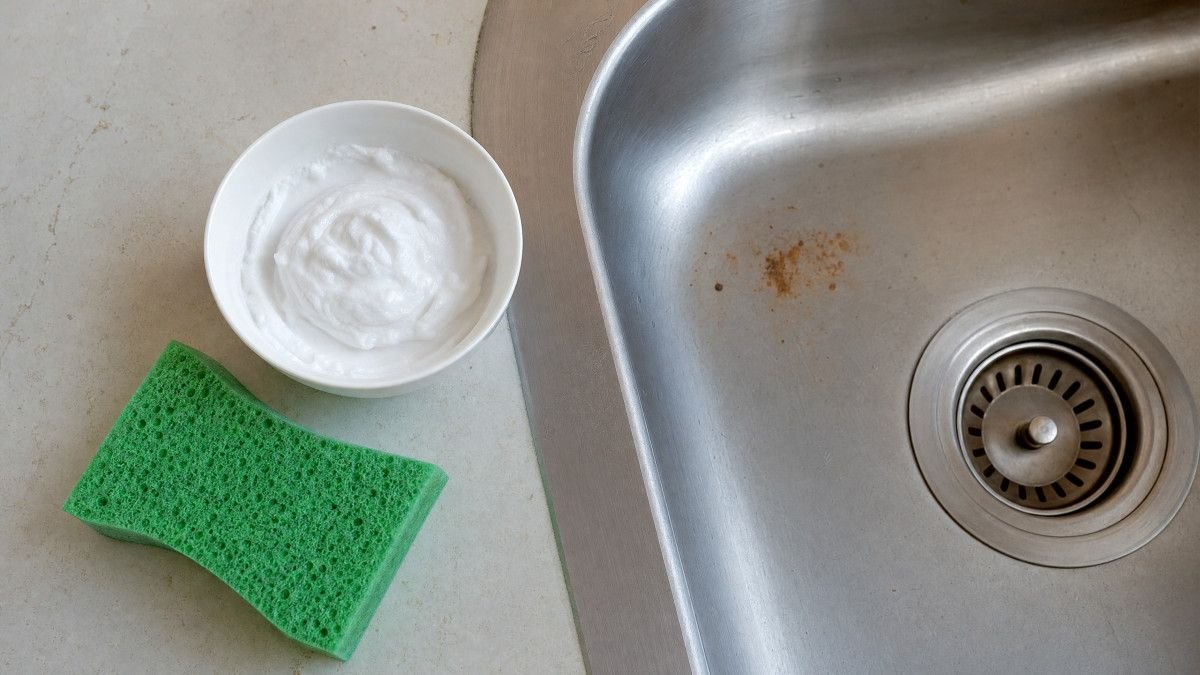
Baking Soda Paste
For most light to moderate rust spots, baking soda is the safest and most accessible option. It acts as a very mild abrasive that physically lifts the oxidized iron without scratching the chromium oxide layer underneath.
Start by pouring a few tablespoons of baking soda into a small bowl. Add just enough water to create a thick paste—you want the consistency of toothpaste or slightly wet sand. Apply this paste directly onto the rust spots and let it sit for about ten minutes. This dwell time is crucial, as it allows the alkaline mixture to soften the rust bond.
After ten minutes, take a non-scratch sponge and scrub the area. You must scrub with the grain of the stainless steel. Look closely at your sink basin; you will see faint, parallel brush lines running either horizontally or vertically. Rubbing parallel to these lines prevents you from creating new, visible scratches that would trap future deposits. Rinse the area thoroughly with warm water once the rust lifts.
Bar Keepers Friend
When baking soda fails, you need a chemical reaction rather than just physical abrasion. Bar Keepers Friend contains oxalic acid, a compound specifically effective at dissolving iron oxide. This is the method preferred by most professional cleaners and contractors.
Wet the rusted area of the sink first. If you are using the powder form of Bar Keepers Friend, sprinkle a small amount over the wet spot to form a slurry. If you are using the liquid soft cleanser, apply a dime-sized drop directly to the rust. Let the product sit for no more than one or two minutes. Oxalic acid is powerful, and leaving it on too long can dull the finish of your stainless steel.
Using a damp, soft cloth or non-scratch sponge, scrub the spot gently, again following the grain of the metal. The rust should dissolve and wipe away almost instantly. Rinse the sink basin heavily with water immediately after scrubbing to neutralize the acid completely.
White Vinegar
If your rust problem looks more like a broad, orange haze caused by iron-rich hard water rather than distinct spots from a pan, white vinegar is highly effective. The acetic acid in vinegar slowly breaks down mineral deposits and light rust.
Fill a spray bottle with undiluted white vinegar and saturate the affected areas of the sink. Let the vinegar sit for five to ten minutes. For stubborn areas, you can lay a paper towel flat against the side of the sink and spray it with vinegar; the wet towel keeps the acid against the metal instead of letting it run down the drain. Scrub the area with a soft cloth and rinse well.
What Not to Do (This Is Where Most People Make It Worse)
Using steel wool, bleach-based cleaners, or chloride disinfectants will strip the protective chromium oxide layer from your sink. While these might temporarily remove a stain, they guarantee that the sink will rust faster and more severely in the future.
When faced with a tough stain, the human instinct is to grab the harshest tool available. With stainless steel, this instinct is destructive. Steel wool pads are the worst offenders. Not only do they aggressively scratch the brushed finish, but they also shed microscopic shards of carbon steel into those scratches. These shards will rust within days, leaving your sink looking worse than when you started.
Chemical cleaners can be just as damaging. Bleach and chloride-based disinfectants actively eat away at the chromium oxide passive layer. If you use these products regularly, the sink loses its ability to protect itself from water and oxygen. Over time, the actual stainless steel alloy will begin to pit and corrode, which is a permanent structural issue rather than a cleanable surface stain. I learned this the hard way when I ruined the finish on a perfectly good basin by letting a bleach-soaked rag sit overnight.
| Cleaning Product | Safety on Stainless Steel | Reason |
|---|---|---|
| Baking Soda | Safe | Mild abrasive, alkaline pH does not harm passive layer. |
| White Vinegar | Safe | Mild acetic acid removes minerals without stripping chromium. |
| Bar Keepers Friend | Safe (with caution) | Oxalic acid dissolves rust, but must be rinsed quickly. |
| Steel Wool | Unsafe | Scratches finish and embeds rusting iron particles. |
| Chlorine Bleach | Unsafe | Destroys the chromium oxide passive layer permanently. |
How to Stop Rust Stains From Coming Back
The single most effective way to prevent rust stains on a stainless steel sink is to dry the basin completely after every use. Without standing water, iron particles cannot oxidize and bond to the metal surface.
Prevention is entirely about moisture management and controlling what touches the steel. Cast iron skillets, tin-plated baking sheets, and wet silverware should never be left sitting in the sink to dry. If you wash a cast iron pan, dry it immediately and put it away. If you use a steel wool pad to scrub a stubborn pot, throw the pad away or store it in a plastic container under the sink—never leave it resting on the stainless steel rim.
For long-term maintenance, consider applying a dedicated stainless steel polish, like Weiman or Zep, every few months. These polishes contain oils that help repel water and maintain the integrity of the passive layer. However, polishing is secondary to the basic habit of keeping the sink dry. Wiping the basin down with a microfiber cloth before you turn off the kitchen lights at night is a tedious chore, and I admit I skip it half the time, but it remains the absolute best defense against rust.
Frequently Asked Questions
Can you get a rust stain out of a stainless steel sink?
Yes, you can remove rust stains from a stainless steel sink using a paste of baking soda and water, or an oxalic acid cleanser like Bar Keepers Friend. The rust you see is almost always surface-level iron particle contamination, not deep corrosion of the sink itself. Scrubbing these spots with the grain of the metal using a non-scratch sponge will lift the stain entirely.
Will WD-40 remove rust from a stainless steel sink?
WD-40 can help loosen light rust stains on stainless steel because it acts as a penetrating oil and solvent. However, it leaves behind a greasy residue that is difficult to wash away and is not food-safe for a kitchen sink environment. Using baking soda or white vinegar is a much safer and more effective approach for food preparation areas.
Does vinegar remove rust from stainless steel?
White vinegar removes light rust and hard water stains from stainless steel due to its mild acetic acid content. Spray undiluted white vinegar onto the rusted area, let it sit for five to ten minutes, and then scrub gently with a soft cloth. It is highly effective for broad, hazy mineral rust, though deep spots may require a stronger abrasive.
Why is my brand new stainless steel sink rusting?
A brand new stainless steel sink appears to rust when iron particles from the manufacturing process, installation tools, or new plumbing pipes settle on the surface and oxidize in water. The sink itself is not rusting; it is simply holding onto foreign iron dust that is reacting to moisture. A thorough cleaning with Bar Keepers Friend will remove this initial contamination permanently.
Is it safe to use Bar Keepers Friend on a stainless steel sink?
Bar Keepers Friend is safe and highly recommended for stainless steel sinks, provided you rinse it off within one to two minutes. The oxalic acid in the cleanser quickly dissolves rust and hard water deposits, but leaving it on the metal for too long can etch or dull the brushed finish. Always scrub with the grain and flush the basin with plenty of water afterward.
Most homeowners panic when they see orange spots in their kitchen basin, assuming they purchased a defective product. Once you understand that these stains are just rogue iron particles reacting to standing water, the problem becomes trivial. Pick the baking soda method for light spots, or grab Bar Keepers Friend for older stains, and scrub with the grain. Then, just try to remember to dry the sink at night.
The Final Word on Sink Rust
Seeing orange spots in a sink you paid good money for is undeniably frustrating. But once you realize those spots are just surface hitchhikers—iron dust from a forgotten skillet or a cheap steel wool pad—the panic fades. Your stainless steel basin is doing exactly what it was engineered to do. The microscopic chromium oxide layer is still intact, holding the line against structural corrosion, even while foreign iron particles rust on top of it.
The fix is entirely in your hands. A simple baking soda paste is usually enough to lift the oxidized iron without scratching the brushed finish. If the stain is older or the result of heavy hard water deposits, oxalic acid cleansers like Bar Keepers Friend will chemically dissolve the rust in seconds. The only real danger is your own impatience: reaching for bleach or aggressive steel wool will permanently strip the sink’s protective layer, turning a minor surface stain into irreversible pitting.
I still catch myself leaving wet cast iron in the sink after a long dinner. We all do. But now, instead of dreading the inevitable orange ring the next morning, I just keep a box of baking soda under the counter. Fix the spots when they happen, scrub with the grain, and try your best to dry the basin before you turn off the kitchen lights. It really is that straightforward.

Most Viewed