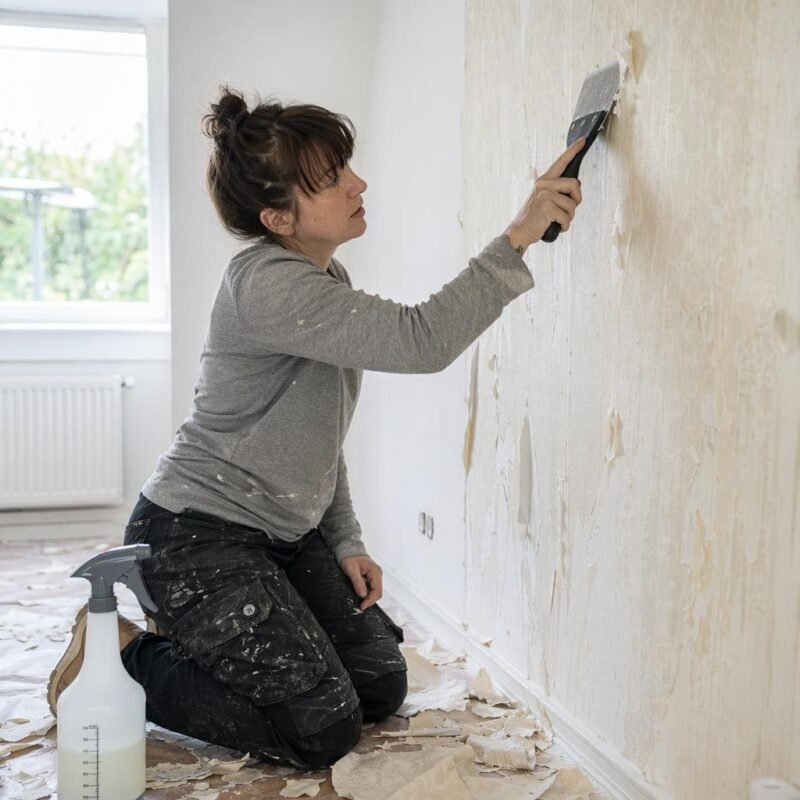

Removing wallpaper easily comes down to two things: knowing which removal method suits your wall type, and keeping the surface wet long enough for the adhesive to release. Skip either step and what should be a weekend project turns into a wall repair nightmare, notes Tide Property Management solutions. This guide covers all three proven methods, the tools you need, and how to handle the situations where nothing seems to work.
Before You Start: Two Things to Check
Two quick checks before touching a scraper save hours of trouble. First, identify whether your walls are drywall (also called gypsum board) or plaster. Drywall is far more sensitive to water damage — oversaturation will damage the paper facing and require patching before painting. Plaster walls from older homes are more forgiving and can take more aggressive wetting. Knock on the wall: a hollow sound indicates drywall, a solid thud indicates plaster. For homes built before 1978, check for lead paint before scoring or steaming, since both activities generate dust — the EPA’s Renovation, Repair and Painting program outlines what contractors and homeowners should know before disturbing older painted surfaces.
Second, test whether the wallpaper is removable or pasted. Find a loose corner or seam and pull gently. If the entire sheet lifts away cleanly, you have removable wallpaper and your job is done in an afternoon. If only the decorative top layer peels off and leaves a paper backing stuck to the wall, you have traditional pasted wallpaper — and that backing requires soaking and scraping. Most wallpaper in homes built before 2000 falls into this category.
| Wall Type | Best Method | Water Caution Level | Typical Time (per room) |
|---|---|---|---|
| Drywall | Fabric softener solution or commercial stripper | High — limit saturation | 4–8 hours |
| Plaster | Steamer or hot water solution | Low — tolerates moisture | 3–6 hours |
| Primed drywall | Any method | Medium | 3–5 hours |
Tools and Materials You Need
The right tools make removing wallpaper easily achievable without damaging the wall underneath. A wallpaper scoring tool (also called a Paper Tiger) perforates the surface so your chosen solution can penetrate the adhesive layer, skipping this step is the single most common reason wallpaper soaking doesn’t work. For scrapers, a 6-inch wide flexible plastic scraper causes far less wall gouging than a stiff metal putty knife.
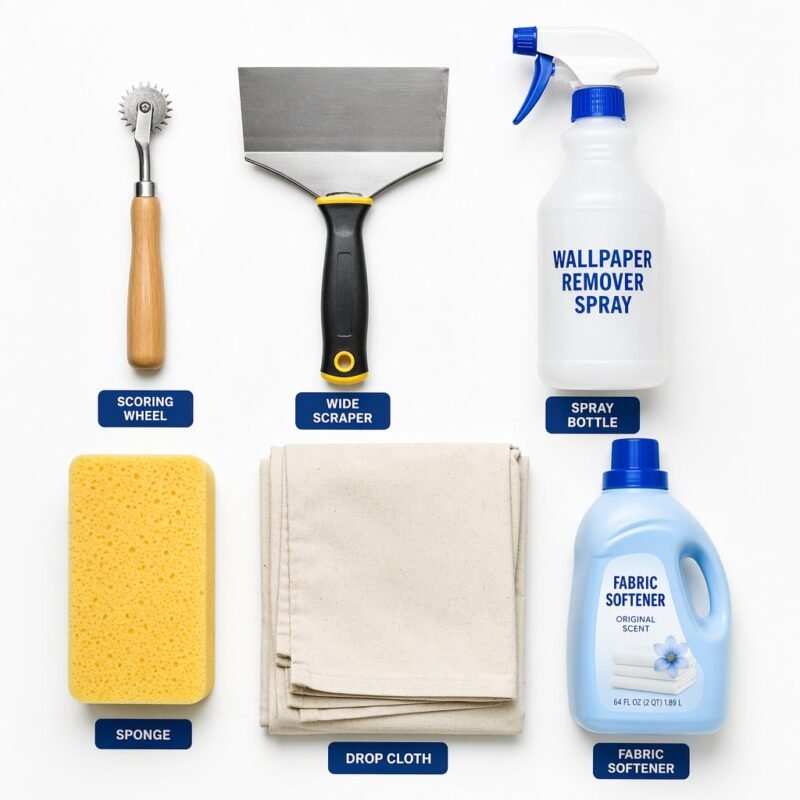
- Wallpaper scoring tool, perforates the top layer without cutting into drywall
- Wide plastic scraper (6-inch), flexible blade reduces wall gouging
- Spray bottle or garden pump sprayer, pump sprayer is faster for large rooms
- Plastic drop cloths, adhesive-soaked paper sticks to floors permanently
- Painter’s tape, cover electrical outlets before any wetting
- Large sponge or roller, for applying solution to large sections
- Bucket and clean water, for rinsing adhesive residue after removal
Method 1: Fabric Softener Solution (Best for Drywall)
A mixture of one part liquid fabric softener to three parts warm water is the gentlest effective option for drywall surfaces. The softener relaxes the adhesive bond without the aggressive saturation that commercial strippers apply, reducing the risk of water damage to the drywall face paper.
Apply the solution with a sponge or spray bottle in sections of about 3 square feet at a time. Wait 3–5 minutes, the adhesive needs time to soften, and this is where most people rush and end up fighting the paper rather than peeling it. When the surface looks slightly translucent and the paper has a slight give when pressed, start scraping from a seam or corner at a low angle. Work the scraper under the paper rather than digging into the wall surface. Re-wet any section that starts resisting before scraping.
After all the paper is off, wipe the wall with clean warm water to remove adhesive residue. Any residue left behind will show through paint as a shiny patch or cause the new paint to peel within months.
Method 2: Commercial Wallpaper Stripper (Fastest Results)
Commercial strippers like DIF or FAST concentrate penetrate adhesive more aggressively than DIY solutions and are worth the cost when dealing with multiple layers or particularly stubborn paper. Products typically retail for $10–$15 per concentrate bottle that mixes into a gallon of solution, enough for one to two average rooms.
Score the wallpaper thoroughly before applying any commercial stripper, especially on multiple layers. Apply liberally with a roller or large sponge and wait the full contact time listed on the product, usually 5–10 minutes. Don’t skip scoring, and don’t rush the wait time. Those two shortcuts account for almost every case where commercial stripper gets blamed for “not working.” Scrape in overlapping strokes and keep the surface wet as you work across the wall.
One practical note on multi-layer wallpaper: tackle one layer at a time. Trying to soak through two layers simultaneously rarely works. Remove the top layer first, let the wall dry for a day, then score and soak the backing layer separately.
Method 3: Wallpaper Steamer (Best for Plaster Walls and Stubborn Paper)
A wallpaper steamer delivers pressurized steam directly into the paper and adhesive, softening even decades-old glue that no liquid solution can penetrate. Steamers rent for $20–$40 per day from most home improvement stores, or purchase for under $75. For large projects or multiple rooms, buying is usually the better value.
Hold the steam plate against the wall section for 20–30 seconds, then immediately scrape that section before it cools. Work in a rhythm: steam one section while scraping the previous one. The technique takes about 10 minutes to master but becomes efficient quickly. Keep the plate moving, holding it in one place on drywall for more than 30 seconds risks water damage.
Steaming is particularly effective on older plaster walls with wallpaper that has been painted over, a scenario where liquid soaking methods consistently struggle. The steam penetrates the painted surface in a way that water solutions cannot. That said, anyone who’s steamed a room remembers the moment the first massive sheet of old wallpaper dropped to the floor in a single piece. The labor feels worthwhile when that happens.
Removing Adhesive Residue: The Step People Skip
Removing the paper is only half the job. The adhesive layer left on the wall after scraping must be fully cleaned off before priming or painting. Paint applied over adhesive residue will peel, bubble, or show lap marks within weeks. Modern wallpaper adhesives are typically starch- or methylcellulose-based, both of which dissolve readily in warm water, making the cleanup step more straightforward than the removal itself.
Mix a solution of warm water with a small amount of dish soap or white vinegar and wipe down the entire wall surface with a wrung-out sponge. Don’t flood the surface, particularly on drywall. Work in sections and rinse the sponge frequently. The wall should feel smooth with no tacky spots when you run your hand across it. Let the wall dry completely before any priming, minimum 24 hours for drywall, 12 hours for plaster.
If the drywall facing paper has been damaged (it looks torn, fuzzy, or raised), skim-coat the area with lightweight joint compound before priming. Painting directly over damaged drywall paper creates a permanent visible texture difference.
Troubleshooting: When the Paper Won’t Budge
Wallpaper that resists every method usually has one of three causes. The first is painted-over wallpaper, where paint seals the surface and prevents any soaking solution from reaching the adhesive. Score aggressively with the Paper Tiger in overlapping passes, then apply steamer or commercial stripper and wait twice the normal contact time.
The second cause is wallpaper applied directly to unprimed drywall, which was common in older construction. The adhesive has bonded to the paper face of the drywall itself. Aggressive removal will tear the wall. In this situation, the least damaging options are: skim-coating over the wallpaper and painting it, or carefully removing in very small sections and repairing damaged areas with joint compound as you go.
The third cause is simply not enough dwell time. If the first pass didn’t work, re-soak and wait longer. A 10-minute soak that allows scraping in one clean motion is faster than three 3-minute soaks that all require fighting the paper.
Frequently Asked Questions
What is the easiest way to remove wallpaper?
The easiest method for most homes is a fabric softener and warm water solution (1:3 ratio) applied with a spray bottle, left to soak for 5 minutes, then scraped with a flexible 6-inch plastic scraper. Score the surface first with a wallpaper scoring tool. This approach works well on drywall because it limits water exposure while still softening the adhesive adequately.
Can I remove wallpaper without a steamer?
Yes. Fabric softener solution and commercial wallpaper strippers like DIF both work without a steamer. Steamers are most useful for wallpaper that has been painted over, multiple layers, or paper applied to older plaster walls. For single-layer unpainted wallpaper on drywall, a pump sprayer and commercial stripper typically performs just as well as a steamer.
How long does it take to remove wallpaper from a room?
An average bedroom takes 4–8 hours depending on the wall type, number of layers, and whether the paper has been painted over. Single-layer removable wallpaper can be done in 1–2 hours. Old pasted wallpaper on drywall that has been painted takes the longest. Budget time for adhesive cleanup and wall drying before adding the total job time.
Will removing wallpaper damage my drywall?
It can, particularly if the wallpaper was applied to unprimed drywall or if too much water is used. The paper face of drywall can tear when over-saturated. Use a flexible plastic scraper rather than a metal knife, keep water applications light, and work in small sections. Damaged areas can be repaired with lightweight joint compound before priming.
Does vinegar work for removing wallpaper?
White vinegar diluted in warm water (equal parts) does help loosen wallpaper adhesive and is a practical alternative to fabric softener solution. It works better on lighter adhesive residue than on thick, fully intact wallpaper layers. For complete wallpaper removal, a commercial stripper or fabric softener solution typically works faster. Vinegar is most useful as the final rinse step for cleaning up adhesive residue after the main paper is off.
How do you remove wallpaper that has been painted over?
Score the surface aggressively with a Paper Tiger scoring tool, then apply a commercial wallpaper stripper and allow at least 10–15 minutes of contact time before scraping. Steam is the most reliable method for painted wallpaper because it penetrates the paint seal that liquid solutions cannot. Expect slower progress and plan for wall patching afterward, as painted wallpaper removal frequently takes some drywall facing with it.

Most Viewed