

Short-term rentals generally offer higher gross revenue potential compared to long-term rentals, though they often involve greater operational costs and management demands, while long-term rentals provide more stable income streams with lower management overhead, while RENOSY Milwaukee professionals can help owners weigh income potential against the operational realities of managing rental properties.
Understanding Rental Strategies: Short-Term vs. Long-Term
In many urban and tourist-heavy markets across the United States, short-term rentals can generate significantly higher gross income, often two to three times that of long-term rentals, due to premium nightly rates and demand for flexible accommodations.
The choice between short-term and long-term rental strategies is a fundamental decision for real estate investors, directly impacting income, expenses, and overall property management. Short-term rentals, typically facilitated through platforms like Airbnb or Vrbo, cater to guests seeking temporary accommodation for days or weeks. This model thrives on flexibility and higher nightly rates, particularly in popular tourist destinations or during peak seasons. Conversely, long-term rentals involve lease agreements spanning several months to years, providing stable, predictable income from consistent tenants. Each strategy presents a distinct set of advantages and disadvantages concerning profitability, operational demands, and risk exposure.
Revenue Potential: Short-Term vs. Long-Term
Across various real estate markets, short-term rentals typically yield higher gross revenue per property compared to long-term rentals, primarily due to their ability to command premium daily or weekly rates, especially in high-demand areas or during peak travel periods.
The most significant allure of short-term rentals is their potential for elevated gross revenue. Property owners can charge substantially higher nightly rates for short stays than the equivalent daily rate of a long-term lease. This is particularly true in areas with strong tourism, business travel, or seasonal events. For example, a property that might rent for $2,000 per month as a long-term rental could potentially generate $150-$250 per night as a short-term rental, leading to a higher overall monthly or annual income if occupancy rates are favorable. However, this higher revenue is contingent on consistent bookings and effective pricing strategies that adapt to market fluctuations and seasonality.
Long-term rentals, while offering lower per-day income, provide a consistent and predictable revenue stream. A signed lease agreement guarantees rent for an extended period, reducing vacancy risks and administrative overhead associated with frequent tenant turnover. This stability allows for easier financial forecasting and budgeting, making it an attractive option for investors prioritizing steady cash flow over maximizing gross income. The income from long-term rentals is less susceptible to seasonal dips or sudden market shifts, offering a more reliable financial foundation.
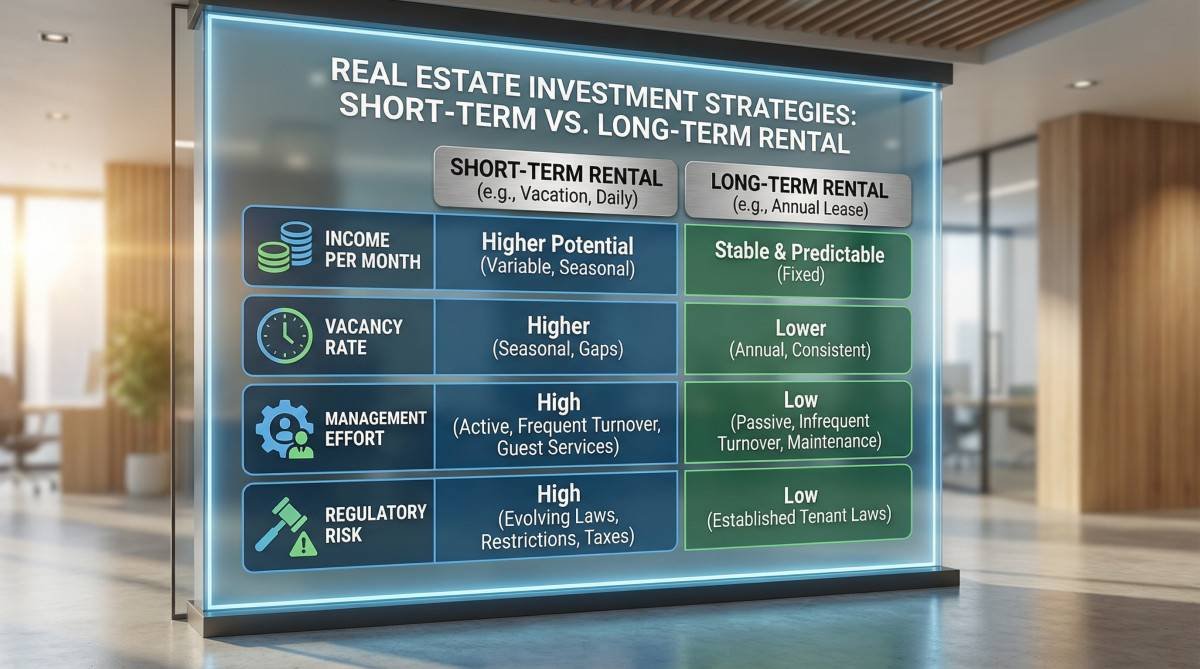
Operational Costs and Management: A Key Differentiator
In most rental markets, short-term rentals incur significantly higher operational costs, including frequent cleaning, utility expenses, and marketing, alongside more intensive management requirements compared to the generally lower and more predictable costs associated with long-term rentals.
The operational costs associated with short-term rentals are considerably higher than those for long-term properties. Frequent guest turnovers necessitate professional cleaning services, replenishment of consumables (toiletries, linens, kitchen supplies), and higher utility expenses due to continuous usage. Marketing and booking platform fees (e.g., Airbnb, Vrbo commissions) also add to the overhead. Furthermore, short-term rentals demand more active management, including 24/7 guest communication, check-in/check-out coordination, and prompt maintenance responses. This intensive management can be time-consuming, often requiring the owner to hire a property manager or invest in automation tools, which adds to the cost structure.
Long-term rentals, in contrast, have lower and more predictable operating expenses. Cleaning is typically the tenant’s responsibility during their stay, and utilities are often paid directly by the tenant. Property management fees, if applicable, are usually a fixed percentage of the monthly rent, and marketing costs are minimal, primarily incurred during tenant turnover. The management responsibilities are less demanding, focusing on rent collection, periodic maintenance, and addressing tenant issues as they arise. This streamlined operation contributes to a lower overall cost of ownership and a more passive investment approach.
Risk Factors and Market Volatility: Assessing Stability
Short-term rentals face greater risks from regulatory changes, seasonal demand fluctuations, and potential property damage, whereas long-term rentals offer more stability against market volatility and tenant turnover, albeit with risks like tenant non-payment or property depreciation.
Short-term rentals are inherently exposed to higher market volatility and a broader range of risks. Regulatory landscapes are constantly evolving, with many municipalities imposing restrictions, taxes, or outright bans on short-term rental operations, which can significantly impact profitability and legality. Income can fluctuate dramatically with seasonal demand, economic downturns, or unforeseen events (e.g., pandemics, natural disasters), leading to periods of low occupancy and reduced revenue. The frequent turnover of guests also increases the likelihood of wear and tear or property damage, necessitating higher maintenance budgets and robust insurance coverage.
Long-term rentals generally offer greater stability and fewer direct risks. Lease agreements provide a predictable income stream, and the longer tenancy reduces vacancy rates and associated costs. While risks such as tenant non-payment, property damage, or eviction processes exist, they are typically less frequent and can be mitigated through thorough tenant screening and proper legal procedures. Long-term rentals are also less susceptible to the whims of tourism markets or sudden regulatory shifts, providing a more secure and consistent investment over time.
Tax Implications and Legal Considerations
The tax treatment for short-term rentals often differs significantly from long-term rentals, with short-term properties potentially qualifying for active income deductions and being subject to specific occupancy taxes, while long-term rentals typically generate passive income with different depreciation schedules.
The tax implications for short-term and long-term rentals vary considerably and can significantly influence net profitability. Short-term rentals, particularly those with substantial owner involvement, may be classified as an active trade or business by the Internal Revenue Service (IRS), allowing owners to deduct losses against other income. However, they are often subject to hotel or occupancy taxes, sales taxes, and stricter local regulations. These regulations can include licensing requirements, zoning restrictions, and limits on the number of rental days per year, all of which add complexity and potential costs.
Long-term rentals are typically treated as passive income investments, subject to passive activity loss rules. While they benefit from depreciation deductions, these deductions may be limited based on the owner’s adjusted gross income. Long-term rentals generally face fewer local regulatory hurdles, though landlord-tenant laws, eviction processes, and rent control ordinances can vary by jurisdiction. Understanding these legal and tax distinctions is crucial for optimizing financial outcomes and ensuring compliance.
Frequently Asked Questions
Is a short-term rental always more profitable than a long-term rental?
Not always. While short-term rentals often have higher gross revenue potential, their profitability depends heavily on occupancy rates, operational costs, management efficiency, and local market conditions. In some markets, or for investors seeking minimal involvement, long-term rentals can be more profitable net of expenses and effort.
What are the main disadvantages of short-term rentals?
The primary disadvantages include higher operational costs (cleaning, utilities, supplies), greater management demands, increased exposure to market volatility and regulatory changes, and potential for higher wear and tear on the property due to frequent guest turnover.
How does tenant screening differ between the two rental types?
Long-term rentals involve extensive tenant screening processes, including credit checks, background checks, and rental history verification, to ensure reliable, long-term occupants. Short-term rentals typically rely on platform-based guest reviews and identification verification, with less emphasis on traditional credit or background checks.
Can I convert a long-term rental into a short-term rental?
Yes, but it requires careful consideration of local zoning laws, homeowner association rules, potential renovation needs to meet short-term guest expectations, and changes in insurance coverage. It’s essential to research all legal and practical implications before converting.
Which rental strategy is better for passive income?
Long-term rentals are generally considered a more passive income strategy due to lower management involvement and more predictable income streams. While short-term rentals can be automated, they typically require more active oversight or the engagement of a dedicated property management service.
Conclusion
The decision between short-term and long-term rental properties hinges on an investor’s financial goals, risk tolerance, and willingness to engage in property management. Short-term rentals offer the potential for higher gross income but come with increased operational costs, management intensity, and market volatility. Long-term rentals, conversely, provide greater income stability, lower operational demands, and a more predictable investment profile. Thorough market research, a clear understanding of local regulations, and a realistic assessment of management capabilities are essential for determining which strategy will ultimately prove more profitable and sustainable for a given real estate investment.

Most Viewed