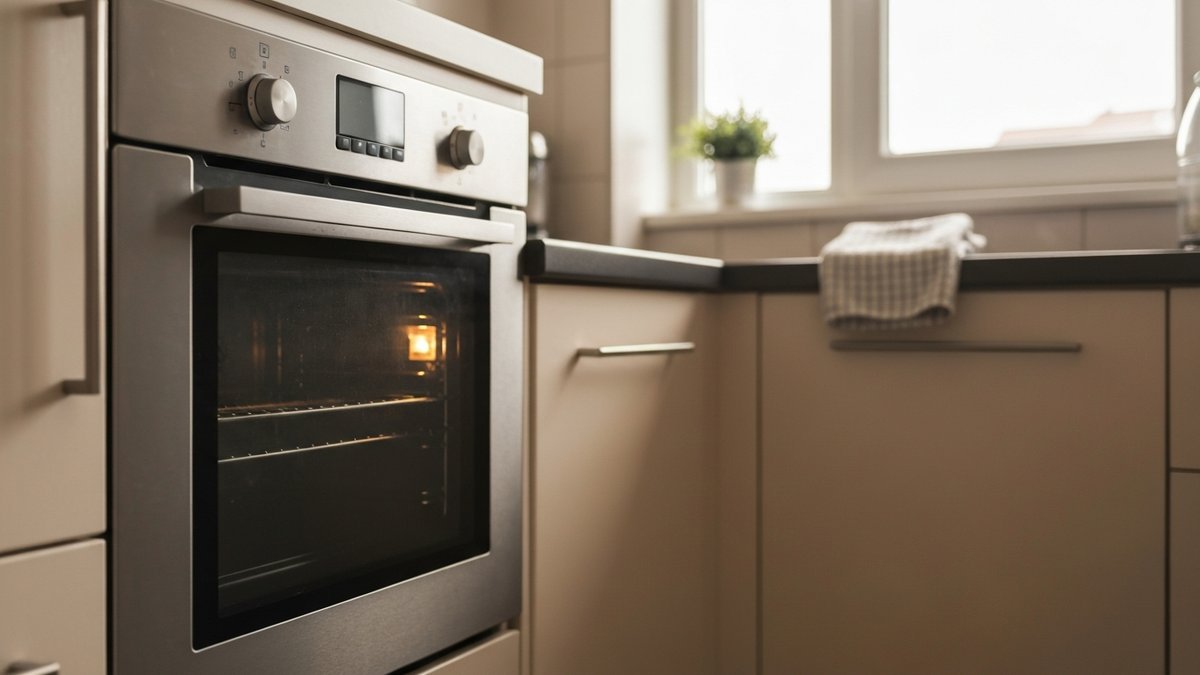

An oven door that hangs ajar by half an inch might seem like a minor annoyance. It is not. That gap leaks enough heat to add roughly 10 to 15 percent to the energy required to hold temperature. Over a year of regular cooking, the waste adds up to real money, points out Vineyard Property Management.
An oven door not closing completely usually comes down to one of four mechanical failures, and two of them can be fixed in under ten minutes. Two of them can be fixed with nothing more than a couple of washcloths.
Why Oven Doors Stop Closing — The Four Usual Suspects
There are only a handful of reasons an oven door refuses to seal. After about four years of regular use, the hinge springs lose tension and can no longer pull the door flush against the frame. The door gasket, the black fiberglass wire mesh running the perimeter, eventually compresses, cracks, or tears, which breaks the seal.
Hinge arms themselves can bend if someone leans on the door or uses it as a step stool. On some models, the latch mechanism or hinge receiver bracket warps from repeated exposure to oven heat.
A quick way to narrow things down: open the door halfway and let go. If it sags noticeably or drops further on its own, the springs or hinges are the likely culprit. If the door closes all the way but you can still feel heat escaping around the edges, suspect the gasket.
“Oven door won’t close. Please help.”
— u/deleted in r/fixit · 27 upvotes · 19 comments
Posts like this one, sitting at the top of r/fixit with dozens of responses, tell you this is a headache that visits kitchens everywhere. The solutions are almost always simpler than the panic suggests.
The One-Minute Hinge Spring Reset (Try This First)
This fix costs nothing and requires zero tools. It works by forcing the hinge springs past their current resting position, letting them re-establish proper tension. Appliance repair veteran Scott Flint, who popularized the technique, calls it the repair that generates the most “it seemed like magic” emails from his viewers.
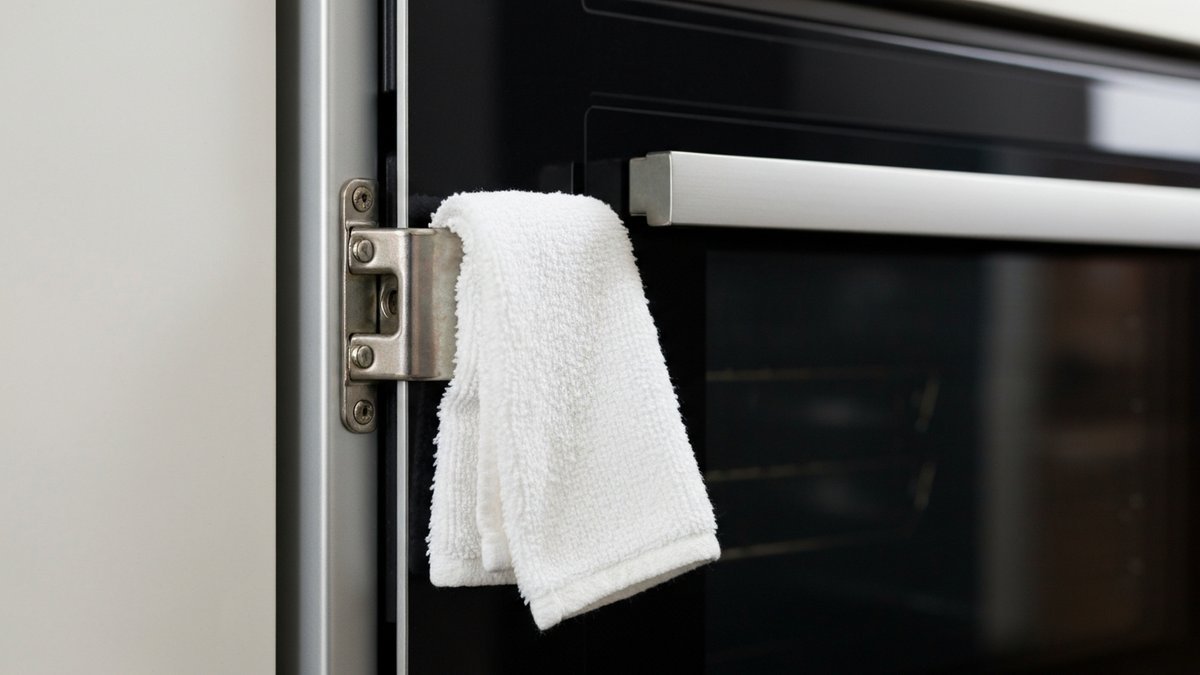
- Fold two washcloths. Fold each one in half, then in half again. You want a pad roughly half an inch thick.
- Place them on the hinges. Set one folded cloth on the right hinge arm, the other on the left. Position them so they sit between the door and the oven body when you close it.
- Close the door against the cloths. Gently push the door closed until it meets resistance from the cloth pads. Do not slam it. The cloths create a fulcrum point.
- Apply three progressive pushes. Push the door inward with controlled force, going slightly further each time. On the third push, the door should come within about a quarter inch of the frame.
- Open the door and remove the cloths. Pull the door open, take out both cloths, then close the door fully. It should now sit flush and stay closed on its own.
- Repeat if necessary. If the door still does not quite seal, do the whole sequence again with slightly more inward force.
This method resets the internal spring mechanism on most freestanding ranges built after 1990. It will not fix a bent hinge arm or a torn gasket, but it solves the gradual tension loss that accounts for perhaps 60 percent of oven door closure complaints. If it does not work, move on to the gasket.
When the Gasket Is the Problem
An oven door gasket that is compressed, torn, or coated in baked-on grease cannot form a proper seal. Run your fingers along the entire length of the gasket, the braided tube that rings the door or the oven cavity opening. Any spot that feels flat, hard, or has visible cracks needs attention.
According to GE Appliances service data, gasket degradation is the second most common reason for an oven door not closing completely, right behind spring fatigue.
Replacement gaskets typically cost $15 to $35 for the part, and installing one is a 15-minute job. Most gaskets are held in place by a friction-fit channel or wire clips along the oven frame. No adhesive is required for the majority of models.
Pull the old gasket out of its channel starting at a corner, press the new one into place working your way around the perimeter, and trim any excess with scissors. The new gasket will feel stiff at first. It softens and conforms to the door after two or three full heat cycles.
A gasket that looks intact but will not seal may just need cleaning. Wipe it down with warm water and a drop of dish soap, then dry thoroughly. Avoid abrasive cleaners. They degrade the fiberglass weave faster than heat alone ever will.
Replacing Worn or Bent Hinges
If the spring reset did not work and the gasket looks fine, the hinge assemblies themselves may be the problem. Hinge arms bend when someone puts weight on an open door: a toddler using it as a step, a heavy roasting pan resting on it while basting.
The bend might be subtle enough that you do not see it, but a two-degree misalignment at the hinge pivot translates to a visible gap at the door’s top corner.
Replacement hinge kits range from $25 to $50 per pair and are model-specific. You will need your oven’s exact model number, usually found on a sticker inside the storage drawer or along the door frame.
Replacing hinges requires removing the oven door, which on most models involves flipping the hinge locks to the unlocked position, lifting the door off at a 45-degree angle, and sliding the old hinges out of their receiver slots. The whole swap takes about 20 minutes with a Phillips screwdriver.
Before ordering parts, inspect the hinge receiver brackets, the slots on the oven body where the hinge arms seat. If these are warped from years of heat cycling, new hinges alone will not solve the problem. A bent receiver usually means a service call.
Brand-Specific Quirks Worth Knowing
Different oven brands have their own failure patterns when an oven door stops closing properly. Based on repair forum discussions and appliance technician reports, certain brands have well-documented tendencies that can save you hours of trial-and-error diagnosis.
| Brand | Common Issue | Typical Fix |
|---|---|---|
| Whirlpool / Maytag | Hinge spring fatigue after 3-5 years | Spring reset or hinge replacement pair ($35-50) |
| Samsung | Door latch sensor misalignment on dual-door models | Realign latch striker plate; sometimes a control board reset |
| Frigidaire / Electrolux | Gasket compression at bottom corners | Gasket replacement; check door alignment first |
| GE / Hotpoint | Hinge receiver bracket warping on older units | Bracket inspection; may require welding or oven replacement |
| KitchenAid | Soft-close mechanism failure on premium ranges | Damper replacement; usually a $60-80 part |
Samsung dual-door models with the Flex Duo feature have an additional failure point: a magnetic latch sensor that detects whether the upper and lower doors are properly seated. If the sensor misreads, the oven may refuse to heat even though both doors appear closed. A hard reset, unplugging the oven for five minutes, clears the sensor error in many cases.
“New oven door not closing. Installer says it’s ‘within tolerance’ but I can fit a piece of paper through the gap at the top. Is this normal for a $2,000 appliance?”
— u/AussieHomeowner in r/AusRenovation · 15 upvotes · 13 comments
If your oven is brand new and the door does not close properly, do not accept “within tolerance” as an answer. A properly installed oven door should seal firmly enough that a sheet of paper offers noticeable resistance when you try to slide it out from between the gasket and frame.
DIY Fix vs Calling a Pro: What It Actually Costs
When an oven door is not closing completely, the financial math is straightforward. A spring reset costs zero dollars and one minute. A gasket replacement costs $15 to $35 and 15 minutes. New hinges run $25 to $50 and 20 minutes. The average appliance repair service call starts at $80 to $120 just for the technician to walk through the door.
With parts and labor, hinge or gasket work on a standard range pushes the total to $150 to $300.
If you have a functioning oven with a door issue and no other problems, repairing it almost always makes more sense than replacing it. According to appliance industry data, the average lifespan of a modern electric range is 13 to 15 years. Door hinge or gasket issues typically surface around years 4 through 7, meaning there is plenty of service life left.
The line where replacement wins is when the repair estimate exceeds 50 percent of a new unit’s cost, or when the oven has multiple simultaneous problems.
Safety Rules Before You Touch Anything
Two things matter more than any repair technique when your oven door is not closing completely. First, unplug the oven or shut off the circuit breaker before replacing hinges or gaskets. The door area on many ranges contains wiring for the interior light, temperature sensor, or control panel. Second, the oven door on a standard 30-inch range weighs 25 to 35 pounds. Have a second person spot you when removing and reinstalling it.
A dropped oven door shatters the inner glass panel and, if it lands on a ceramic or stone floor, takes the tile with it.
If you smell gas during any repair, and this applies even if you are only working on the door, stop immediately. Open windows and call your utility provider. A gas line to the oven runs through the front lower area of most freestanding ranges, close enough to the hinge receivers that aggressive prying could disturb a fitting.
How do I know if it’s the hinges or the gasket?
Open the door to 45 degrees and let go. If it sags or drops further, the hinges or springs are the problem. If the door holds position but you can feel hot air escaping around the edges while the oven is on, replace the gasket.
You can also perform a dollar-bill test: close the door on a piece of paper, pull it out, and check for resistance all around the perimeter.
Can I still use my oven if the door won’t close all the way?
You can, but you should not make a habit of it. A partially open door means the oven runs longer to reach and maintain temperature, burning more electricity or gas. It also creates uneven cooking. The area near the gap will be 25 to 50 degrees Fahrenheit cooler than the rest of the cavity.
For baking, that is the difference between evenly browned cookies and a tray with one pale corner.
How much does it cost to fix an oven door not closing completely?
When an oven door is not closing completely, DIY fixes range from free for a spring reset to $15 to $50 for a gasket or hinge replacement. Professional repair typically costs $150 to $300 depending on your location and the parts needed. If the oven is under 7 years old and has no other issues, repair is almost always the better financial decision.
What if my oven door won’t close after self-cleaning?
Self-cleaning cycles run the oven at 900 degrees Fahrenheit or higher for several hours. This extreme heat can warp the hinge receiver brackets or damage the door gasket on older units. The problem is common enough that many appliance technicians advise against using the self-clean function on ovens more than 5 years old.
Let the oven cool completely for at least 4 hours, then check whether the door still will not close. If it does not, the hinges or receivers likely warped from the extreme heat.

Most Viewed