

Understanding property easements and rights-of-way means grasping a simple legal concept: an easement is a legal right to use someone else’s land for a specific purpose without owning it. A right-of-way is a type of easement that grants passage across a property.
The distinction matters because a neighbor with an easement can legally enter your land, and you cannot stop them. Understanding property easements and rights-of-way before you buy, build, or fight with a neighbor is the difference between a manageable fact of homeownership and an expensive lawsuit you will probably lose.
Easements are not rare. They exist on millions of residential properties across the United States, buried in title reports and deed language that most homeowners never read until there is a problem. A utility company runs a power line through your backyard because a 15-foot-wide easement was recorded in 1972.
A neighbor drives across the corner of your lot to reach their garage because an access easement was granted to the previous owner in 1985 and runs with the land. None of this is visible from the curb. All of it is legally binding.
Easement Versus Right-of-Way: What Is the Difference
A right-of-way is a type of easement. Every right-of-way is an easement, but not every easement is a right-of-way. A utility easement allows the power company to run lines and access equipment on your property — that is an easement, but not a right-of-way, because no one is passing through. A driveway easement that lets your neighbor cross your property to reach their home is both an easement and a right-of-way, because it grants passage. The distinction controls what the easement holder can actually do on your land.
Easements are either appurtenant or in gross. An appurtenant easement benefits a specific adjacent parcel of land and transfers automatically when either property is sold.
That neighbor’s driveway easement across your lot is appurtenant — it belongs to the neighboring parcel, not to the neighbor personally. An easement in gross benefits a specific entity rather than a parcel. The utility company’s power line easement is in gross — it belongs to the power company, and if the power company sells its assets to another utility, the easement transfers with the sale.
Common Types of Easements Found on Residential Properties
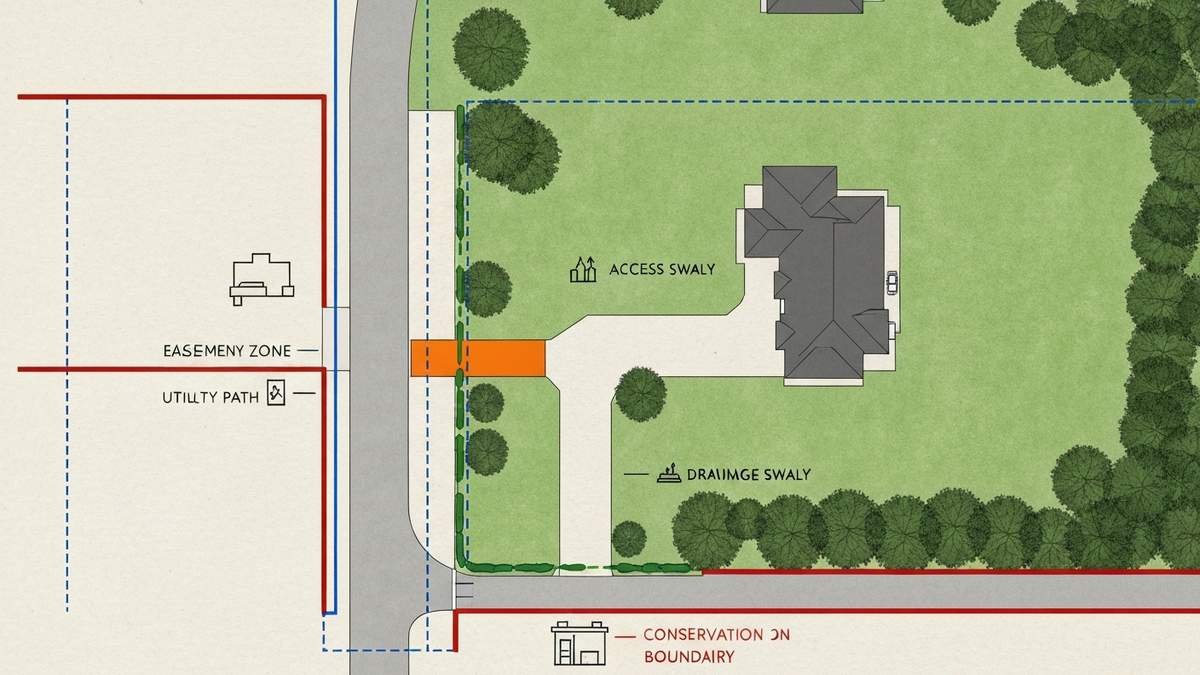
Utility easements are the most common. They run along property edges, typically five to fifteen feet wide, and allow electric, gas, water, sewer, and telecommunications companies to install and maintain infrastructure.
You cannot build permanent structures in a utility easement. A shed, a pool, or even a deck built over a utility easement can be ordered removed at your expense if the utility company needs access. Before you build anything within 20 feet of your property line, check the plat map and the title report for recorded easements.
Access easements grant a neighbor or the public the right to cross your property to reach another location. A shared driveway is a common example. If your property sits between a neighbor’s home and the public road, an access easement may allow them to use a strip of your land as their driveway. These easements are typically recorded on both properties’ deeds and survive changes in ownership indefinitely.
Drainage easements allow water to flow across your property from adjacent land or public infrastructure. They restrict what you can build, grade, or plant in the drainage path. Blocking a drainage easement , even accidentally, by building a retaining wall or filling in a swale , can make you liable for flood damage to neighboring properties.
Prescriptive easements are acquired through use, not through a written document. If a neighbor has used a path across your land openly, continuously, and without permission for the statutory period , typically 10 to 20 years depending on the state , they may have acquired a legal easement through prescription.
A prescriptive easement is functionally identical to adverse possession, except the neighbor gains the right to use the land rather than ownership of it. A well-worn footpath that has been there since before you bought the house may already be a legal right-of-way.
Conservation easements restrict development on a property to protect natural resources, open space, or historic features. They are typically held by land trusts or government agencies and permanently limit what can be built on the land. A property subject to a conservation easement may sell for less than an unrestricted property, but the owner may qualify for significant tax benefits.
| Easement Type | Who Holds It | What It Allows | Common Location | Impact on Owner |
|---|---|---|---|---|
| Utility Easement | Power, gas, water, telecom companies | Install and maintain infrastructure | Along property edges, 5-15 ft wide | Cannot build permanent structures |
| Access Easement | Adjacent property owner | Cross your land to reach their property | Shared driveways, rear access paths | Neighbor has permanent passage rights |
| Drainage Easement | Adjacent owners or municipality | Water flow across your property | Swales, ditches, natural drainage paths | Cannot block or redirect water flow |
| Prescriptive Easement | Neighbor (acquired through use) | Continue historical use of your land | Footpaths, driveways used 10-20+ years | Use becomes legal right without consent |
| Conservation Easement | Land trust or government agency | Restrict development permanently | Entire property or designated area | Limits building; may provide tax benefits |
“New neighbor wants an easement through my property for electrical access to build a second home behind mine. I said no. Now they’re threatening legal action. I own the land.”
, u/deleted in r/RealEstate · 1,234 upvotes · 679 comments
“Neighbor thinks an easement means they own the strip of my property. They started parking there. When I put up a camera they called the police. The police told them it’s a civil matter , but I’m the one who has to hire a lawyer.”
, u/deleted in r/legaladvice · 1,185 upvotes · 23 comments
“Neighbor doesn’t have a recorded easement or right of way, but they insist they’ve been using the path across my backyard for 15 years so it’s ‘theirs now.’ They’re not entirely wrong about prescriptive easements and that’s what worries me.”
, u/deleted in r/homeowners · 508 upvotes · 250 comments
How to Find Out If Your Property Has an Easement
Start with the title report from when you purchased the property. Easements are recorded on the title and should appear in the Schedule B section, which lists exceptions to the title insurance coverage.
If you do not have your title report, order a new one from a title company for $200 to $400. The county recorder’s office also maintains easement records, searchable by property address or parcel number. A surveyor can locate easements physically by researching the chain of title and marking the boundaries on the ground.
The plat map , a detailed drawing of your subdivision filed with the county , often shows utility easements along property lines and access easements for shared driveways or common areas. Plat maps are available through the county assessor’s office or online through many county GIS portals, usually at no cost.
A plat map that is 50 years old may show easements that are still legally valid. Age does not extinguish a recorded easement.
How Easements Affect Your Property Rights and Value
An easement does not transfer ownership, but it permanently restricts what you can do with the affected portion of your land. You retain ownership of the land within the easement.
You can typically use it for landscaping, gardening, or parking as long as you do not interfere with the easement holder’s rights. What you cannot do is build anything permanent within the easement that would impede the holder’s access. A fence across an access easement, a swimming pool in a utility easement, or a retaining wall blocking a drainage easement can all be ordered removed by a court.
Easements affect market value in both directions. A property burdened by a significant easement , particularly an access easement that allows a neighbor to drive through your backyard , will sell for less than an unencumbered comparable property. The discount varies by the type and visibility of the easement. A buried utility easement along the rear property line that no one ever sees may have negligible impact. A driveway easement that sends the neighbor’s car past your kitchen window three times a day reduces value by 5% to 15% depending on the market. Conversely, a property that benefits from an easement , the one with the right to cross a neighbor’s land to reach the road , gains value that the burdened property loses.
What to Do If a Neighbor Violates or Disputes an Easement
Start with the document. If the easement is recorded, pull the record from the county recorder and provide a copy to the neighbor. A surprising number of easement disputes end at this step, because the neighbor was relying on a verbal agreement with a previous owner that has no legal force. If the neighbor blocked your access easement with a fence or gate, show them the recorded document and ask them to remove the obstruction within a reasonable time , two weeks is common in legal demand letters. If they refuse, the next step is an attorney, because removing a neighbor’s fence without a court order can expose you to criminal damage charges even if the fence is on an easement you hold the rights to.
If a neighbor claims an easement across your property that you dispute, the burden of proof is on them. They must produce a recorded easement document or prove the elements of a prescriptive easement. Request a copy of the recorded easement.
If they cannot produce one, order a title search to confirm. If no easement exists and the neighbor refuses to stop using your land, consult a real estate attorney about sending a cease-and-desist letter and filing a trespass action if necessary. Allowing the use to continue without objection can, over time, create the prescriptive easement the neighbor is claiming.
Frequently Asked Questions
What is the difference between an easement and a right-of-way?
A right-of-way is a type of easement that specifically grants passage across property. All rights-of-way are easements. Not all easements are rights-of-way. A utility easement that allows a power company to maintain lines on your property is an easement but not a right-of-way. A driveway easement allowing a neighbor to cross your land is both an easement and a right-of-way.
Can I build a fence on an easement?
Generally no, if the easement is an active right-of-way or access easement. A fence across an access easement obstructs the easement holder’s rights and can be ordered removed.
For utility easements, you may be able to build a fence as long as the utility company can still access their equipment , but check with the utility company and local zoning before building. A fence built in a utility easement may need to be removed at your expense if the utility requires access.
Do easements expire?
Most easements are perpetual unless the document creating the easement specifies an expiration date. An easement can be terminated by written agreement of both parties, by merger if the same person comes to own both properties, or by abandonment if the easement holder takes clear and unequivocal actions demonstrating intent to permanently relinquish the right. Mere non-use is typically not enough to extinguish an easement.
How do easements affect selling a home?
Easements must be disclosed to buyers and appear on the title report. A property with significant easements , particularly access easements that allow neighbors to use the land , will sell for less than a comparable property without encumbrances. The discount varies by type and visibility.
A buried utility easement may have negligible impact. A neighbor’s driveway through your backyard can reduce value by 5% to 15%. Properties that benefit from easements gain value, and properties burdened by them lose it.
Can a neighbor gain an easement on my property without my permission?
Yes, through a legal doctrine called prescriptive easement. If a neighbor uses a portion of your land openly, continuously, and without permission for a statutory period , typically 10 to 20 years depending on state law , they may acquire a legal right to continue that use.
The use must be hostile to your interests, meaning without your permission. Once the statutory period runs, the neighbor can file a court action to establish the prescriptive easement formally. Granting written permission for the use before the statutory period runs prevents a prescriptive easement from forming.

Most Viewed